
Now Reading: SpaceX launches huge ‘Cygnus XL’ cargo ship carrying over 5 tons of supplies to ISS astronauts (video)
-
01
SpaceX launches huge ‘Cygnus XL’ cargo ship carrying over 5 tons of supplies to ISS astronauts (video)

SpaceX launches huge ‘Cygnus XL’ cargo ship carrying over 5 tons of supplies to ISS astronauts (video)

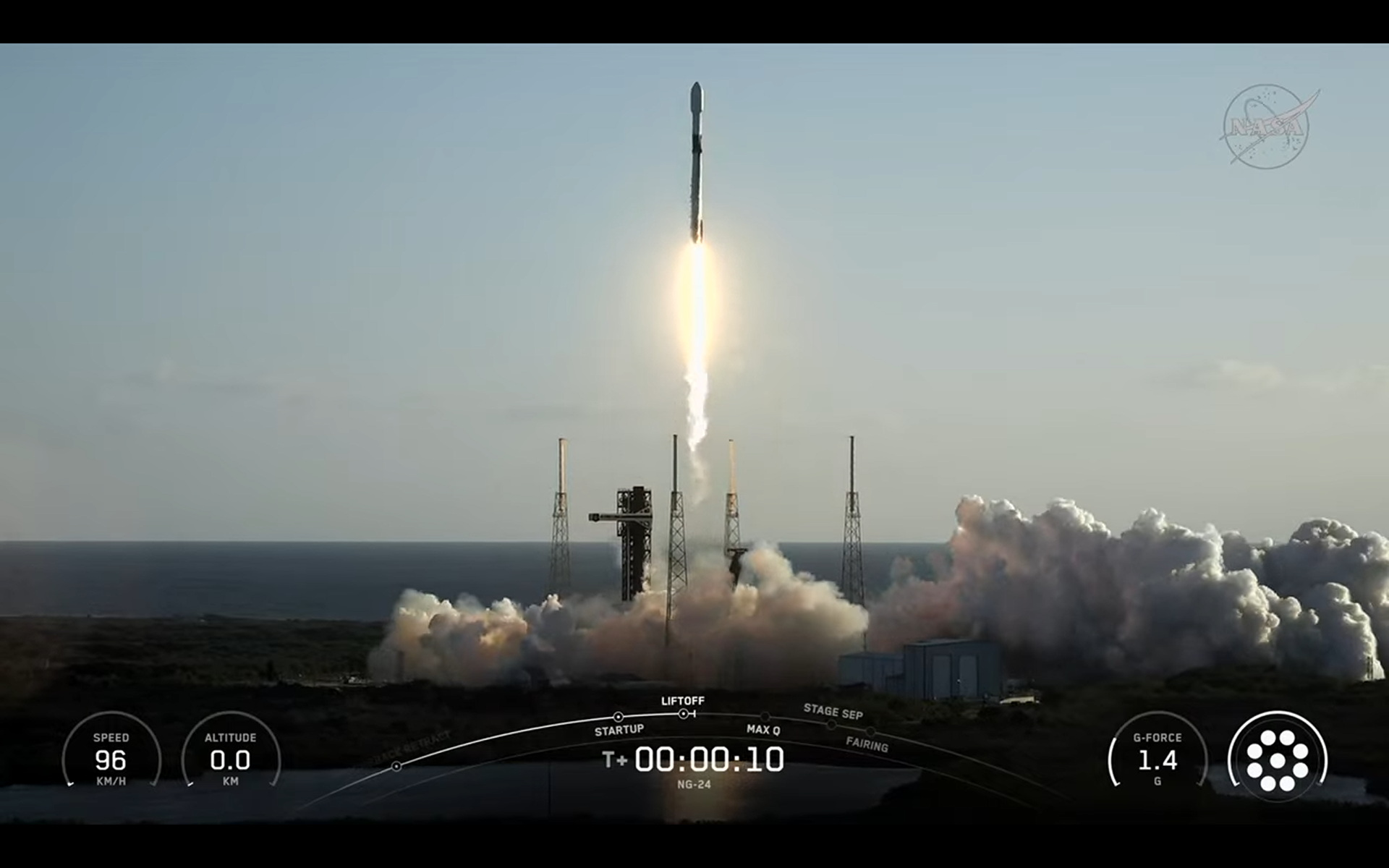
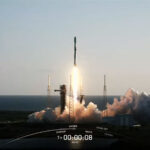
SpaceX launched launch a massive cargo ship packed with over 5 tons of gear for astronauts on the International Space Station early Saturday (April 11), then aced a rocket landing minutes after the Florida liftoff.

“This Cygnus spacecraft is named the S.S. Steven R. Nagel in honor of the astronaut who flew four space shuttle missions and logged more than 720 hours in space,” Jones added.
The robotic Cygnus XL will arrive at the ISS on Monday (April 13), when it will be grappled by the orbiting lab’s Canadarm2 robotic arm. That capture is scheduled for 12:50 p.m. EDT (1650 GMT), NASA said.

Nagel, an Air Force test pilot, served as a NASA astronaut from 1979 to 1995. His first flight was as a mission specialist; he then flew once as a pilot and twice as a commander. Nagel died in 2014 at the age 67 after a long illness, according to NASA.
Nagel’s namesake Cygnus XL freighter will deliver about 11,000 pounds (4,990 kilograms) of science equipment and supplies to the astronauts aboard the station. That load-carrying capacity explains Cygnus XL’s name: The original version of the freighter, which flew more than 20 missions to the ISS, maxed out at about 8,500 pounds (3,856 kg) of payload.
Saturday’s launch was the second flight of the Cygnus XL to date. The first one launched last September, also atop a SpaceX Falcon 9. It stayed attached to the ISS for six months, departing on March 12 to burn up in Earth’s atmosphere. The mission profile is roughly the same for this second Cygnus XL.

Saturday’s mission was the seventh flight for the SpaceX Falcon 9 first stage that propelled the cargo ship toward orbit. It returned to Earth about eight minutes after liftoff to make a smooth landing at a SpaceX pad at Cape Canaveral Space Force Station. The booster launched Northrop Grumman’s previous cargo flight, NG-23, NASA’s Crew-11 astronaut flight, the Axiom Space Ax-4 astronaut flight and three Starlink missions, according to a SpaceX description.
Just over 14 minutes after liftoff, the NG-24 Cygnus XL cargo ship separated from the Falcon 9 upper stage to enter its initial orbit. It should deploy its solar arrays about one hour after liftoff to continue its journey to the ISS.

The Northrop Grumman vehicle is one of four robotic cargo spacecraft that service the ISS, along with Japan’s HTV-X, Russia’s Progress and SpaceX’s Dragon.
Dragon is the only one of these freighters that’s reusable. The other three die fiery deaths in Earth’s atmosphere when their time in orbit is up.










Related Posts

Stay Informed With the Latest & Most Important News
Previous Post
Next Post


Advertisement
-
 01Two Black Holes Observed Circling Each Other for the First Time
 -
 02From Polymerization-Enabled Folding and Assembly to Chemical Evolution: Key Processes for Emergence of Functional Polymers in the Origin of Life
 -
 03Astronomy 101: From the Sun and Moon to Wormholes and Warp Drive, Key Theories, Discoveries, and Facts about the Universe (The Adams 101 Series)
 -
 04True Anomaly hires former York Space executive as chief operating officer
 -
 05Φsat-2 begins science phase for AI Earth images
 -
 06Hurricane forecasters are losing 3 key satellites ahead of peak storm season − a meteorologist explains why it matters
 -
 07Binary star systems are complex astronomical objects − a new AI approach could pin down their properties quickly