
Now Reading: SpaceX secures approval for major expansion and redesign of Starbase launch site
-
01
SpaceX secures approval for major expansion and redesign of Starbase launch site

SpaceX secures approval for major expansion and redesign of Starbase launch site

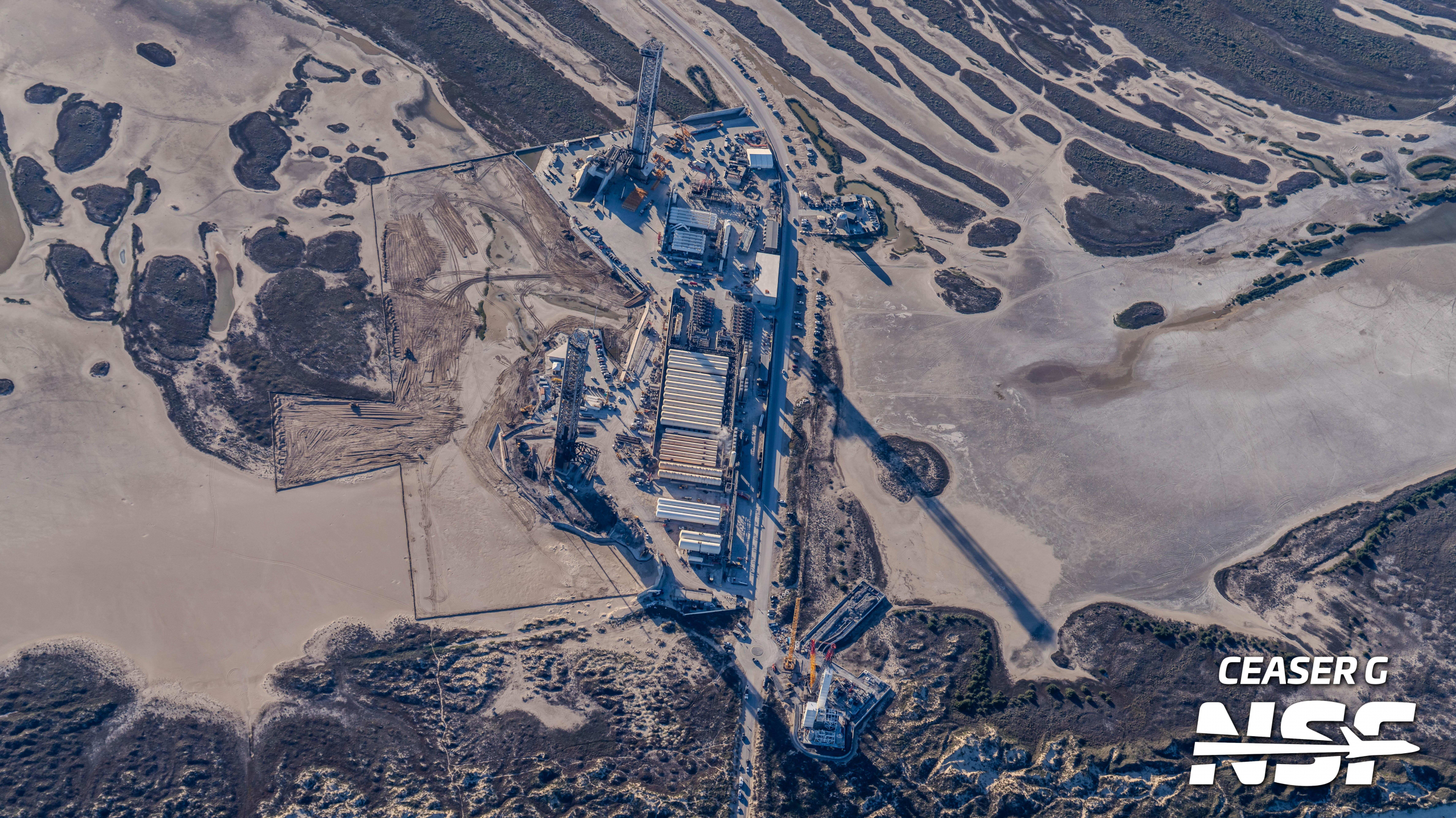

SpaceX is set to transform its Starbase launch site, having secured approval to significantly expand the facility’s footprint. This enhancement will allow the company to nearly double the size of the site and complete a comprehensive redesign of Pad 1, which is pivotal for the anticipated Flight 12 launch.
The overhaul of Pad 1 began shortly after the conclusion of Flight 11 as SpaceX initiated the process of modernizing the launch infrastructure. In recent months, the company has dismantled the orbital launch mount, removed the water-cooled steel plate, and taken out the propellant pumps, paving the way for a more advanced launch pad. Currently, SpaceX is drilling Continuous Flight Auger Piles (CFA) for the new flame trench, a method previously employed during the development phase of Pad 2. This process involves stabilizing the foundation and preventing soil collapse during excavation, ultimately setting the stage for a concrete floor and the installation of steel walls.
As part of the redesign, the company is also developing a cryogenic supply trench, designed to manage propellant and high-pressure gas lines. This aspect of the project required an expansion into surrounding land, necessitating approval from the U.S. Army Corps of Engineers and other regulatory bodies. The green light for this expansion opens new opportunities for the facility’s capabilities.
With the newly approved expansion, SpaceX will be able to incorporate Liquid Natural Gas (LNG) liquefaction plants, which will convert natural gas into LNG to be used in Starship missions. Additional space will be allocated for ground support equipment storage and potentially improved water storage facilities. As part of this plan, the existing methane tank farm will be relocated away from the Liquid Nitrogen and Liquid Oxygen tanks to improve safety by maintaining separation between various propellants. Crews are currently preparing to upgrade the existing methane tanks, aiming to boost capacity to accommodate up to two and a half launches’ worth of methane.
Beyond the tank upgrades, the expansion will facilitate the addition of new subcoolers and pumps for Pad 1, using existing supply lines. Planned infrastructure improvements also include a new water deluge farm and an Isolation and Purging area, similar to facilities at Pad 2 and other launch locations. The layout may also include staging areas for vehicular access, which could simplify operations and improve efficiency alongside ongoing launch activities.
Initial groundwork has commenced, with teams removing vegetation and preparing the site for subsequent development phases. This will involve leveling the ground and compacting it, followed by the installation of geotextile for soil stabilization, a road base, and concrete slabs reinforced with rebar. Additionally, CFA pile drilling will support the construction of various structures needed for the launch site.
The extensive groundwork and construction processes ahead indicate a significant transformation for the Starbase launch site, setting the stage for a robust and versatile hub for future space missions. As these advancements unfold, the facility’s landscape will evolve into a critical base of operations for SpaceX’s ambitious space exploration goals.










Related Posts

Stay Informed With the Latest & Most Important News
Previous Post
Next Post





Advertisement
-
 01Two Black Holes Observed Circling Each Other for the First Time
 -
 02From Polymerization-Enabled Folding and Assembly to Chemical Evolution: Key Processes for Emergence of Functional Polymers in the Origin of Life
 -
 03Astronomy 101: From the Sun and Moon to Wormholes and Warp Drive, Key Theories, Discoveries, and Facts about the Universe (The Adams 101 Series)
 -
 04True Anomaly hires former York Space executive as chief operating officer
 -
 05Φsat-2 begins science phase for AI Earth images
 -
 06Hurricane forecasters are losing 3 key satellites ahead of peak storm season − a meteorologist explains why it matters
 -
 07Binary star systems are complex astronomical objects − a new AI approach could pin down their properties quickly