
Now Reading: SpaceX successfully launches Cygnus XL spacecraft to supply International Space Station
-
01
SpaceX successfully launches Cygnus XL spacecraft to supply International Space Station

SpaceX successfully launches Cygnus XL spacecraft to supply International Space Station

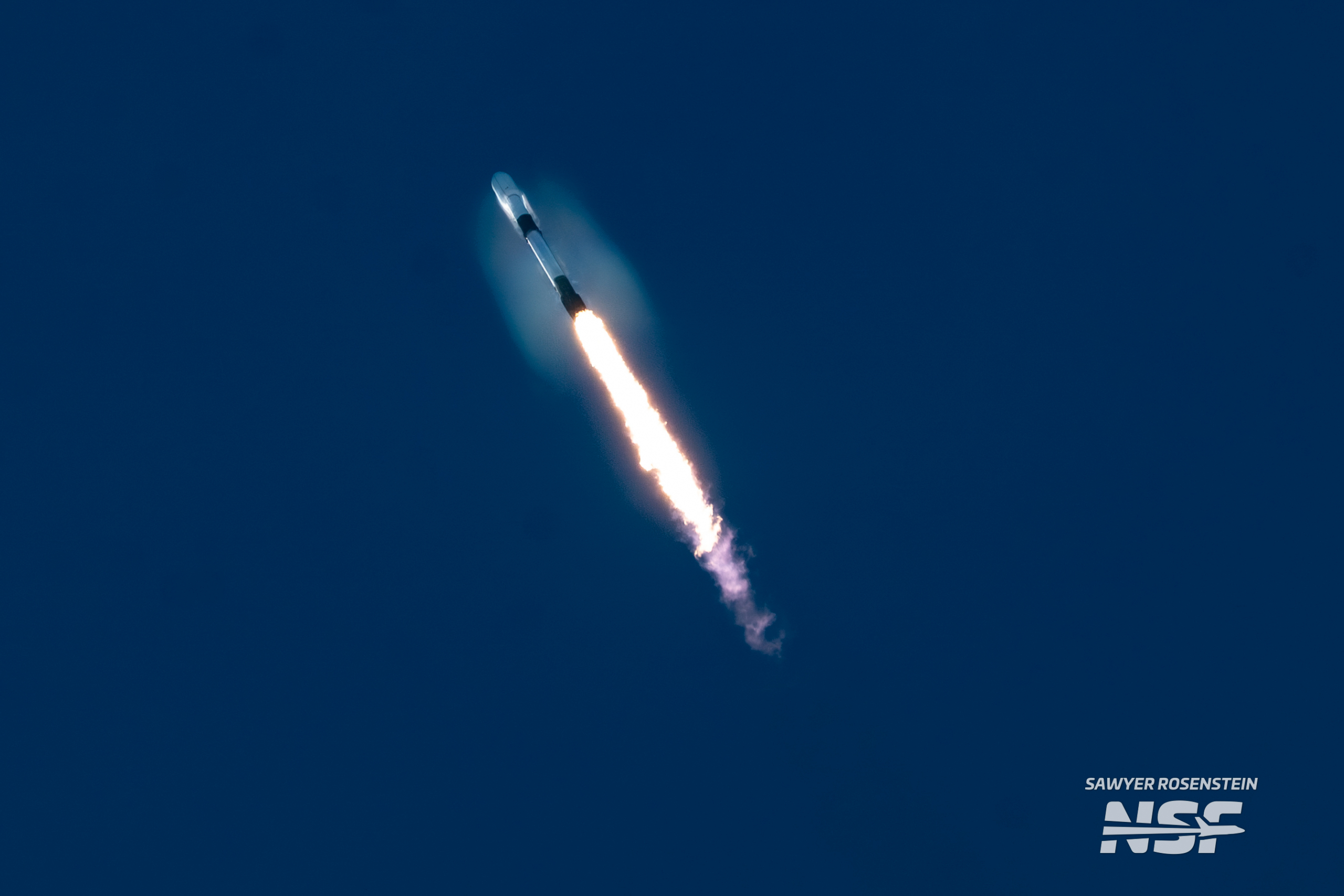

A SpaceX Falcon 9 rocket successfully lifted off on April 11, 2026, carrying the Cygnus XL spacecraft, named S.S. Steven R. Nagel, destined for the International Space Station (ISS). This marks the fourth mission in which SpaceX has launched a Cygnus cargo spacecraft for Northrop Grumman.
The launch occurred at 7:41 AM EDT from the Cape Canaveral Space Force Station in Florida, originally rescheduled from April 8 due to inclement weather conditions. With an instantaneous launch window, a backup opportunity was available the following day if necessary.
The Falcon 9’s booster, designated B1094-7, executed a successful mission trajectory that placed the Cygnus spacecraft in an orbit aligned with that of the ISS. Following its deployment approximately 14 minutes and 39 seconds after liftoff, the booster returned safely to the newly established landing zone at Cape Canaveral, completing its seventh flight since its introduction.
The S.S. Steven R. Nagel, named in honor of the veteran astronaut who logged over 700 hours in space across four Space Shuttle missions, is set to arrive at the ISS approximately two days after launch. The ISS crew plans to use the Canadarm2 robotic arm to capture the Cygnus spacecraft, with the grapple and berthing at the Unity module anticipated around 16:50 UTC on April 13.
This mission will deliver approximately 5,000 kilograms of cargo to the ISS, including over 1,000 kilograms dedicated to scientific research. Among the key payloads is a new upgrade for the Cold Atom Laboratory, which aims to cool atoms of rubidium and potassium to temperatures just above absolute zero for quantum studies. This experimentation could potentially enhance the development of advanced quantum sensors and contribute to research surrounding dark matter.
The Cygnus spacecraft also carries equipment for creating therapeutic stem cells and model organisms for microgravity research, along with a radio receiver designed to capture scientific signals from the Earth’s ionosphere. Additionally, a climate monitoring system, known as ClimCam, will be installed on the European Columbus module, focusing on the climate and weather patterns of East Africa.
In terms of supplies, the mission includes crew provisions, spacewalk equipment, vehicle hardware, and computer systems. Notable among the cargo is a backup evaporative cooler intended to manage heat on the ISS in case of system failures, and a medical eye imaging device.
The Cygnus XL spacecraft is equipped to remain docked at the ISS for approximately six months before it’s scheduled for a controlled re-entry, ultimately concluding its mission over the Pacific Ocean. This marks the second flight of the Cygnus XL, the largest variant of the spacecraft line, and could potentially be one of the last missions undertaken aboard the Falcon 9 as Northrop Grumman prepares for its upcoming Antares 330 vehicle, aimed for deployment in late 2026.
Steven Nagel’s distinguished career included notable missions in the Space Shuttle program, following his selection as an astronaut in 1978 and his passing in 2014. With this latest launch, SpaceX continues its robust collaboration with NASA to advance research and logistics in low-Earth orbit. The Falcon 9’s launch schedule remains active, with additional missions lined up in the coming months.










Related Posts
Stay Informed With the Latest & Most Important News
Previous Post
Next Post

Advertisement
-
 01Two Black Holes Observed Circling Each Other for the First Time
 -
 02From Polymerization-Enabled Folding and Assembly to Chemical Evolution: Key Processes for Emergence of Functional Polymers in the Origin of Life
 -
 03Astronomy 101: From the Sun and Moon to Wormholes and Warp Drive, Key Theories, Discoveries, and Facts about the Universe (The Adams 101 Series)
 -
 04True Anomaly hires former York Space executive as chief operating officer
 -
 05Φsat-2 begins science phase for AI Earth images
 -
 06Hurricane forecasters are losing 3 key satellites ahead of peak storm season − a meteorologist explains why it matters
 -
 07Binary star systems are complex astronomical objects − a new AI approach could pin down their properties quickly