
Now Reading: SpaceX to Lead Busy Launch Week with Three Major Missions Including NASA Collaboration
-
01
SpaceX to Lead Busy Launch Week with Three Major Missions Including NASA Collaboration

SpaceX to Lead Busy Launch Week with Three Major Missions Including NASA Collaboration

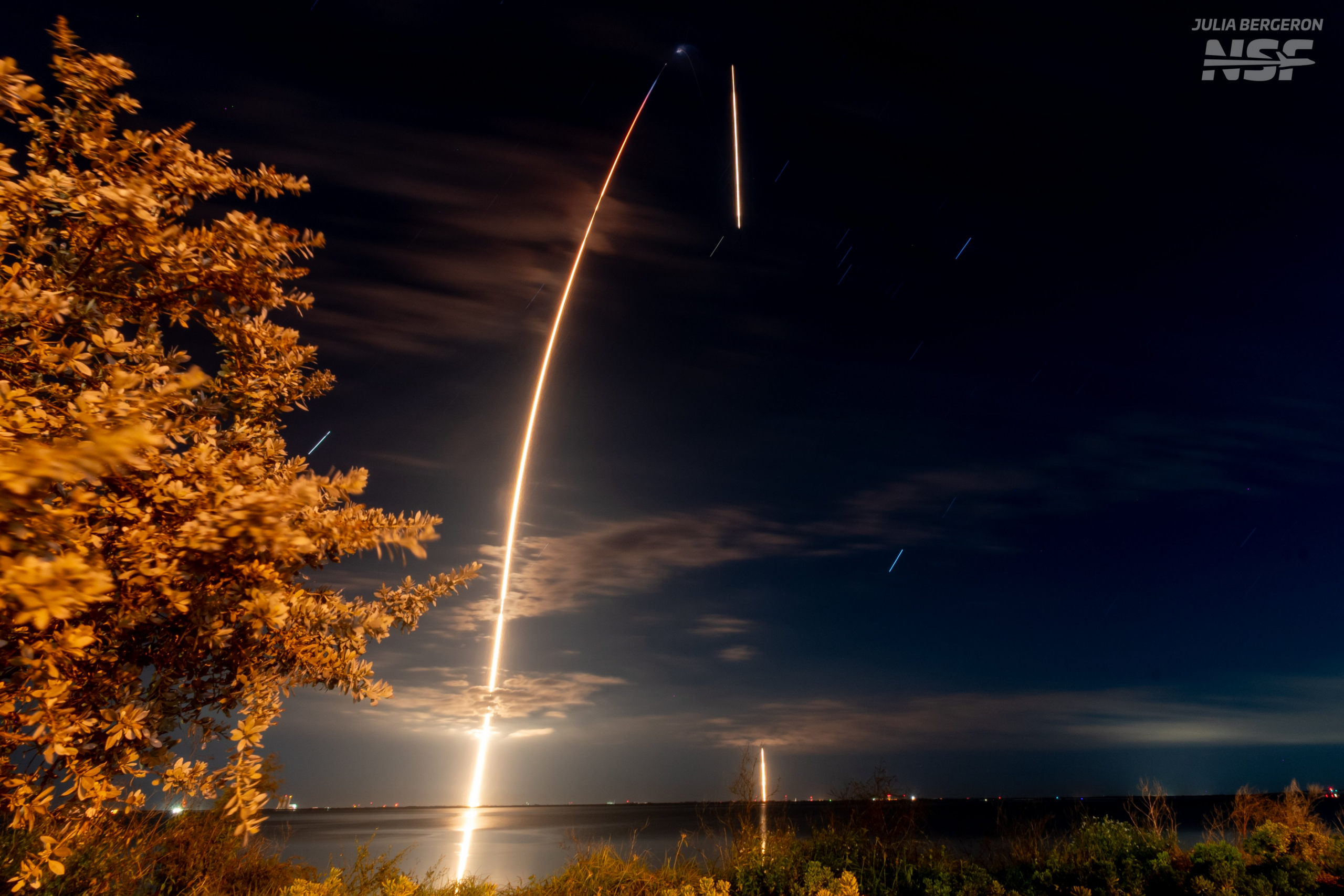

SpaceX is set to dominate the upcoming launch week with three missions on its schedule, continuing its strong start to the year as the provider for the first five launches of 2026. In addition to two flights that expand its Starlink constellation, SpaceX will facilitate a rideshare mission that will include a NASA exoplanet observation initiative among its 20 payloads. Meanwhile, the Indian Space Research Organisation (ISRO) is slated to commence its 2026 launch campaign early Monday, deploying an Indian Earth observation satellite along with 18 other rideshare payloads.
The first mission, using a Falcon 9 rocket, is scheduled to lift off on Thursday, January 8, at 13:29 EST (18:29 UTC) from Cape Canaveral’s SLC-40 launch site. This marks the first of two Starlink Group 6 missions in the week, both aimed at enhancing internet coverage from SpaceX’s satellite constellation. The rocket’s first stage, known as Booster B1069, will execute its 29th flight, delivering 29 Starlink v2-Mini satellites into low-Earth orbit. After stage separation, the booster will make a recovery landing on the autonomous droneship, Just Read the Instructions, stationed in the ocean.
Currently, SpaceX’s Starlink service boasts over nine million subscribers worldwide, with a significant number of satellites already in orbit. As of the beginning of the week, the company has successfully launched a total of 10,868 Starlink satellites, of which 8,170 are operational.
The second Starlink launch of the week is planned for Saturday, January 10, from the same launch pad. This mission will also deploy 29 satellites, augmenting the Group 6 shell at an altitude of 559 kilometers. Vice President of Starlink Engineering, Michael Nicholls, recently announced a strategic reconfiguration of the constellation expected to take place throughout 2026, aimed at enhancing orbital safety. This involves lowering the altitude of approximately 4,400 operational satellites, which should help reduce time spent in orbit for any failing satellites, while also mitigating collision risks with other orbital debris.
On January 11, SpaceX will launch a Falcon 9 rocket from Vandenberg Space Force Base in California at 05:09 PST (13:09 UTC). This mission aims to place 20 payloads into a Sun-Synchronous Orbit and includes NASA’s Pandora satellite, which is designed to observe over 20 exoplanets and their surrounding stars. The data collected will enhance scientists’ understanding of planetary atmospheres in conjunction with findings from instruments like the James Webb Space Telescope. The mission will also feature ten satellites from Kepler Communications and Spire Global’s innovative weather forecasting satellite.
In a parallel effort, ISRO will execute its first mission of 2026 on January 12, launching from the Satish Dhawan Space Center at 10:17 IST (04:47 UTC). The primary payload, the EOS-N1 Earth observation satellite, is accompanied by 18 smaller satellites, possibly including the Defense Research and Development Organisation’s experimental hyperspectral imaging satellite. The mission will employ the PSLV-DL rocket, configured with two solid boosters, to carry all payloads into a Sun-Synchronous Orbit, marking an important step for India’s space endeavors in the new year.










Related Posts
Stay Informed With the Latest & Most Important News
Previous Post
Next Post


Advertisement
-
 01Two Black Holes Observed Circling Each Other for the First Time
 -
 02From Polymerization-Enabled Folding and Assembly to Chemical Evolution: Key Processes for Emergence of Functional Polymers in the Origin of Life
 -
 03Astronomy 101: From the Sun and Moon to Wormholes and Warp Drive, Key Theories, Discoveries, and Facts about the Universe (The Adams 101 Series)
 -
 04True Anomaly hires former York Space executive as chief operating officer
 -
 05Φsat-2 begins science phase for AI Earth images
 -
 06Hurricane forecasters are losing 3 key satellites ahead of peak storm season − a meteorologist explains why it matters
 -
 07Binary star systems are complex astronomical objects − a new AI approach could pin down their properties quickly