
Now Reading: Spire to build eight satellites for Deloitte’s on-orbit cybersecurity program
-
01
Spire to build eight satellites for Deloitte’s on-orbit cybersecurity program


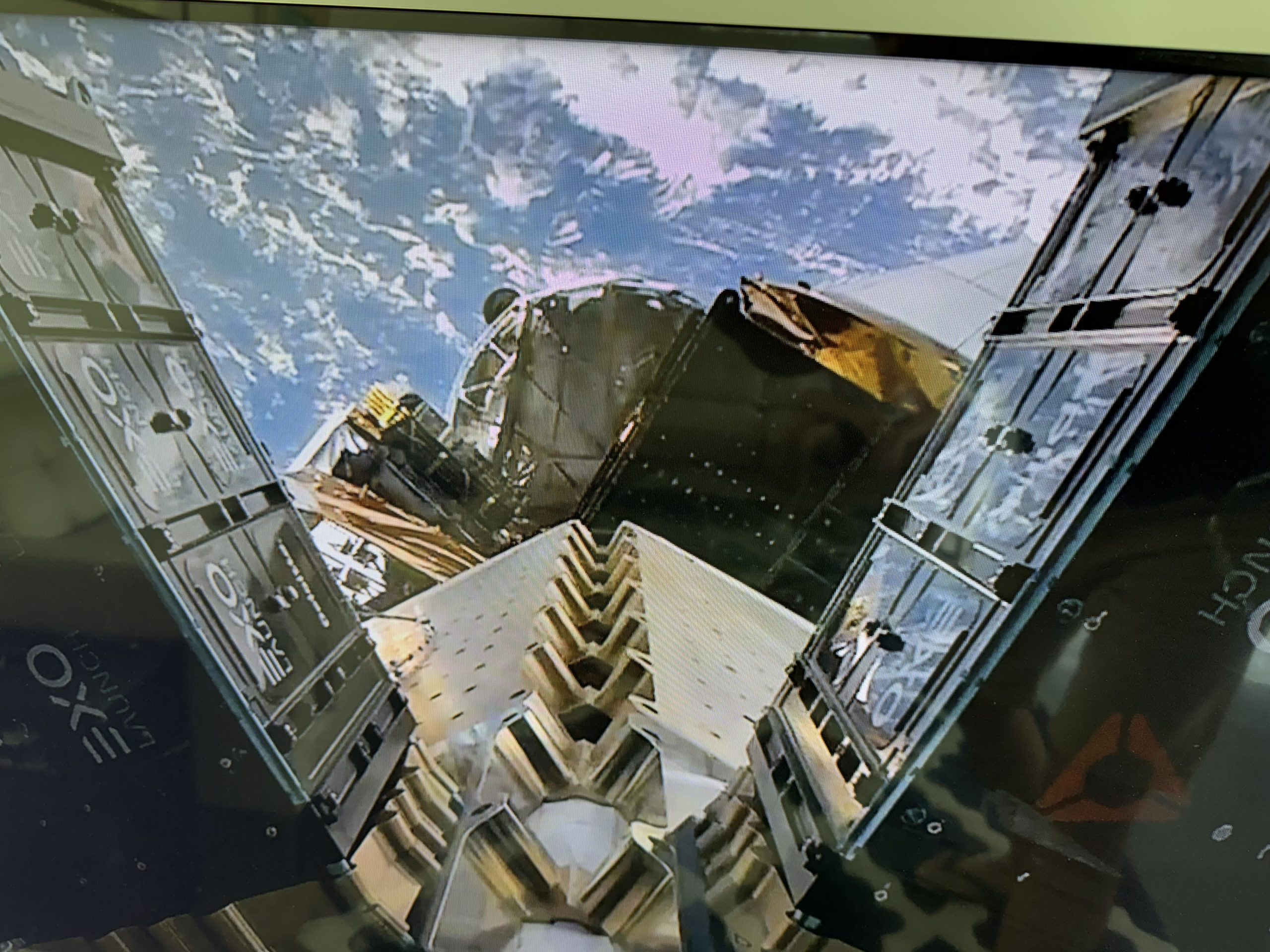

WASHINGTON — Spire Global has secured a contract from Deloitte to design, build and operate eight satellites that will support the consulting firm’s push into on-orbit cybersecurity, the companies said Dec. 1.
Spire Global, a space-based data and satellite services company, will supply the spacecraft for Deloitte’s planned constellation carrying Silent Shield, an intrusion-detection payload built to spot cyber threats targeting satellites. The satellites will also host advanced radio-frequency and geolocation payloads to support Deloitte’s commercial and government clients.
The deal expands a partnership that began earlier this year, when Deloitte launched Deloitte-1 on SpaceX’s Transporter-13 rideshare mission. Spire worked with Deloitte to validate Silent Shield on that spacecraft, which serves as the first node in what Deloitte aims to grow into a nine-satellite cyber defense testbed in orbit.
“Spire’s integrated technology gives us a powerful and relevant platform to engineer, test, validate and refine our on-orbit cyber solutions,” Brett Loubert, leader of Deloitte’s U.S. Space practice, said in a statement.
Satellite cyber defense
Deloitte is betting that real cybersecurity testing for space systems requires operating in orbit, not just in ground stations. A widening set of cyber risks threaten satellites as they become more networked and more numerous.
Silent Shield includes two versions of Deloitte’s intrusion-detection system: A hardware payload, flying on Deloitte-1 and planned for the final satellites in the series, operates out-of-band and only ingests telemetry. By design, it cannot send commands to the spacecraft, limiting the chance that a compromised payload could be used as a bridge to attack the satellite itself.
And a “massless” software-only payload is intended for legacy satellites or platforms that cannot accept new hardware. The software package can run intermittently to meet the power constraints typical of older spacecraft.
Deloitte said the eight new satellites will launch in clusters over the next 18 months, forming a constellation to test cyber defenses, generate operational data and model how attacks could move laterally across multiple spacecraft — an emerging concern as more satellite networks rely on inter-satellite links and shared ground architectures.
The company is also using data from Deloitte-1 to train AI models for future autonomous cyber responses in orbit, a capability that industry executives say will become more important as spacecraft grow more software-defined.










Related Posts

Stay Informed With the Latest & Most Important News
Previous Post
Next Post
Advertisement
-
 01Two Black Holes Observed Circling Each Other for the First Time
 -
 02From Polymerization-Enabled Folding and Assembly to Chemical Evolution: Key Processes for Emergence of Functional Polymers in the Origin of Life
 -
 03Astronomy 101: From the Sun and Moon to Wormholes and Warp Drive, Key Theories, Discoveries, and Facts about the Universe (The Adams 101 Series)
 -
 04True Anomaly hires former York Space executive as chief operating officer
 -
 05Φsat-2 begins science phase for AI Earth images
 -
 06Hurricane forecasters are losing 3 key satellites ahead of peak storm season − a meteorologist explains why it matters
 -
 07Binary star systems are complex astronomical objects − a new AI approach could pin down their properties quickly