
Now Reading: Starliner and Artemis: commercial label vs. commercial discipline
-
01
Starliner and Artemis: commercial label vs. commercial discipline




NASA’s Commercial Crew Program was supposed to be the template: services-based procurement, private ownership of hardware and competition between providers. Yet NASA has now formally designated Boeing’s 2024 Starliner crewed test flight as a Type A mishap — its most serious category — and leadership has been explicit that the most troubling failure was not hardware but decision-making and leadership.
Taken at face value, that sounds like a narrow program failure.
It isn’t.
The Starliner investigation, released Feb. 19, is a case study in treating “commercial” as a contract label rather than a behavior. A program can call itself commercial. But if the underlying habits revert to program protection — closing out anomalies without full root-cause resolution, accepting limited insight into lower-tier data, letting advocacy substitute for rigor — the result is not a repeatable market capability. It’s bespoke procurement with a commercial label.
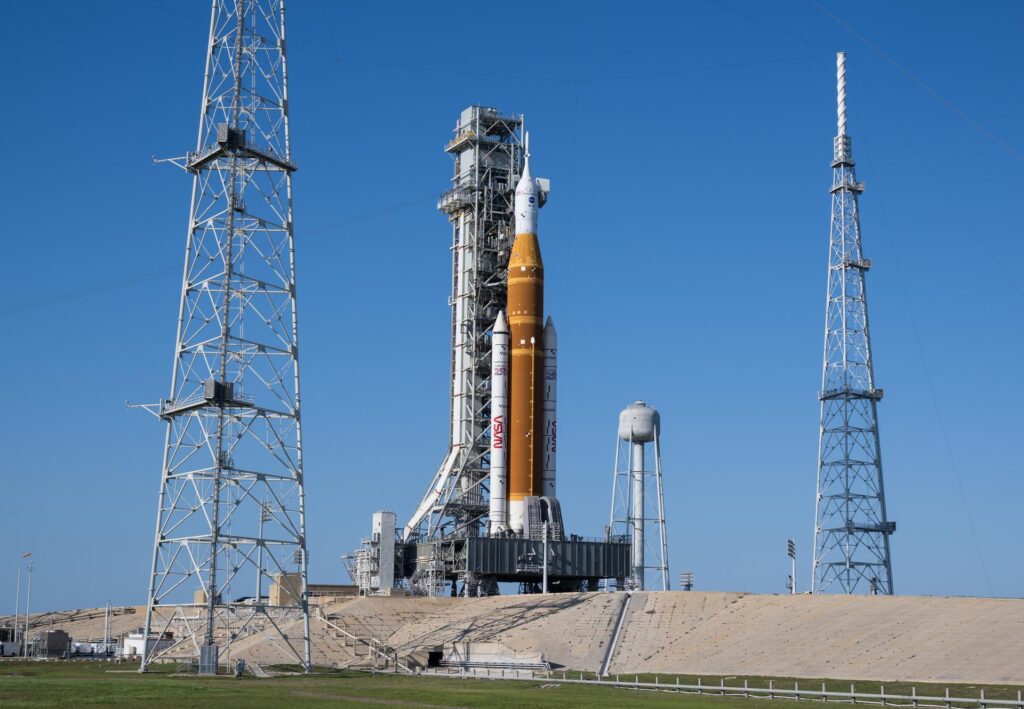
That’s why NASA’s revised Artemis approach, announced eight days later, matters. NASA laid out a new plan for Artemis missions 3-onward that emphasized standardization, higher flight cadence and smaller technical step sizes between missions — de-risking through repetition rather than one-off heroics. One important signal was the decision to cancel planned SLS upgrades in favor of a “near Block 1” approach explicitly intended to increase flight rate. That is the right direction. Whether NASA can sustain that discipline in execution is the test.
Here’s the distinction that matters. Commercial structure is what shows up on paper: a services contract, fixed-price mechanisms, private ownership, multiple providers. Commercial discipline shows up in behavior: the buyer constrains itself to a standard offering; anomalies get driven to root cause; architectures are built for repeatability before demand is proven; and learning compounds because the core system holds. We’ve spent years celebrating structure while quietly ignoring the need for discipline.
Starliner is the cleanest example precisely because it failed inside a program explicitly designed to behave “commercially.” The investigation described recurring issues, investigations that “stopped short” and a culture where program advocacy distorted decision-making. According to NASA leadership, that decision-making was the program’s core failure, not its hardware.
What does “right” look like when the discipline holds?
SpaceX is the obvious case because NASA enforced commercial discipline early. Under COTS-era logic, the agency bought outcomes and avoided reshaping the vehicle into a bespoke program. The result was Falcon 9 as a repeatable system designed to fly frequently across many missions — where cadence compounds learning and produces operational confidence and resilience that are hard to manufacture after the fact.
Axiom Space is a different and more subtle pattern. Much of Axiom’s early demand is still sovereign-funded, but the structure is explicitly multi-buyer. The company offers a standardized substrate with a delivery layer that can be configured per customer. That’s government demand used as market construction because the architecture is designed to be repeatable, not rewritten each time.
Market formation requires discipline on both sides of the contract. Without that alignment, “commercial” becomes a label applied to what is still, functionally, bespoke procurement.
Companies that call their products dual-use should operate the same way. “Dual-use” isn’t a label you earn because a Pentagon customer could imagine a commercial use case. It only becomes dual-use when the same core product can be delivered repeatedly to multiple buyer classes over time without major redesign, requalification, or a one-off integration stack each time. Dual-use becomes unhealthy when defense funding drives bespoke variants that can’t be sold again without being rebuilt.
For operators building “commercial” systems, that’s the discipline test: if each new customer forces meaningful redesign, you’re running a contracting business regardless of how the revenue is labeled. The market-building move is to lock the technical core early and compete at the delivery/integration layer. If a company’s tenth deployment takes as much cost and effort as its first, the system isn’t learning; it’s just repeating bespoke work.
For NASA and the Department of Defense (including the Space Force), “commercial” should be treated as a behavioral commitment, not a contract label. In practice, that means constraining post-award requirement growth that fractures products into bespoke variants and rewarding operational cadence over paper compliance. If “oversight” drives mission-unique requirements that break standardization, the contract may be labeled “commercial” but still behave like bespoke procurement.
For investors, the diligence question isn’t “how much government revenue?” It’s whether the system behaves like a repeatable product. If the anchor customer disappeared tomorrow, could at least two other qualified buyers purchase the current system within a quarter, or would the company need to rebuild? Depending on a single buyer for north of 60% of revenue means you’re underwriting contractor economics regardless of contract structure. Were core architectural decisions made to serve multiple markets, or optimized for the first customer? And would the company keep building if the anchor program went quiet for 18 months? That’s a clear test of whether you’re looking at a platform or a program-dependent contractor. If each new customer requires redesign, requalification, or bespoke integration, value it accordingly.
Commercial markets aren’t declared from the top down. They’re enforced by competition, repeatability and restraint on both sides of the contract. Without those, expansion stalls. With them, it compounds.
Dan Garretson is the founder of CounterFlow Solutions. He previously managed space policy analysis at the Science and Technology Policy Institute.
SpaceNews is committed to publishing our community’s diverse perspectives. Whether you’re an academic, executive, engineer or even just a concerned citizen of the cosmos, send your arguments and viewpoints to opinion (at) spacenews.com to be considered for publication online or in our next magazine. If you have something to submit, read some of our recent opinion articles and our submission guidelines to get a sense of what we’re looking for. The perspectives shared in these opinion articles are solely those of the authors and do not necessarily represent their employers or professional affiliations.










Related Posts

Stay Informed With the Latest & Most Important News
Previous Post
Next Post






Advertisement
-
 01Two Black Holes Observed Circling Each Other for the First Time
 -
 02From Polymerization-Enabled Folding and Assembly to Chemical Evolution: Key Processes for Emergence of Functional Polymers in the Origin of Life
 -
 03Astronomy 101: From the Sun and Moon to Wormholes and Warp Drive, Key Theories, Discoveries, and Facts about the Universe (The Adams 101 Series)
 -
 04True Anomaly hires former York Space executive as chief operating officer
 -
 05Φsat-2 begins science phase for AI Earth images
 -
 06Hurricane forecasters are losing 3 key satellites ahead of peak storm season − a meteorologist explains why it matters
 -
 07Binary star systems are complex astronomical objects − a new AI approach could pin down their properties quickly