
Now Reading: Startup announces ‘Galactic Brain’ project to put AI data centers in orbit
-
01
Startup announces ‘Galactic Brain’ project to put AI data centers in orbit



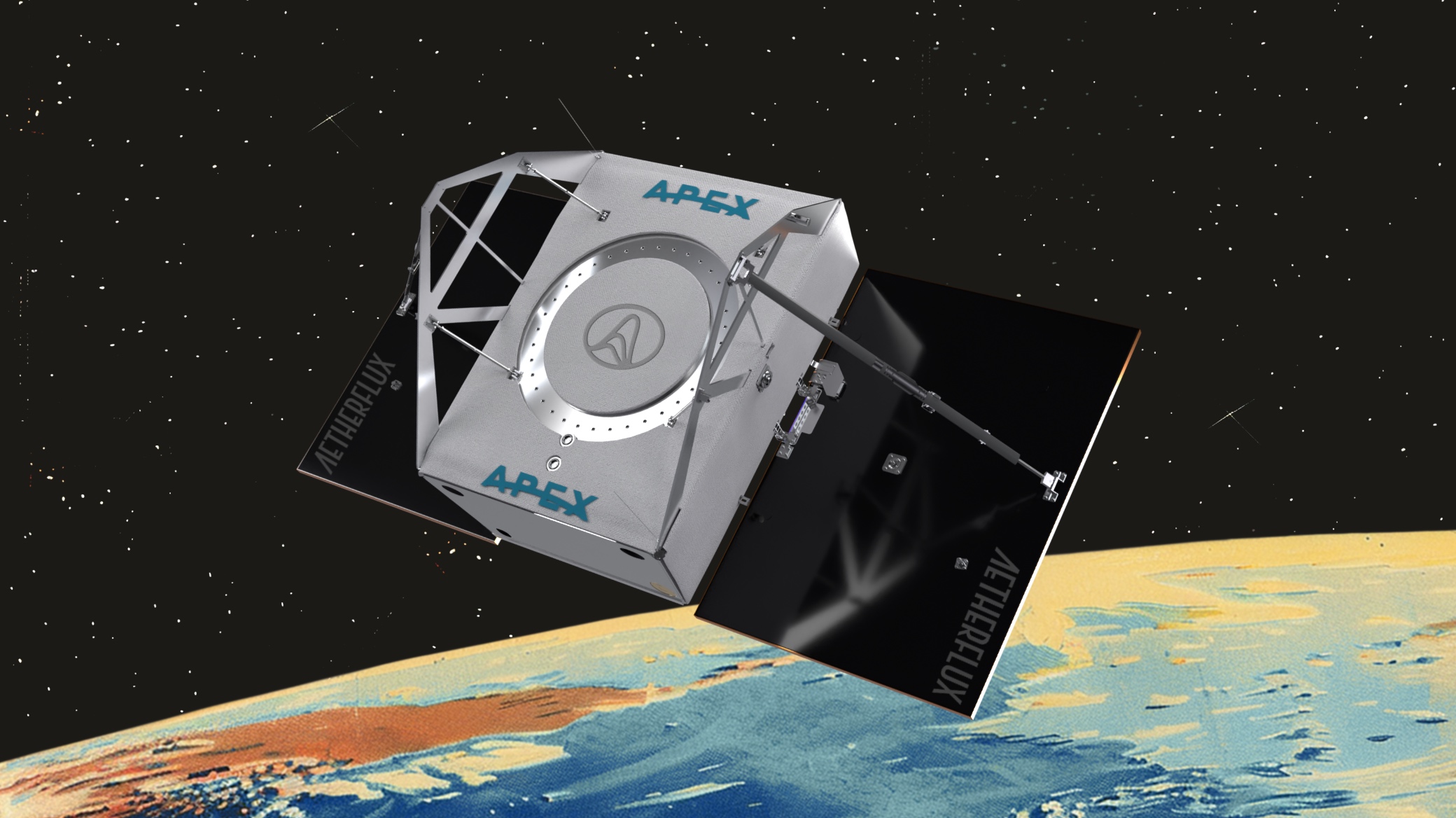
Aetherflux, a space-based solar technology company hoping to beam power down to Earth, is now throwing its hat into the orbital data center ring.
The company’s new “Galactic Brain” project aims to speed up artificial intelligence data center production processes that are hampered on Earth by energy requirements and construction timelines by launching a constellation of solar-powered satellites capable of the same computing power without the bulky infrastructure.

The announcement comes as AI computing power needs are rapidly increasing and major companies with skin already in the game such as OpenAI, Google and Amazon have begun seriously considering orbital solutions for their own computing needs.
“Satellites with localized AI compute, where just the results are beamed back from low-latency, sun-synchronous orbit, will be the lowest cost way to generate AI bitstreams in <3 years,” SpaceX CEO Elon Musk said about the topic in a Dec. 7 post on X.
Since its founding in 2024, California-based Aetherflux has focused its efforts on space-based solar power, with the goal of “building an American power grid in space,” and the company’s new Galactic Brain initiative fits neatly into that vision.
“Continuous solar power and advanced thermal systems remove the limits faced by Earth-based data centers,” the Aetherflux release said, describing the company’s planned power-beaming capabilities as “foundational” to its orbital data center initiative, “enabling energy collected in space to support not only compute in orbit but also power delivery on Earth.”
According to Aetherflux’s design, many small satellites will transmit energy through infrared lasers to ground stations, where the power and data can be subsequently distributed. “We anticipate powerbeaming to be dramatically more reliable than current solar power generation on the ground,” the release said.
The company hopes to launch its first power-beaming demonstration satellite to low Earth orbit sometime in 2026.










Related Posts


Stay Informed With the Latest & Most Important News
Previous Post
Next Post



Advertisement
-
 01Two Black Holes Observed Circling Each Other for the First Time
 -
 02From Polymerization-Enabled Folding and Assembly to Chemical Evolution: Key Processes for Emergence of Functional Polymers in the Origin of Life
 -
 03Astronomy 101: From the Sun and Moon to Wormholes and Warp Drive, Key Theories, Discoveries, and Facts about the Universe (The Adams 101 Series)
 -
 04True Anomaly hires former York Space executive as chief operating officer
 -
 05Φsat-2 begins science phase for AI Earth images
 -
 06Hurricane forecasters are losing 3 key satellites ahead of peak storm season − a meteorologist explains why it matters
 -
 07Binary star systems are complex astronomical objects − a new AI approach could pin down their properties quickly