
Now Reading: Startup bets on new approach to space-based missile defense
-
01
Startup bets on new approach to space-based missile defense



WASHINGTON — Wardstone is staking its future on the Pentagon’s appetite for orbital missile defense.
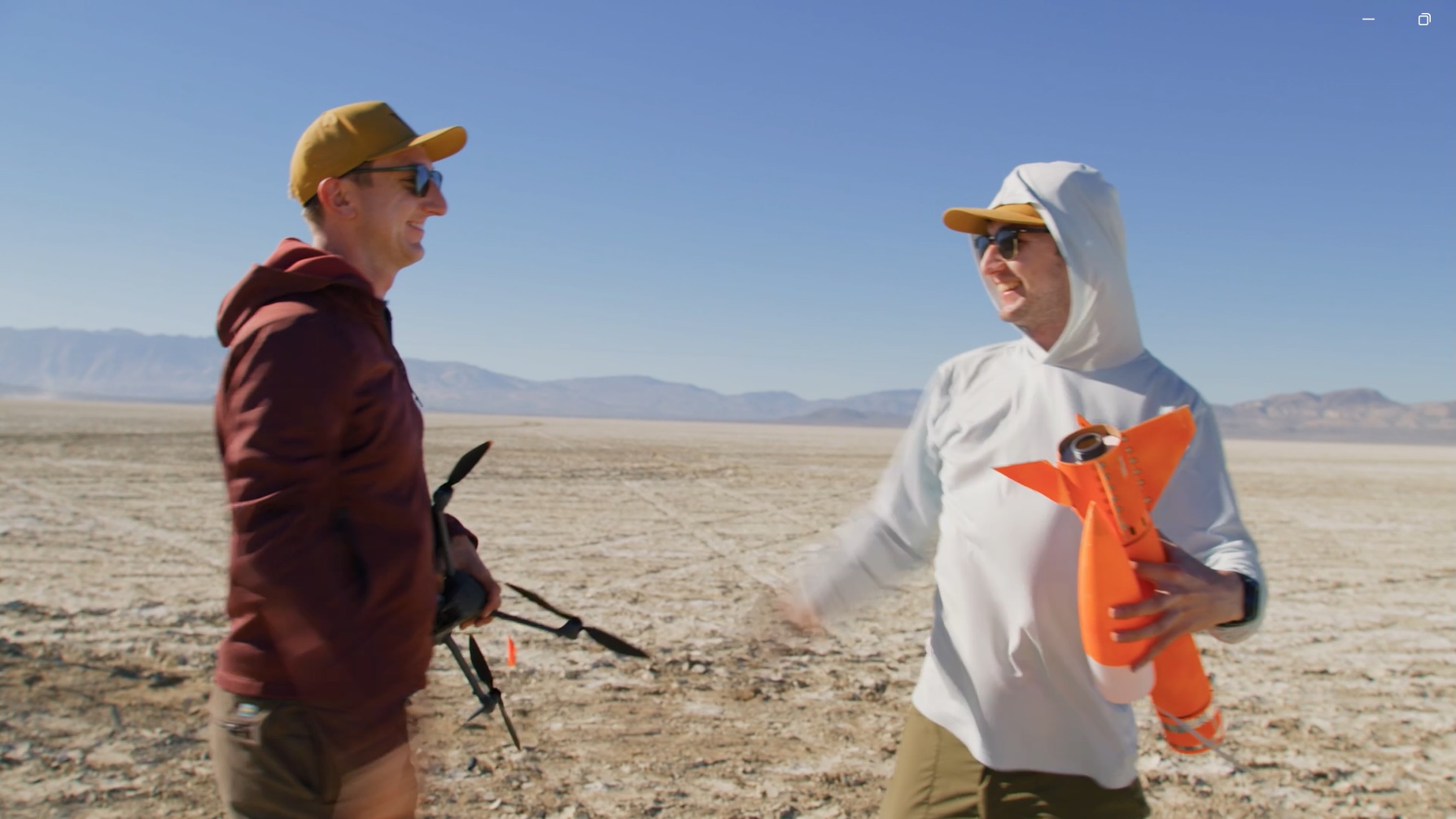
The California-based startup, founded by brothers Sebastian and Tobias Fischer, has raised about $5 million in seed funding and is preparing to test its first prototype interceptor vehicle this spring on a suborbital flight, Sebastian Fischer, the company’s chief executive, told SpaceNews.
Following participation in Y Combinator in fall 2025, Wardstone is setting up operations in El Segundo, California, a growing hub for aerospace startups. Y Combinator, the Silicon Valley accelerator known for backing early-stage technology firms, provides seed capital and mentorship in exchange for equity. In recent years, more defense and space ventures have entered its cohorts.
Wardstone is focused on developing satellites and associated systems designed to physically intercept and neutralize missile threats from orbit, including hypersonic missiles. Investors in the seed round include Nova Threshold, Liquid 2 Ventures, Bow Capital, B5 Capital and Allegis Capital.
The company aims to develop kinetic interceptors that ultimately could be launched from the ground or from space. “Our initial use case is counter hypersonics,” said Fischer. “We plan to expand for ballistic missiles and other space based threats as well.”
Destroying a target with ‘buckshot’
Its technical approach departs from traditional “hit-to-kill” interceptors, which rely on precise tracking to collide directly with an incoming warhead. “Our interceptors will actively track hypersonic threats and shortly before impact will deploy large particle clouds on the order of 1 km in diameter,” Fischer explained. “This approach increases the probability of intercept, reduces the required sensing and actuator costs that make current interceptors so expensive, and can even solve for the complications of hypersonic maneuvers or decoys.”
An analogy to explain this particle cloud approach towards hypersonic missile defense is “destroying a clay pigeon with shotgun buckshot instead of using a rifle with a single bullet,” Fischer said.
Hypersonic weapons, which travel at speeds greater than Mach 5 and can maneuver unpredictably, have posed a challenge to traditional missile defense systems designed primarily for ballistic trajectories. Under the Golden Dome program, the Pentagon is studying options for a layered defense architecture that could include space-based sensors and potentially interceptors.
Fischer said he heard about Golden Dome at an industry conference last summer and saw both a technical gap and a potential market. “There’s no proof that this whole space based interceptor thing will work, but I do think that there needs to be a variety of approaches applied towards developing space based interceptors to deliver a solution.”
Wardstone does not expect to compete in the current round of space-based interceptor prize challenges run by the Space Systems Command, which are aimed at supporting Golden Dome. The program seeks to deploy a layered, space-enabled missile defense architecture over the U.S. homeland and has explicitly encouraged nontraditional vendors and venture-backed firms to propose new approaches.
The company instead plans an incremental path. Wardstone aims to launch its first prototype interceptor in late April on a supersonic sounding rocket. Sounding rockets are suborbital launch vehicles used to test technologies in high-speed, high-altitude conditions without placing hardware into orbit. Fischer declined to identify the companies involved in the launch.
Competing with large primes
Beyond private investment, Wardstone intends to pursue Small Business Innovation Research contracts from the Space Force and the Missile Defense Agency once Congress reauthorizes the SBIR program, which remains on pause.
“This funding round will hold us over until it is reauthorized,” said Fischer. “We are also looking into IRAD funding opportunities.” Independent Research and Development, or IRAD, refers to company-funded research that can later be incorporated into government programs.
Starting a company to develop space-based interceptors places Wardstone in a sector long dominated by large defense contractors with deep ties to the Pentagon. Fischer acknowledged the challenge. “Having delivered products spanning satellites, drones, and self-driving cars, I feel a responsibility to use my experience to develop a space based interceptor to provide a solution for this problem for the United States,” he said. “I welcome the competition with large defense contractors.”
Before founding Wardstone, Fischer held roles at Amazon Prime Air, Cruise Self-Driving, Lockheed Martin and NASA. His brother Tobias previously worked on geostationary satellites at Astranis, a commercial satellite manufacturer.
Fischer argued that early-stage companies can pursue ideas that established contractors may view as too risky. Startups are “able to develop new concepts that large defense contractors might not have the risk appetite to pursue or are too far outside of the solutions that they currently have,” he said. “I am engaged in strategic collaborations with some traditional contractors in order to speed up testing and deployment using the systems, interfacing products, and infrastructure that they have a head start on.”
Ultimately, Fischer said, the United States “needs a variety of defensive measures, different approaches that will ensure it will be more difficult for our adversaries to evade.”










Related Posts

Stay Informed With the Latest & Most Important News
Previous Post
Next Post



Advertisement
-
 01Two Black Holes Observed Circling Each Other for the First Time
 -
 02From Polymerization-Enabled Folding and Assembly to Chemical Evolution: Key Processes for Emergence of Functional Polymers in the Origin of Life
 -
 03Astronomy 101: From the Sun and Moon to Wormholes and Warp Drive, Key Theories, Discoveries, and Facts about the Universe (The Adams 101 Series)
 -
 04True Anomaly hires former York Space executive as chief operating officer
 -
 05Φsat-2 begins science phase for AI Earth images
 -
 06Hurricane forecasters are losing 3 key satellites ahead of peak storm season − a meteorologist explains why it matters
 -
 07Binary star systems are complex astronomical objects − a new AI approach could pin down their properties quickly