
Now Reading: Struck by a cosmic ray: Galactic particles may have forced a passenger jet to make an emergency landing
-
01
Struck by a cosmic ray: Galactic particles may have forced a passenger jet to make an emergency landing

Struck by a cosmic ray: Galactic particles may have forced a passenger jet to make an emergency landing

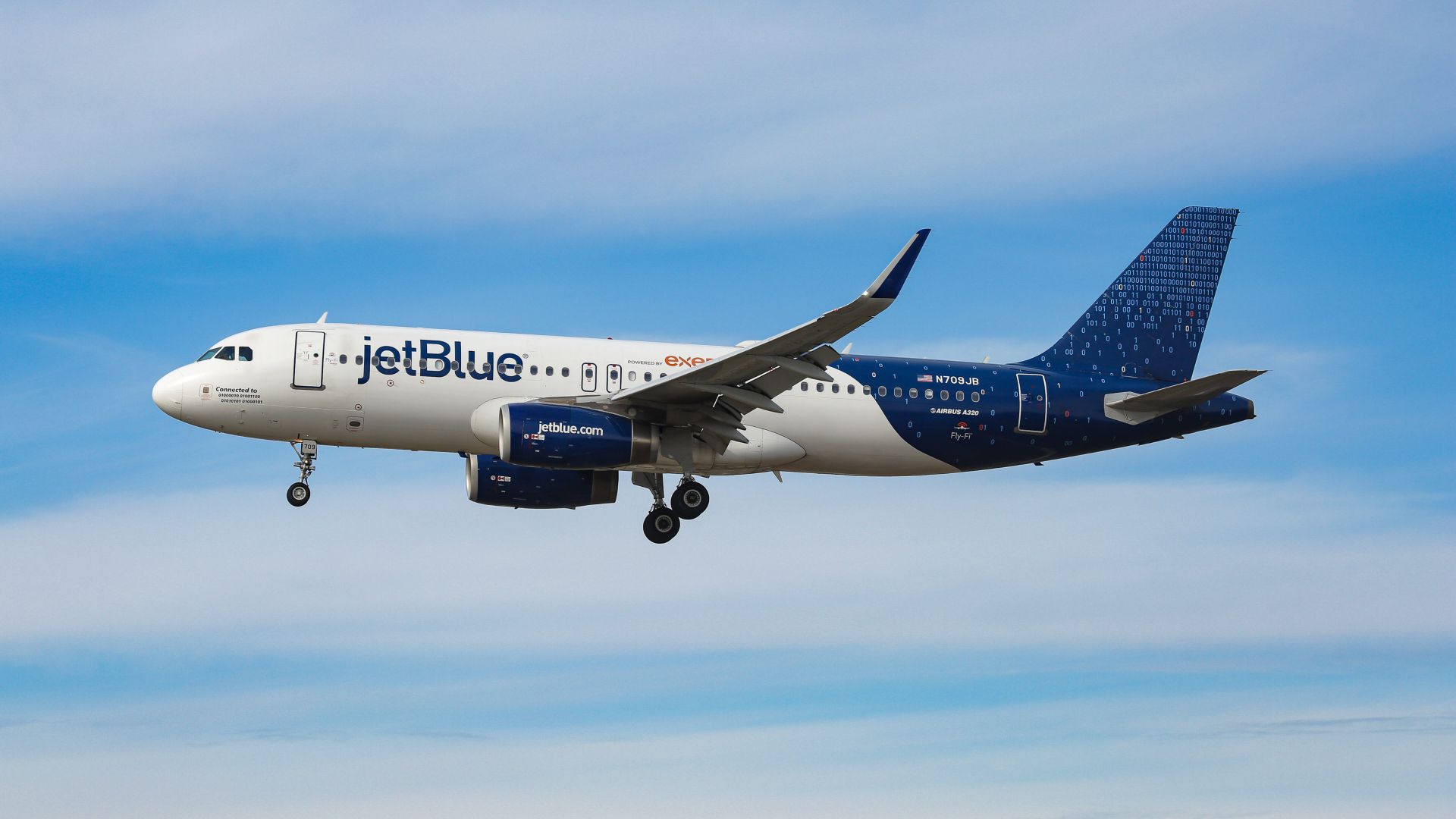
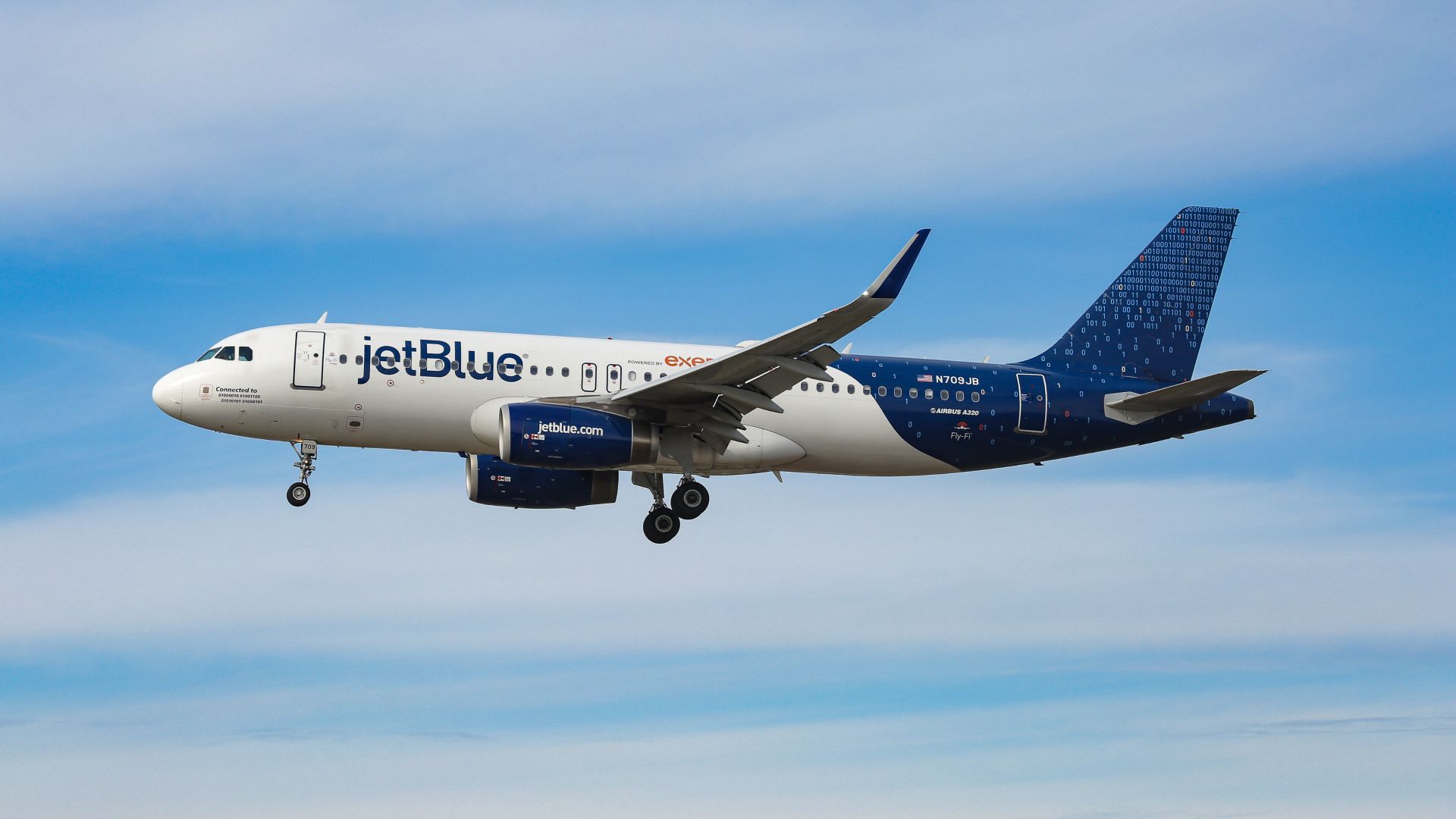
A stream of high-energy particles from a distant supernova explosion may have caused a packed passenger jet to suddenly lose altitude in late October, forcing an emergency landing.
The incident took place on Oct. 30 and involved a JetBlue Airbus A320 aircraft heading from Cancun, Mexico, to Newark in New Jersey. According to available reports, the aircraft suddenly dropped down in the air without an obvious reason while cruising above Florida. Although the pilots quickly regained control of the plane, at least 15 passengers were injured in the incident, forcing the pilots to make an emergency landing at Tampa International Airport. Earlier this week, Airbus issued a statement attributing the incident to “intense solar radiation” which may have corrupted “data critical to the functioning of flight controls.” The manufacturer subsequently grounded 6,000 A320s to roll out software updates to fix the vulnerability.
“[Cosmic rays] can interact with modern microelectronics and change the state of a circuit,” Dyer said. “They can cause a simple bit flip, like a 0 to 1 or 1 to 0. They can mess up information and make things go wrong. But they can cause hardware failures too, when they induce a current in an electronic device and burn it out.”
Cosmic rays frequently arise when massive stars explode in supernovas at the end of their lives. The explosions accelerate streams of protons, hurling them across the universe at the speed of light. Cosmic rays batter Earth’s atmosphere constantly, interacting with molecules of air and producing showers of exotic particles such as muons, high energy neutrons and positrons. As these particles rain down on Earth, they may hit an electronic circuit inside an aircraft sensor or onboard computer causing what researchers call a single-event upset.
Bursts of energy from the sun in the form of solar flares are also a source of such particles and can be dozens of times more energetic, or in extreme cases thousands of times, and therefore more damaging than particles from cosmic ray showers. When the sun gets active, incidents caused by single-event upsets in aircraft electronics may become more common.
In fact, less than two weeks after the JetBlue incident, potentially dangerous levels of solar radiation caused by a powerful solar flare persisted in the atmosphere at flight altitudes for several days. The Airbus software update therefore makes sense, even though, according to Dyer, solar activity couldn’t have been responsible for the BlueJet accident.
“It’s down to manufacturers to produce hardy electronics, especially in safety critical units,” Dyer said. “A slight problem is that over 20 years, they’ve become complacent, because there have not been any [significant solar weather] events.”
For Dyer, the effects of cosmic radiation on spacecraft and aircraft electronics are a life-long professional interest. In the 1980s, he was a part of a team that researched single-event upsets in spacecraft and later flew radiation monitors on the Concorde. He believes that single-event upsets in aircraft electronics due to cosmic rays, although rare, are not unprecedented.
In fact, Dyer thinks that a 2008 incident of the Quantas Flight 72 was likely produced by such a particle strike. Back then, the affected aircraft, an Airbus 330, nosedived twice on its own while cruising above the Pacific Ocean, creating brief spells of near weightlessness. Unfortunately, the passengers weren’t prepared to be suddenly thrown in the air and many sustained serious injuries.
Dyer, who served as an advisor in the investigation at that time, said that although the incident was traced back to faults in the aircraft’s electronic sensors, the investigation concluded without finding a definitive cause.
“They never got to the fundamental cause of the bit flip in the device,” Dyer said. “It was left open, surprisingly.”
With the sun being rather active lately, the chances of serious incidents caused by energetic solar flares are on the rise.
“You can get huge increases [in particle radiation] from the sun,” said Dyer. “A thousand times higher than cosmic rays, and then many aircraft could be bothered by it.”
The Airbus software update has certainly been needed, even though the JetBlue incident was unlikely caused by solar weather. Airbus has yet to respond to Space.com’s request for comment at time of publication.










Related Posts

Stay Informed With the Latest & Most Important News
Previous Post
Next Post
Previous Post
Next Post

Advertisement
-
 01Two Black Holes Observed Circling Each Other for the First Time
 -
 02From Polymerization-Enabled Folding and Assembly to Chemical Evolution: Key Processes for Emergence of Functional Polymers in the Origin of Life
 -
 03Astronomy 101: From the Sun and Moon to Wormholes and Warp Drive, Key Theories, Discoveries, and Facts about the Universe (The Adams 101 Series)
 -
 04True Anomaly hires former York Space executive as chief operating officer
 -
 05Φsat-2 begins science phase for AI Earth images
 -
 06Hurricane forecasters are losing 3 key satellites ahead of peak storm season − a meteorologist explains why it matters
 -
 07Binary star systems are complex astronomical objects − a new AI approach could pin down their properties quickly