
Now Reading: Subsurface Life On Earth As A Key To Unlock Extraterrestrial Mysteries
-
01
Subsurface Life On Earth As A Key To Unlock Extraterrestrial Mysteries


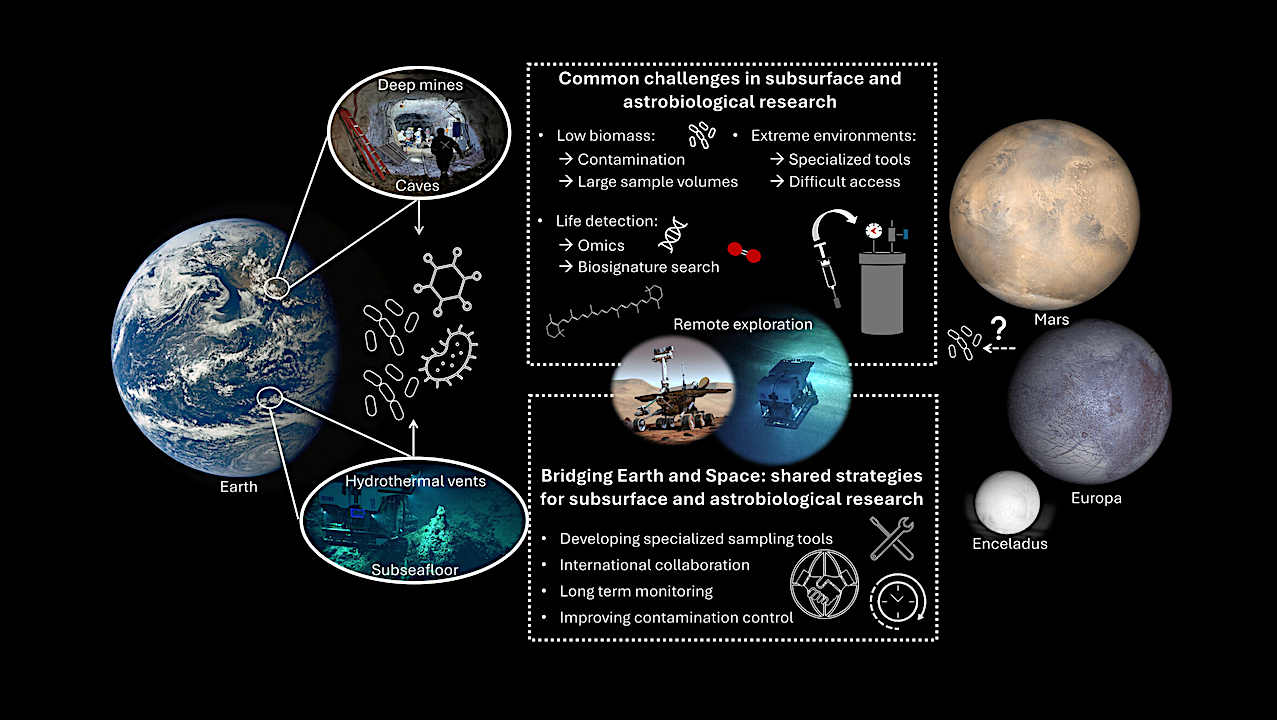
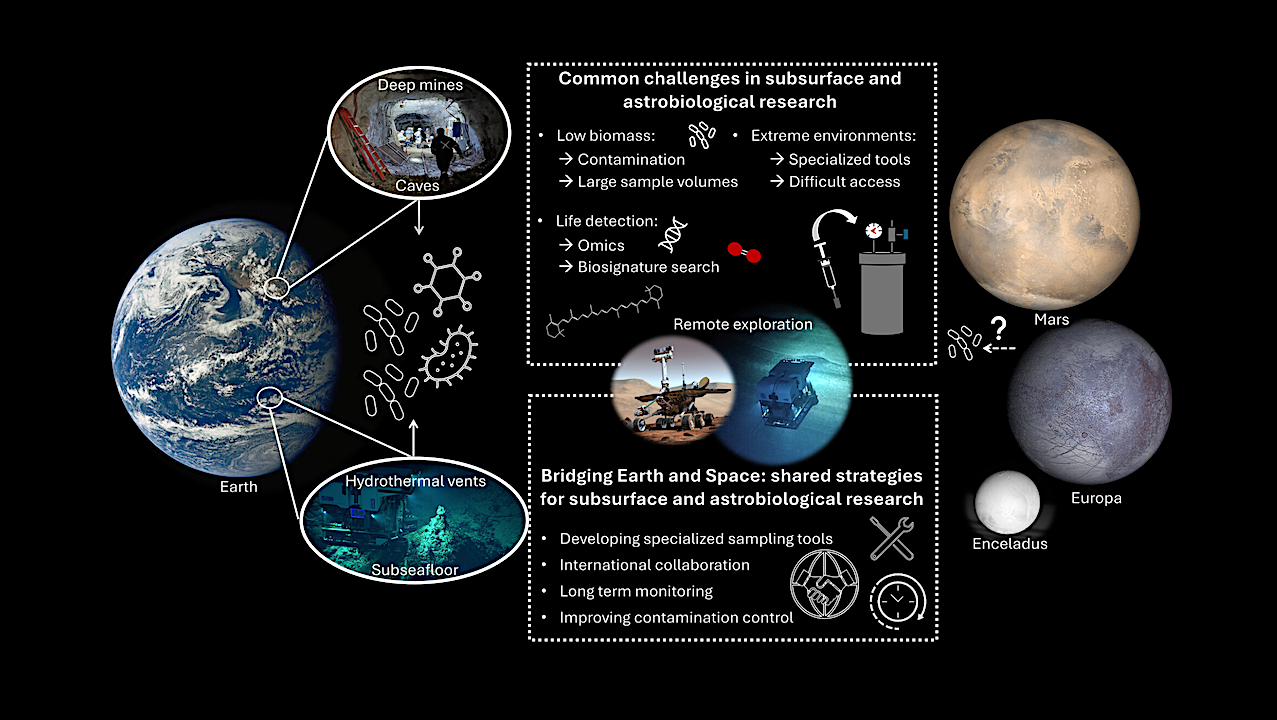
Graphical Abstract — Microbial Biotechnology via PubMed
The first forms of life on Earth were microbial, preceding the evolution of multicellular life by more than two billion years.
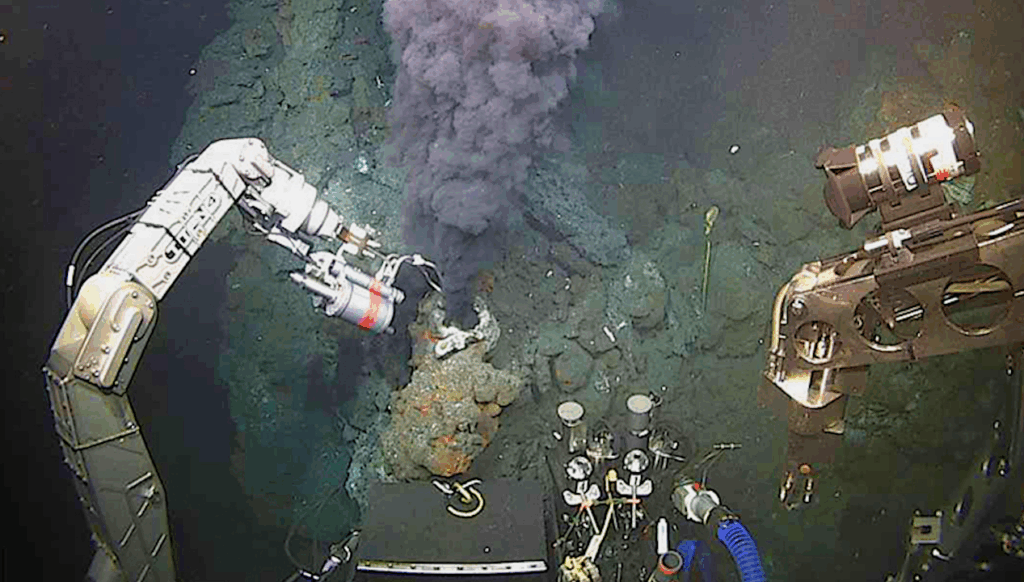
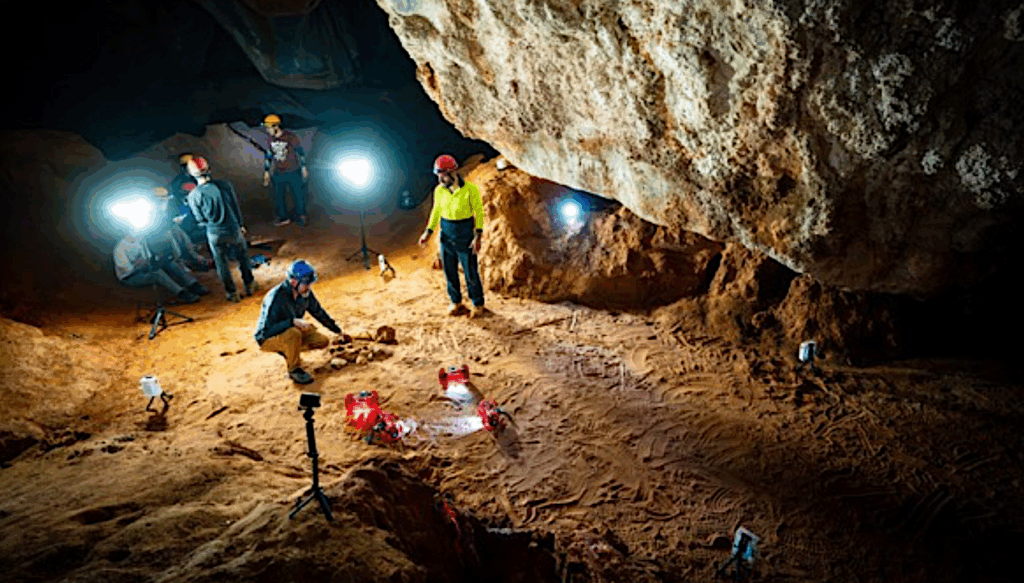
Based on our current understanding of the origin of life, it is likely that the first life forms on any extraterrestrial world would also be microbial. Due to the extreme temperatures, radiation or aridity on most planetary surfaces, such extraterrestrial microbes would most likely dwell in subsurface environments. Earth’s subsurface features a wide range of environments, including deep marine sediments, crustal aquifers, rock fracture fluids, hydrocarbon reservoirs, caves and permafrost soils.
These environments are known to host an immense diversity of life forms, predominantly microbes that survive or even thrive under extreme conditions and energy scarcity. Life’s ability to endure and possibly evolve in Earth’s subsurface lends credence to the possible existence of life beyond our planet and provides a blueprint for the extraterrestrial life forms and biosignatures we might expect.
The exploration of space via extraterrestrial samples analysed on Earth, in situ extraterrestrial analyses, and remote sensing continue to advance our search for and understanding of potential biosignatures on other planetary bodies. But by investigating Earth’s deep, dark and isolated ecosystems, we not only broaden our understanding of life’s adaptability but also refine our strategies and technologies for detecting life on other planets and moons.
Subsurface exploration is not just a frontier of Earth science—it is a cornerstone of astrobiology and in the pursuit of understanding the multitude of processes that could create and sustain life anywhere.
In this opinion article, we discuss the latest highlights in subsurface research and technology, how Earth’s subsurface environments serve as models for potential environments on other planetary bodies, why insights into subsurface microbiomes inform the search for life elsewhere, and which technologies and developments will advance the field in the future.
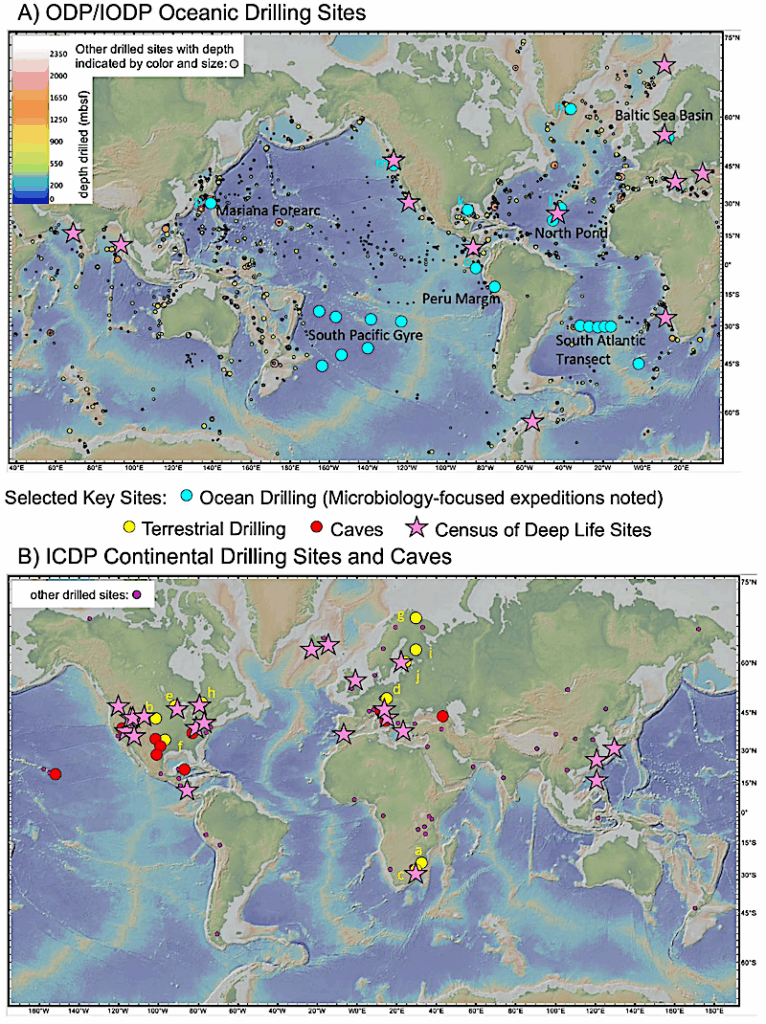
Distribution and locations of subsurface drilling sites. (A) Location of Ocean Drilling Programme (ODP) and International Ocean Drilling Programme/Integrated Ocean Discovery Programme (IODP) drilling sites. Colour and size of location markers both indicate depth drilled in metres below seafloor (mbsf). (B) Location of caves of interest and International Continental Drilling Programme (ICDP) drilling sites, indicated with magenta circle markers. Boreholes, mines and caves of interest (also noted in this figure) are indicated by the larger stars: ocean drilling boreholes in blue, continental drilling boreholes in yellow and caves of interest in red. — Microbial Biotechnology via PubMed
Astrobiology, Oceanography










Related Posts
Stay Informed With the Latest & Most Important News
Previous Post
Next Post




Advertisement
-
 01Two Black Holes Observed Circling Each Other for the First Time
 -
 02From Polymerization-Enabled Folding and Assembly to Chemical Evolution: Key Processes for Emergence of Functional Polymers in the Origin of Life
 -
 03Astronomy 101: From the Sun and Moon to Wormholes and Warp Drive, Key Theories, Discoveries, and Facts about the Universe (The Adams 101 Series)
 -
 04True Anomaly hires former York Space executive as chief operating officer
 -
 05Φsat-2 begins science phase for AI Earth images
 -
 06Hurricane forecasters are losing 3 key satellites ahead of peak storm season − a meteorologist explains why it matters
 -
 07Binary star systems are complex astronomical objects − a new AI approach could pin down their properties quickly