
Now Reading: Telus invests in AST SpaceMobile to expand D2D coverage in Canada
-
01
Telus invests in AST SpaceMobile to expand D2D coverage in Canada


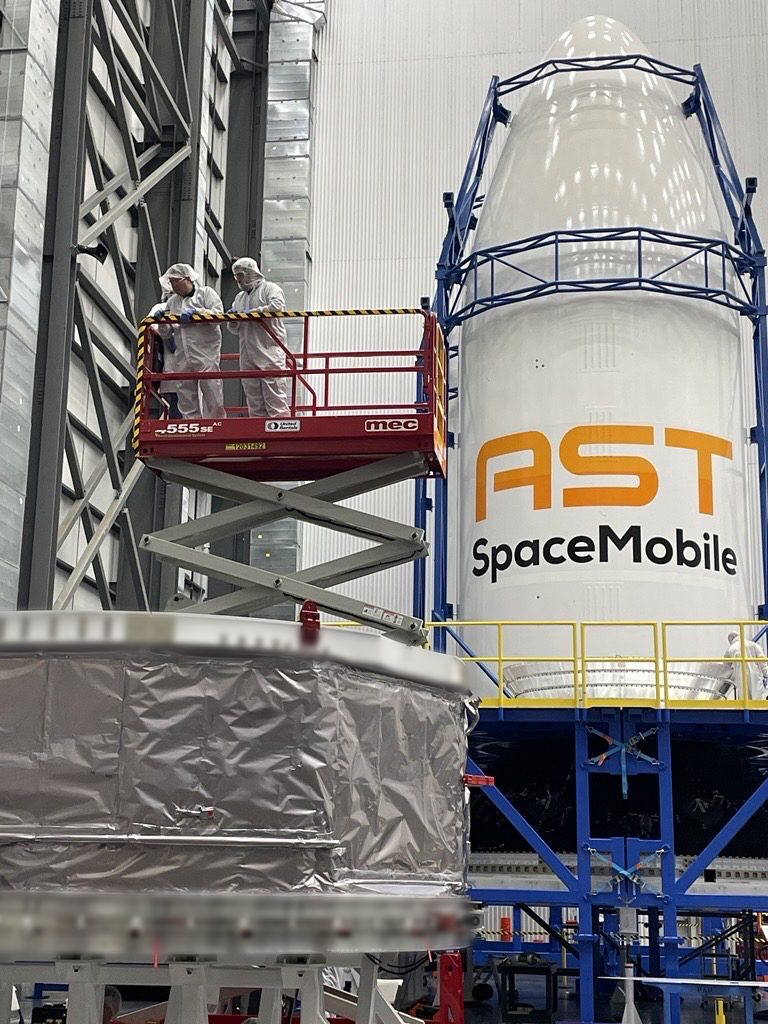

TAMPA, Fla. — Canadian telco Telus has agreed to take a stake in AST SpaceMobile and invest in ground infrastructure needed to connect subscribers to the operator’s planned direct-to-smartphone constellation.
The companies said March 3 they had signed the commercial agreement as part of plans to extend coverage for texts, calls and data for unmodified phones to Canada’s most remote locations from late 2026.
“Canada’s vast geography, remote industries and dispersed communities make universal connectivity both a challenge and a necessity,” said Chris Ivory, chef commercial officer at Texas-based AST SpaceMobile.
Financial details were not disclosed.
The partnership follows a similar agreement with Bell, another of Canada’s three dominant wireless carriers, which first partnered with AST SpaceMobile in 2021 and backs the company through its corporate venture arm. Bell also owns the ground stations that would connect satellites directly to user devices.
Rogers, which holds the remaining roughly one-third share of Canada’s mobile subscribers, began connecting phones late last year using SpaceX’s rival Starlink Mobile network.
To date, AST SpaceMobile has announced definitive customer agreements with AT&T and Verizon in the United States, United Kingdom-based Vodafone and Saudi Arabia’s stc Group.
Finding partners
AST SpaceMobile has announced a raft of other terrestrial partnerships this week during Mobile World Congress in Barcelona, Spain.
Spain’s Telefónica, France’s Orange, Switzerland’s Sunrise and CK Hutchison of Hong Kong said they are exploring connecting European operations with Satellite Connect Europe, the Luxembourg-based joint venture AST SpaceMobile forged with Vodafone to distribute services in the region.
Taiwan Mobile also announced an agreement to explore using AST SpaceMobile’s low Earth orbit (LEO) network in the Asian country.
Meanwhile, Germany-based Deutsche Telekom unveiled plans to deliver next-generation Starlink Mobile services across 10 countries in Europe in 2028, shortly after Telefónica’s British operations marked the first commercial deployment of its service in the region.
Awaiting deployment
AST SpaceMobile deployed BlueBird-6 late last year, the first of its next-generation Block 2 satellites, and recently unfolded its 223 square meter antenna, the largest commercial communications array placed in LEO and designed to deliver more than 120 megabits per second peak data speeds.
The spacecraft follows five smaller BlueBird satellites launched in 2024 that are currently being used for testing direct-to-device (D2D) connectivity with partners.
While the company has demonstrated voice calls, broadband data and video streaming from space to standard smartphones, the services are not yet commercially available.
AST SpaceMobile plans to deploy at least 45 BlueBird Block 2 satellites by the end of 2026, with intermittent services expected in some markets following the deployment of its first 25 spacecraft.
BlueBird 7, the next spacecraft in the series, is scheduled to launch later this month on Blue Origin’s New Glenn rocket.
Revenue ramp and spectrum challenges
AST SpaceMobile has been generating revenue in the interim from telco partners ordering ground stations to enable the service, as well as work with the U.S. government.
The operator reported about $54 million in revenue for the three months to Dec. 31, and expects at least $140 million in sales in 2026, roughly double the year before, excluding contributions from the activation of commercial service.
Boosted by service revenue, AST SpaceMobile chief strategy officer Scott Wisniewski pointed to a revenue opportunity nearing $1 billion for 2027 on the earnings call.
The company is also seeking regulatory approval to access additional satellite spectrum in North America to improve services, via a proposed arrangement with bankrupt satellite operator Ligado Networks.
However, the proposal has drawn opposition from satellite operators and industry groups, including Iridium and the Satellite Safety Alliance, which argue the plan could create harmful interference with existing L-band services.










Related Posts

Stay Informed With the Latest & Most Important News
Previous Post
Next Post




Advertisement
-
 01Two Black Holes Observed Circling Each Other for the First Time
 -
 02From Polymerization-Enabled Folding and Assembly to Chemical Evolution: Key Processes for Emergence of Functional Polymers in the Origin of Life
 -
 03Astronomy 101: From the Sun and Moon to Wormholes and Warp Drive, Key Theories, Discoveries, and Facts about the Universe (The Adams 101 Series)
 -
 04True Anomaly hires former York Space executive as chief operating officer
 -
 05Φsat-2 begins science phase for AI Earth images
 -
 06Hurricane forecasters are losing 3 key satellites ahead of peak storm season − a meteorologist explains why it matters
 -
 07Binary star systems are complex astronomical objects − a new AI approach could pin down their properties quickly