
Now Reading: The future of astronomy is both on Earth and in space
-
01
The future of astronomy is both on Earth and in space


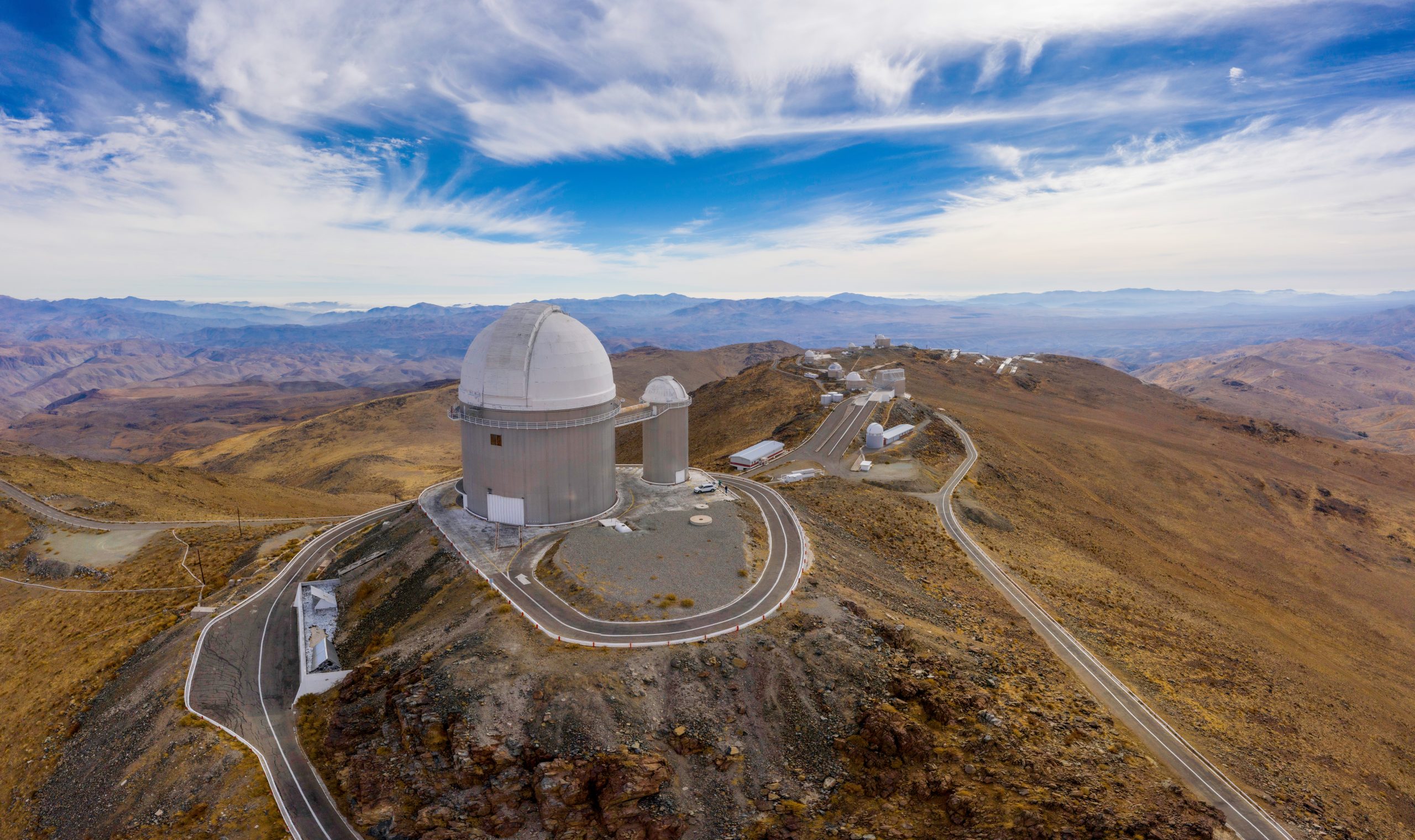

A recent SpaceNews opinion article argued that it is time to “take astronomy off Earth.” The suggestion is straightforward: If satellite constellations and commercial space activity threaten ground-based astronomy, perhaps astronomers should simply move their work into space.
As current, incoming and past presidents of the American Astronomical Society, we feel impelled to respond.
As leaders in our professional field, we have spent countless hours in the rooms where decisions are made that shape humanity’s ability to understand the universe — at NASA, the National Science Foundation and the National Academies. We share the concern that motivates the recent commentary: We must protect our ability to observe the cosmos we are part of. But the idea that astronomy can simply relocate off Earth misunderstands how modern astronomy works and sidesteps deeper questions about how companies are choosing to operate in space.
The commentary, from the perspective of the National Space Society, also mischaracterizes ongoing policy efforts. The Dark and Quiet Skies Act, cited as having failed, was actually only introduced late in the previous congressional session, and has been reintroduced. The bipartisan support for this bill reflects the growing recognition that preserving the night sky is a shared responsibility of scientists, industry and policymakers. These efforts exist because humanity’s access to the universe is essential and requires responsible stewardship of the space environment.
To be sure, astronomers have considered space-based observing for generations, well before the boom in the satellite industry that is underway. This is not a new idea. But there are good reasons we have not moved wholesale into orbit.
Collectively, the authors of this response have used nearly every major telescope operating today, both on the ground and in space, in the effort to understand both the universe and our place within it. Astronomers are scavengers for light. We use whatever photons the universe sends us, and we have become remarkably adept at decoding them. We observe from remote mountaintops in Chile and Hawai‘i, from the Atacama Desert and Antarctica. We observe from space with Hubble, Chandra and the James Webb Space Telescope and their predecessors. We work at radio wavelengths with antennas larger than football fields and with interferometers that link telescopes across continents. We do not choose Earth or space as a matter of ideology. We use both because each does something the other cannot.
Space telescopes are extraordinary tools. Hubble transformed our understanding of galaxies. Webb is reshaping what we know about the early universe. But space missions are expensive, finite, have limited tools and are largely unserviceable once deployed. They are optimized for specific questions and limited wavelength ranges. Ground-based observatories, by contrast, evolve. Instruments are upgraded. Mirrors are recoated. New capabilities are added. A new generation of large telescopes, both proposed and underway, would be impossible from space for the foreseeable future. For example, the Extremely Large Telescope now rising in Chile, as well as the Giant Magellan Telescope and Thirty Meter Telescope that are under development, will collect more light than any optical telescopes ever built. The recently completed Vera C. Rubin Observatory has the unique capability to scan most of the sky every few days, crucial for the detection of transient events and objects including near-Earth asteroids. There are no orbital equivalents currently, and none on the horizon.
More to the point: moving astronomy to space does not solve the underlying problem. It avoids it.
The challenges facing ground-based astronomy — optical interference from satellite trails, radio contamination, orbital congestion — stem from policy choices and engineering decisions. They are not inevitable consequences of progress in our space ambitions. Leaving Earth behind would mean letting commercial interests set the rules for access to the sky, and that is not a precedent humanity should accept.
There is also a harder reality emerging in orbit itself. As industry analysts are well aware, low Earth orbit (LEO) is becoming crowded. Many thousands of satellites are already in place, and nearly 2 million have been proposed. Even if only a fraction are launched, they will radically outnumber the roughly 5,000 stars visible to the unaided human eye under dark skies. Beyond the satellites themselves, there is debris. More than 30,000 pieces of trackable debris larger than 10 centimeters are currently monitored in orbit, and millions of smaller fragments are estimated to exist — each of which could fatally damage a spacecraft.
Ironically, the argument that astronomy should move to space to avoid interference overlooks this growing instability in orbit itself. If debris generation continues unchecked, various orbital regimes could become increasingly hazardous to use, complicating not only scientific missions but also weather monitoring, GPS, communications and other services that modern societies (and their economies) rely on every day.
What have we gained in going to space if, in the process, we have cut off all of humanity from the night sky?
The night sky has always been a shared domain, and modern astronomy grew from that shared inheritance. The recent opinion article also dismisses concerns about humanity’s experience of the night sky as if only what can be easily quantified has value. But astronomy has never been solely about data collection. The night sky is the most accessible scientific laboratory humanity has. Access to the night sky is also not “nostalgic” as argued in the commentary. The ability to see the universe directly has inspired generations to pursue science, engineering and discovery. Removing that shared point of access would not just affect professional astronomy; it would weaken the very foundation from which future scientific capability grows.
Today, ground-based facilities remain essential not only for discovery, but for training students, testing instrumentation and responding quickly to transient events — supernovae, near-Earth asteroids, gravitational-wave counterparts. These require distributed networks of telescopes working together. They cannot be replaced by a handful of space missions. Nor are space missions independent of Earth. Every telescope placed in orbit depends on terrestrial infrastructure and the research ecosystem sustained by ground-based science.
None of this is an argument against exploration or responsible use of our shared space commons. Astronomy has always advanced by extending its reach — from Galileo’s first instrument to radio arrays to space observatories. We welcome innovation. But innovation does not require displacement, it requires coordination.
Satellite operators and astronomers have already begun working together through mitigation strategies and coordination agreements to enable commercial interests, science and public access to the night sky to coexist. Satellite operators can reduce optical brightness. Spectrum protections can be strengthened. Debris mitigation must be enforced. Launch practices should be evaluated not only individually, but cumulatively. International governance must recognize that LEO and the night sky function as a shared commons, not blank canvases. Coexistence is possible, and as the commentary from the National Space Society leaders argues, the path forward lies in collaboration.
Framing the choice as “move astronomy or accept interference” presents a false binary. The real question is whether we are willing to manage shared domains responsibly as activity accelerates.
Astronomy does not belong off Earth. It belongs wherever the universe can be observed — and that necessarily includes the surface of the planet humans live on.
Signed,
Kelsey Johnson: Past President of the American Astronomical Society, Past President of the Astronomical Society of the Pacific, and Professor of Astronomy at University of Virginia.
Dara Norman: Current President of the American Astronomical Society.
Marcel Agüeros: President-elect of the American Astronomical Society and Professor of Astronomy, Columbia University.
Megan Donahue: Past President of the American Astronomical Society and University Distinguished Professor of Physics and Astronomy, Michigan State University.
Andrea K. Dupree: Past President of the American Astronomical Society and Senior Astrophysicist, Center for Astrophysics | Harvard & Smithsonian.
Debra Elmegreen: Past President of the American Astronomical Society, Past President of the International Astronomical Union, and Emerita Professor of Astronomy, Vassar College.
Robert D. Gehrz: Past President of the American Astronomical Society and Emeritus Professor of Physics and Astronomy, University of Minnesota.
David J. Helfand: Past President of the American Astronomical Society and and Professor of Astronomy, Columbia University.
Robert P. Kirshner: Past President of the American Astronomical Society and Executive Director Thirty Meter Telescope International Observatory.
Catherine Pilachowski: Past President of the American Astronomical Society.
Anneila I Sargent: Past President of the American Astronomical Society and Bowen Professor of Astronomy Emeritus Cahill Center for Astrophysics , California Institute of Technology.
Paula Szkody: Past President of the American Astronomical Society, Past President of the American Association of Variable Star Observers, and Professor at University of Washington.
C. Megan Urry: Past President of the American Astronomical Society and Israel Munson Professor of Physics and Astronomy, Yale University.
J. Craig Wheeler: Past President of the American Astronomical Society and Emeritus Professor of Astronomy, The University of Texas at Austin.
Sidney Wolff: Past President of the American Astronomical Society and Astronomy Emerita, NOIRLab.
SpaceNews is committed to publishing our community’s diverse perspectives. Whether you’re an academic, executive, engineer or even just a concerned citizen of the cosmos, send your arguments and viewpoints to opinion (at) spacenews.com to be considered for publication online or in our next magazine. If you have something to submit, read some of our recent opinion articles and our submission guidelines to get a sense of what we’re looking for. The perspectives shared in these opinion articles are solely those of the authors and do not necessarily represent their employers or professional affiliations.










Related Posts

Stay Informed With the Latest & Most Important News
Previous Post
Next Post
Advertisement
-
 01Two Black Holes Observed Circling Each Other for the First Time
 -
 02From Polymerization-Enabled Folding and Assembly to Chemical Evolution: Key Processes for Emergence of Functional Polymers in the Origin of Life
 -
 03Astronomy 101: From the Sun and Moon to Wormholes and Warp Drive, Key Theories, Discoveries, and Facts about the Universe (The Adams 101 Series)
 -
 04True Anomaly hires former York Space executive as chief operating officer
 -
 05Φsat-2 begins science phase for AI Earth images
 -
 06Hurricane forecasters are losing 3 key satellites ahead of peak storm season − a meteorologist explains why it matters
 -
 07Binary star systems are complex astronomical objects − a new AI approach could pin down their properties quickly