
Now Reading: The ‘ground truth’ gap in AgTech: Why satellites alone can’t save supply chains
-
01
The ‘ground truth’ gap in AgTech: Why satellites alone can’t save supply chains


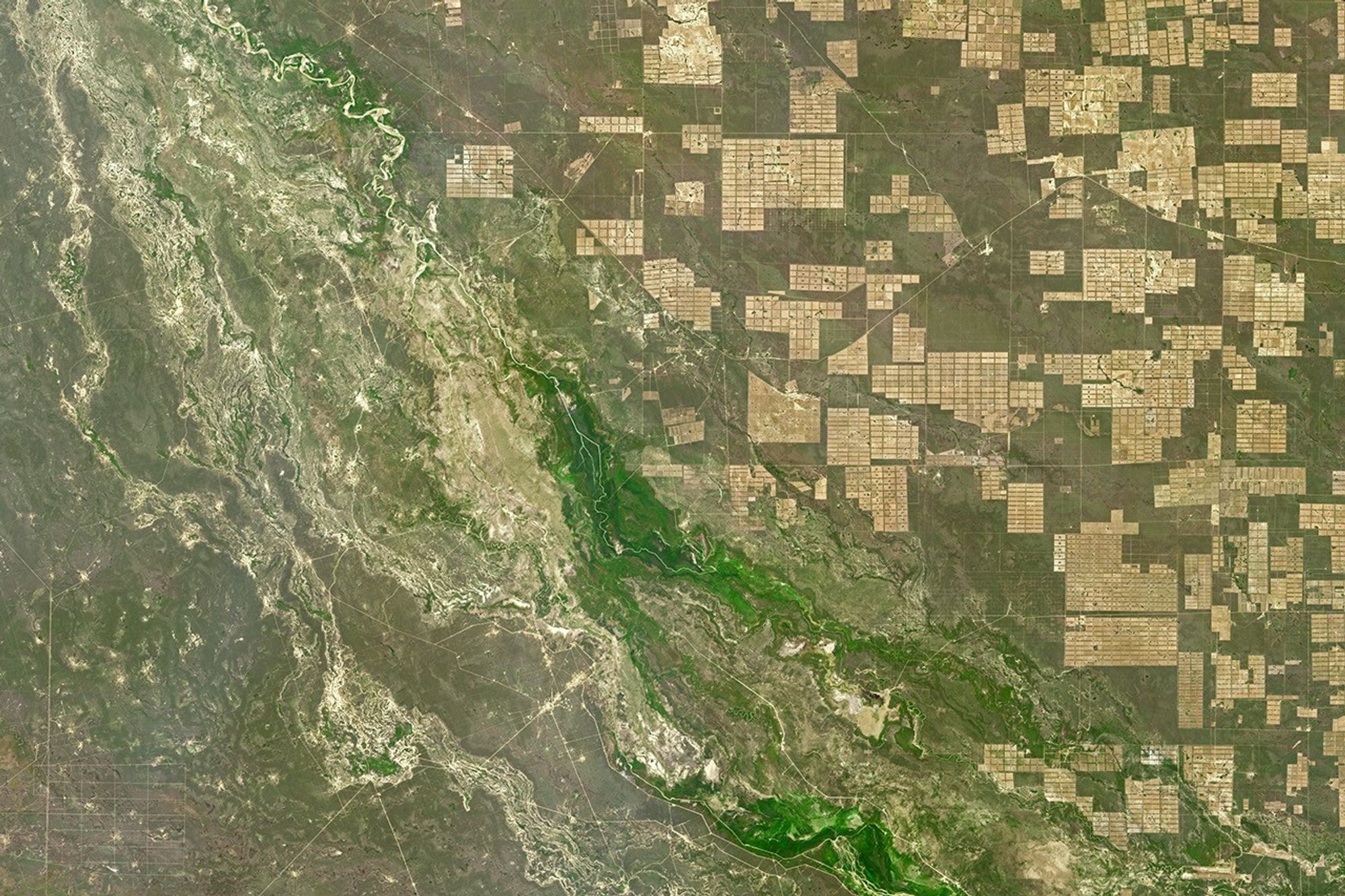

The Earth observation sector is experiencing a golden age. Satellite hardware and launch costs have plummeted, and computer power, driven by AI and analytics, continues to improve. That’s led to a genuine revolution in precision agriculture and automated supply chain monitoring.
For agribusinesses, investors and regulators, it’s an appealing mix: using satellite technology to track crop yields, monitor deforestation and ensure regulatory compliance without anyone ever having to set foot in the mud.
However, as impressive as the AgTech market is, there’s a critical vulnerability: an over-reliance on using satellite imagery and algorithms to interpret complex human geographies.
This over-reliance is creating a dangerous “ground truth gap” — a gap between what the satellite imagery suggests and reality on the ground.
The pixel and the problem: the need for human insights
Today’s orbital tech is incredible, but there are several limitations. AI models are limited by what they’re trained on. And while they’re excellent at detecting changes in forest cover from satellite imagery, they cannot accurately determine intent or causality, and they don’t take into account complex local dynamics or on-the-ground realities.
When data inputs are processed without human insights, solid underlying baselines and on-the-ground data, these tools oversimplify complex situations. For commodity buyers facing strict legislation such as the incoming EU Deforestation Regulation (EUDR), a false positive marks the start of a painful process. It triggers unintended consequences that can lead to the unfair exclusion of suppliers, including smallholders, who lack the resources to provide immediate compliance data.
The danger of supply chain exclusion
If a company panics at a false AI alert and immediately cuts ties with a supplier or a smallholder cooperative, the technology has failed its mandate. This path of least resistance — supply chain exclusion — might instantly clean up a corporate spreadsheet and create an illusion of compliance, but it fails to solve the problem.
By doing so, companies are not stopping deforestation; they are merely displacing it, or in some cases, exacerbating it. Suppliers who are frozen out because of tech alerts do not disappear. Instead, they often continue operating the same way, moving their products to so-called leakage markets — regions or buyers with lower standards and less scrutiny.
Bridging the gap: What companies can do now
To drive real change and avoid becoming over-reliant on satellite tech, companies must move beyond simple automated compliance and prioritise social equity alongside environmental protection. Here are four concrete steps organizations can take:
1. Anchor monitoring systems in accurate, up-to-date baselines
Companies must ensure that deforestation alerts are generated from verified, current land-use baselines rather than outdated or generic datasets. Weak baselines lead to overwhelming false positives, misdirected resources and unnecessary supplier friction.
Monitoring systems should also enable precise supplier attribution — clearly identifying which supplier, concession or smallholder plot is linked to an alert, and mapping the full supply chain connection. Without traceability to the source, alerts cannot translate into meaningful accountability or corrective action
2. Implement an alert response protocol grounded in human-verified data
In rare or disputed cases where automated screening is insufficient, companies should activate a clear response protocol for high-risk tree-cover loss alerts. This should require suppliers to conduct on-the-ground verification to establish context, such as whether clearing was intentional, accidental, legally permitted or linked to complex land tenure issues. Automated alerts flag risk. Field verification determines accountability.
3. Invest in localized partnerships and implementation experts
Orbital solutions cannot solely solve problems rooted in human geography. Companies should partner with implementation experts such as Earthqualizer, local NGOs and field teams who possess the on-the-ground knowledge and nuance required to engage suppliers, including smallholders, fairly and accurately interpret satellite data.
4. Shift from supply chain exclusion to Recovery and Re-Entry Programs
When remote sensing confirms a non-compliant event against No Deforestation, No Peat, No Exploitation policies, companies should carefully consider their default response. Rather than moving immediately to suspension, they can activate structured supplier engagement mechanisms — often formalized as Recovery and Re-Entry Programs.
By providing a pathway for suppliers to acknowledge responsibility, restore affected areas, and regain market access, companies can convert compliance risk into a structured process for rehabilitation and long-term forest protection.
Satellites and AI have given us greater visibility and are indispensable tools in the fight for sustainable supply chains. But they are exactly that: tools. Getting compliance data from space is an incredible first step, but it fails without an accurate baseline and verifiable, on-the-ground action. The future of sustainability is about pairing satellite technology and AI with human insight, acknowledging the complexities of the ground truth, and working towards a fairer, more sustainable future for everyone.
Priscillia Moulin is the co-founder and Director of Strategy at MosaiX and a senior advisor at the Earthqualizer Foundation and Inovasi Digital.
SpaceNews is committed to publishing our community’s diverse perspectives. Whether you’re an academic, executive, engineer or even just a concerned citizen of the cosmos, send your arguments and viewpoints to opinion (at) spacenews.com to be considered for publication online or in our next magazine. If you have something to submit, read some of our recent opinion articles and our submission guidelines to get a sense of what we’re looking for. The perspectives shared in these opinion articles are solely those of the authors and do not necessarily represent their employers or professional affiliations.










Related Posts


Stay Informed With the Latest & Most Important News
Previous Post
Next Post



Advertisement
-
 01Two Black Holes Observed Circling Each Other for the First Time
 -
 02From Polymerization-Enabled Folding and Assembly to Chemical Evolution: Key Processes for Emergence of Functional Polymers in the Origin of Life
 -
 03Astronomy 101: From the Sun and Moon to Wormholes and Warp Drive, Key Theories, Discoveries, and Facts about the Universe (The Adams 101 Series)
 -
 04True Anomaly hires former York Space executive as chief operating officer
 -
 05Φsat-2 begins science phase for AI Earth images
 -
 06Hurricane forecasters are losing 3 key satellites ahead of peak storm season − a meteorologist explains why it matters
 -
 07Binary star systems are complex astronomical objects − a new AI approach could pin down their properties quickly