
Now Reading: The Impact Of Supermassive Black Holes On Exoplanet Habitability: I. Spanning The Natural Mass Range
-
01
The Impact Of Supermassive Black Holes On Exoplanet Habitability: I. Spanning The Natural Mass Range

The Impact Of Supermassive Black Holes On Exoplanet Habitability: I. Spanning The Natural Mass Range

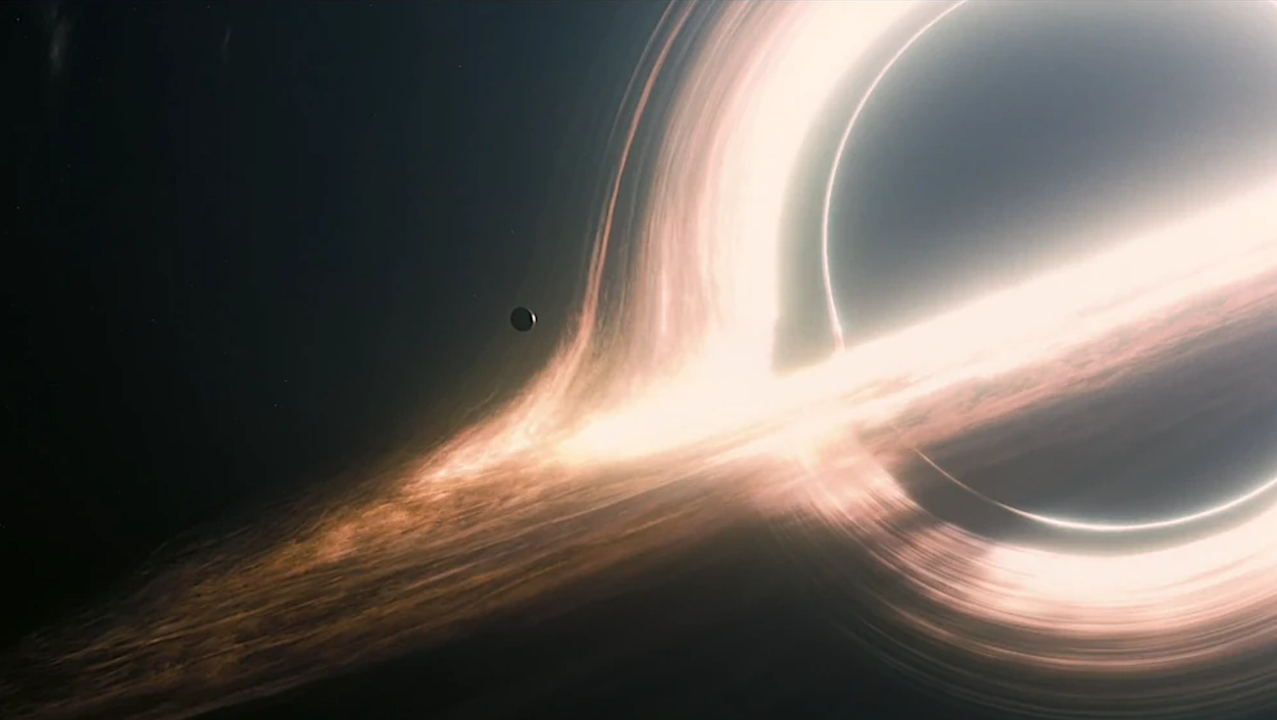
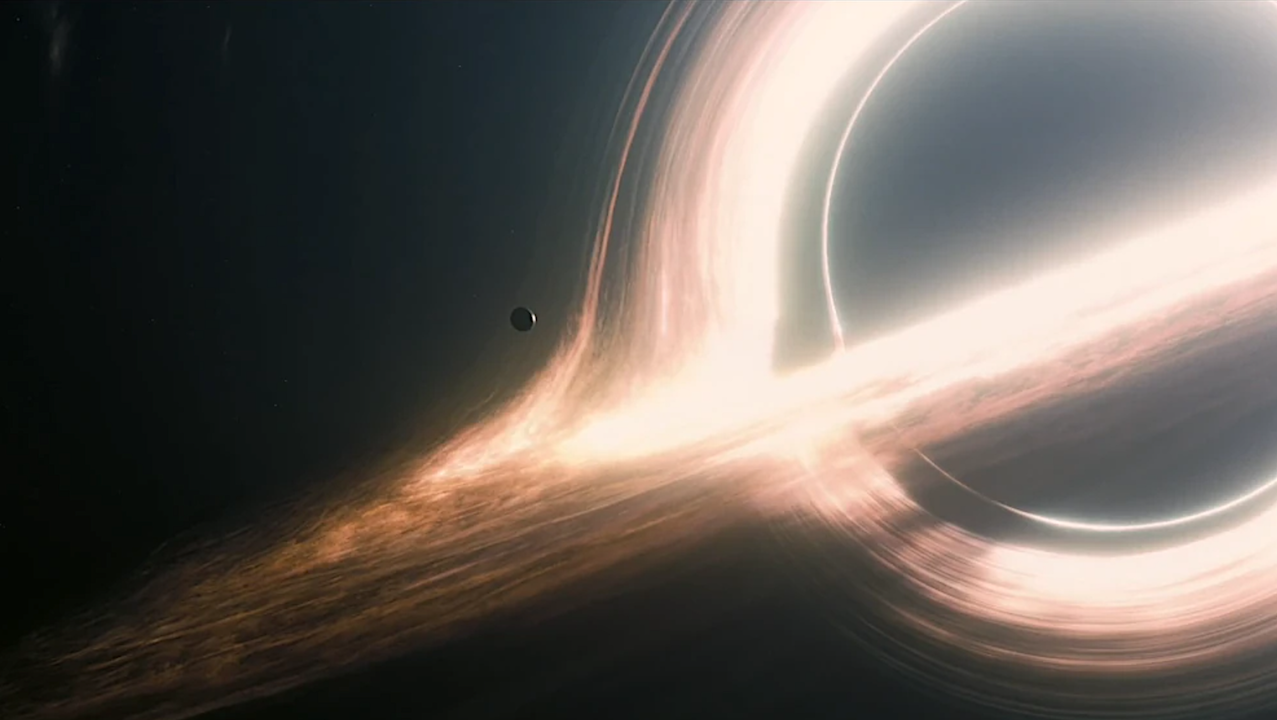
Miller’s Planet – Interstellar
While the influence of supermassive black hole (SMBH) activity on habitability has garnered attention, the specific effects of active galactic nuclei (AGN) winds, particularly ultrafast outflows (UFOs), on planetary atmospheres remain largely unexplored.
This study aims to fill this gap by investigating the relationship between SMBH mass at the galactic center and exoplanetary habitability, given that SMBH masses are empirically confirmed to span approximately 5 orders of magnitude in galaxies. Through simplified models, we account for various results involving the relationships between the distance from the planet to the central SMBH and the mass of the SMBH.
Specifically, we show that increased SMBH mass leads to higher atmospheric heating and elevated temperatures, greater molecular thermal velocities, and enhanced mass loss, all of which diminish with distance from the galactic center.
Energy-driven winds consistently have a stronger impact than momentum-driven ones. Crucially, ozone depletion is shown to rise with SMBH mass and decrease with distance from the galactic center, with nearly complete ozone loss (∼100%) occurring across galactic scales for SMBHs ≥108M⊙ in the energy-driven case.
This study emphasizes that SMBH growth over cosmic time may have produced markedly different impacts on galactic habitability, depending on both the mass of the central black hole (BH) and the location of planetary systems within their host galaxies.
Jourdan Waas, Eric S. Perlman, Manasvi Lingam, Emily Lohmann, Jackson Kernan, Francesco Tombesi, Amedeo Balbi, Alessandra Ambrifi
Comments: 22 pages, 10 figures. Submitted to ApJ. Revised manuscript
Subjects: Astrophysics of Galaxies (astro-ph.GA); Cosmology and Nongalactic Astrophysics (astro-ph.CO); Earth and Planetary Astrophysics (astro-ph.EP); High Energy Astrophysical Phenomena (astro-ph.HE)
Cite as: arXiv:2511.10794 [astro-ph.GA] (or arXiv:2511.10794v3 [astro-ph.GA] for this version)
https://doi.org/10.48550/arXiv.2511.10794
Focus to learn more
Submission history
From: Jourdan Waas
[v1] Thu, 13 Nov 2025 20:44:20 UTC (1,982 KB)
[v2] Tue, 2 Dec 2025 21:16:15 UTC (1,977 KB)
[v3] Mon, 2 Mar 2026 20:36:09 UTC (2,108 KB)
https://arxiv.org/abs/2511.10794
Astrobiology,










Related Posts
Stay Informed With the Latest & Most Important News
Previous Post
Next Post


Advertisement
-
 01Two Black Holes Observed Circling Each Other for the First Time
 -
 02From Polymerization-Enabled Folding and Assembly to Chemical Evolution: Key Processes for Emergence of Functional Polymers in the Origin of Life
 -
 03Astronomy 101: From the Sun and Moon to Wormholes and Warp Drive, Key Theories, Discoveries, and Facts about the Universe (The Adams 101 Series)
 -
 04True Anomaly hires former York Space executive as chief operating officer
 -
 05Φsat-2 begins science phase for AI Earth images
 -
 06Hurricane forecasters are losing 3 key satellites ahead of peak storm season − a meteorologist explains why it matters
 -
 07Binary star systems are complex astronomical objects − a new AI approach could pin down their properties quickly