
Now Reading: The race to build orbital data centers is missing its biggest variable: power
-
01
The race to build orbital data centers is missing its biggest variable: power


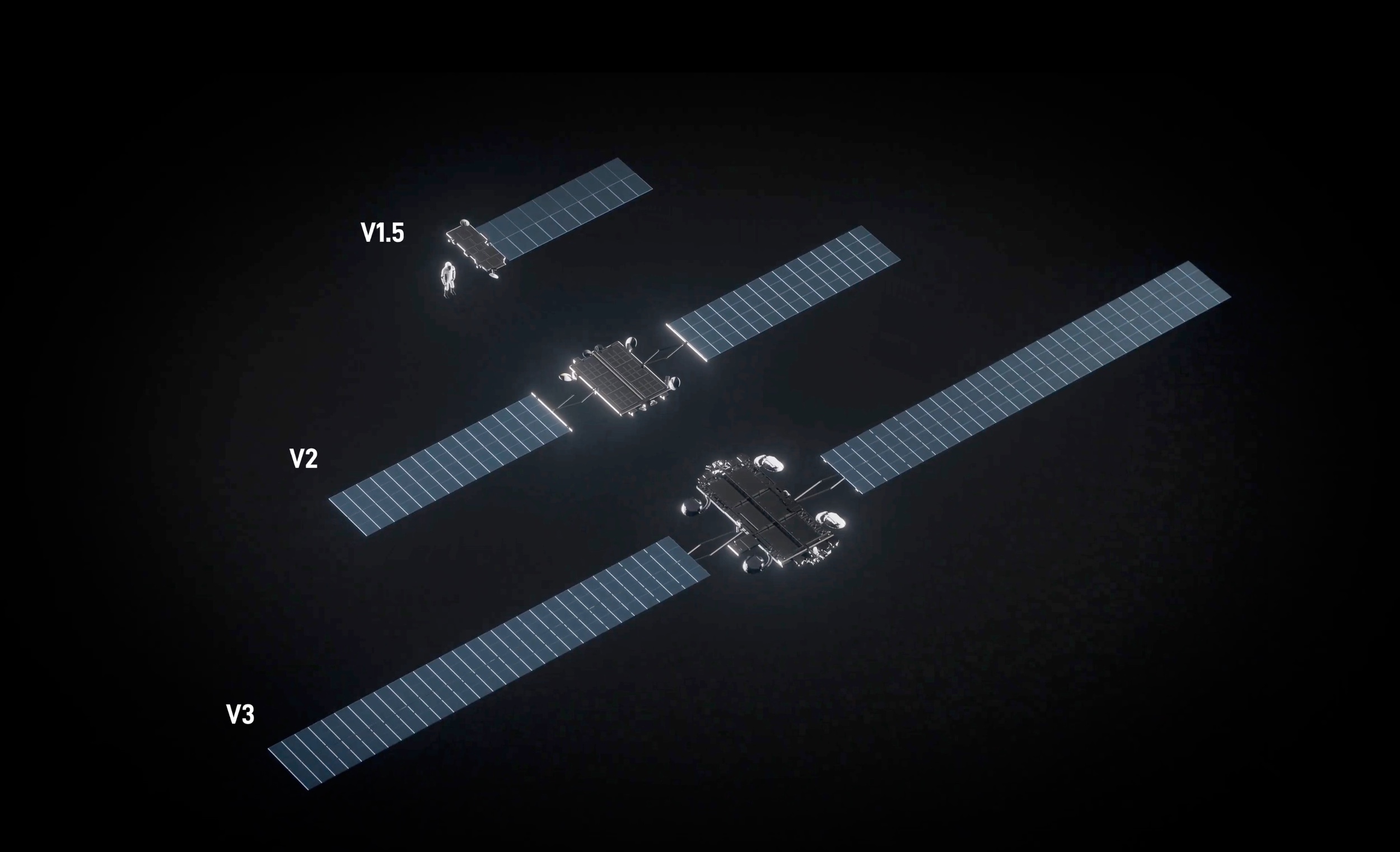

Here’s the version of the orbital data center story you keep reading: Elon Musk says space will be the cheapest place to run AI within 36 months. LoneStar announces plans for a lunar data center. NVIDIA’s Vera Rubin Space-1 makes headlines. These are real announcements, and they all have one thing in common. Nobody talks about the source of electricity. While Musk frequently discusses the necessity of sustainable energy, current industry discourse remains disproportionately focused on AI capabilities rather than the massive power sources required to run them. To capitalize on this shift, investors need to update their strategy to prioritize the energy stack in addition to the compute stack.
This is not a trivial matter. On Earth, it’s already the biggest limiting factor in the build-out of AI. McKinsey estimates that $6.7 trillion in data center investments will be required by 2030 to support the buildout. In 2025, Amazon, Microsoft, Alphabet and Meta spent approximately $410 billion on data center infrastructure combined. In 2026, that figure is expected to reach nearly $650–700 billion — a 60% increase in a single year. The International Energy Agency estimates that data center power consumption could double by 2030, reaching as much as 945 TWh annually, or the equivalent of the entire Japanese grid. Turbines are sold out through 2030. Power purchase agreements for new nuclear power are being signed in blocks of hundreds of megawatts. The grid can’t keep up, and hyperscalers know it. That’s why hyperscalers are now building their own nuclear reactors and taking direct stakes in the supply chain, as seen with Google’s major acquisition of United States renewable energy developer Intersect Power to scale massive solar and storage portfolios.
If we apply the same logic to the issue of orbit, then the assertion made by Musk begins to make a lot of engineering sense. A panel in space produces roughly five times the amount of electricity that the same panel would produce on Earth. There is no atmosphere, no weather and no day-night cycle for most orbits. No interconnection queue and no permitting. For a data center, it is a fundamental advantage that completely changes the economics of the situation. The issue for policy-makers, investors and the space industry is not whether data centers in orbit will ever become economically viable; it is whether the energy infrastructure to support them when they become necessary will be ready, and who will provide it.
Three technologies, one argument
There is no need to wait to create the energy stack for orbital data centers. It is currently being developed, primarily for terrestrial clients, and will eventually be transferred to space.
Solar power. The Shockley-Queisser limit for silicon solar cells is between 29-30%, and the industry has extracted almost all of its potential from that architecture. As a result, silicon solar cells are getting close to the physical efficiency ceiling. Perovskite-silicon tandem cells are the next generation. Companies like Tandem PV — a Beyond Earth Ventures portfolio company working at the frontier of commercial perovskite-silicon technology — are among the few that have bridged the gap between record-breaking efficiency and real-world reliability. Such companies solving durability for Earth are building the materials science foundation that space qualification will build on.
Nuclear power. For environments where continuous solar is impractical — lunar polar craters, high-inclination orbits, deep space — nuclear radioisotope power systems are not one option. They are the only option. Zeno Power, also a Beyond Earth Ventures portfolio company, is already proving the concept before taking it to space: Their radioisotope systems are being developed for long-duration power on the seabed and in lunar environments. Now, both commercial demand and NASA programs are driving hardware advancements. Its value proposition is straightforward: power in any setting, indefinitely, without the need for a grid. This is precisely what an orbital data center in perpetual shadow requires.
Fusion propulsion. The economic case for any orbital infrastructure depends on the cost of getting mass there. Chemical rockets have some major limitations that we can’t just engineer our way out of. But fusion propulsion is different — it has the potential to be way more efficient, with specific impulse values that are orders of magnitude better than what we have now. This could completely flip the script on how we think about getting heavy cargo into orbit. NASA and DARPA are already investing in fusion propulsion programs, suggesting it’s not just some pie-in-the-sky idea. The good news is that the same companies that are working on fusion reactors for use on Earth are also the ones that will be building the orbital drives. So, the groundwork that’s being laid now for terrestrial fusion reactors will also help us get to a point where we can use fusion propulsion in space. This is a big deal, because it means that the cost of getting stuff into orbit could go way down, making it more feasible to build all sorts of things in space.
What the space community should do differently
The space industry’s default approach treats energy as a downstream problem — something to address after the architecture is established. This sequencing is already causing delays in terrestrial data center deployment for the same reason. It requires modification in two specific areas.
For investors: Examine your space portfolio for energy exposure — not as an ESG line item, but as an operational dependency. The question to ask is simple: if grid access disappears, which of your portfolio companies stop working? At Beyond Earth Ventures, energy infrastructure at the beginning was one of our investment priorities. Tandem PV and Zeno Power reflect a deliberate thesis: the companies solving next-generation power on Earth are the same ones that will power the orbital economy. The practical implication for any fund building a space portfolio today is to treat energy hardware — solar, nuclear and power electronics — as foundational positions, not opportunistic add-ons. The energy layer must be funded before the rest of the stack can be built on top of it.
For hyperscalers: Microsoft, Google and Amazon are already signing multi-gigawatt nuclear PPAs on Earth — they have the procurement infrastructure, the legal templates and the internal mandates. The missing step is applying that same muscle to orbital energy systems. Concretely: Open a dedicated RFP track for space power suppliers alongside existing data center energy procurement. Bring radioisotope power companies, advanced solar manufacturers and power management specialists into conversations that currently happen only with launch providers and satellite operators. Include a power density requirement in any orbital infrastructure RFP — the equivalent of what ASHRAE standards do for terrestrial data centers. That single requirement would immediately bring the right companies to the table. The budget is there. The internal mandate to treat orbital power as a 2026 problem — rather than a 2032 one — is not yet.
Elon Musk’s prediction of a 36-month timeline will likely be proven right or wrong depending on one thing: Is the energy system ready? We can be pretty sure that the computing power will be there. But the big question is, will we have enough energy to make it happen?
Oleg Demidov is a general partner at Beyond Earth Ventures, a U.S. deep tech fund investing at the intersection of space, energy and frontier technology.
SpaceNews is committed to publishing our community’s diverse perspectives. Whether you’re an academic, executive, engineer or even just a concerned citizen of the cosmos, send your arguments and viewpoints to opinion (at) spacenews.com to be considered for publication online or in our next magazine. If you have something to submit, read some of our recent opinion articles and our submission guidelines to get a sense of what we’re looking for. The perspectives shared in these opinion articles are solely those of the authors and do not necessarily represent their employers or professional affiliations.










Related Posts

Stay Informed With the Latest & Most Important News
Previous Post
Next Post
Previous Post
Next Post


Advertisement
-
 01Two Black Holes Observed Circling Each Other for the First Time
 -
 02From Polymerization-Enabled Folding and Assembly to Chemical Evolution: Key Processes for Emergence of Functional Polymers in the Origin of Life
 -
 03Astronomy 101: From the Sun and Moon to Wormholes and Warp Drive, Key Theories, Discoveries, and Facts about the Universe (The Adams 101 Series)
 -
 04True Anomaly hires former York Space executive as chief operating officer
 -
 05Φsat-2 begins science phase for AI Earth images
 -
 06Hurricane forecasters are losing 3 key satellites ahead of peak storm season − a meteorologist explains why it matters
 -
 07Binary star systems are complex astronomical objects − a new AI approach could pin down their properties quickly