
Now Reading: The U.S. Senate vs. the Athena Plan — NASA on trial
-
01
The U.S. Senate vs. the Athena Plan — NASA on trial


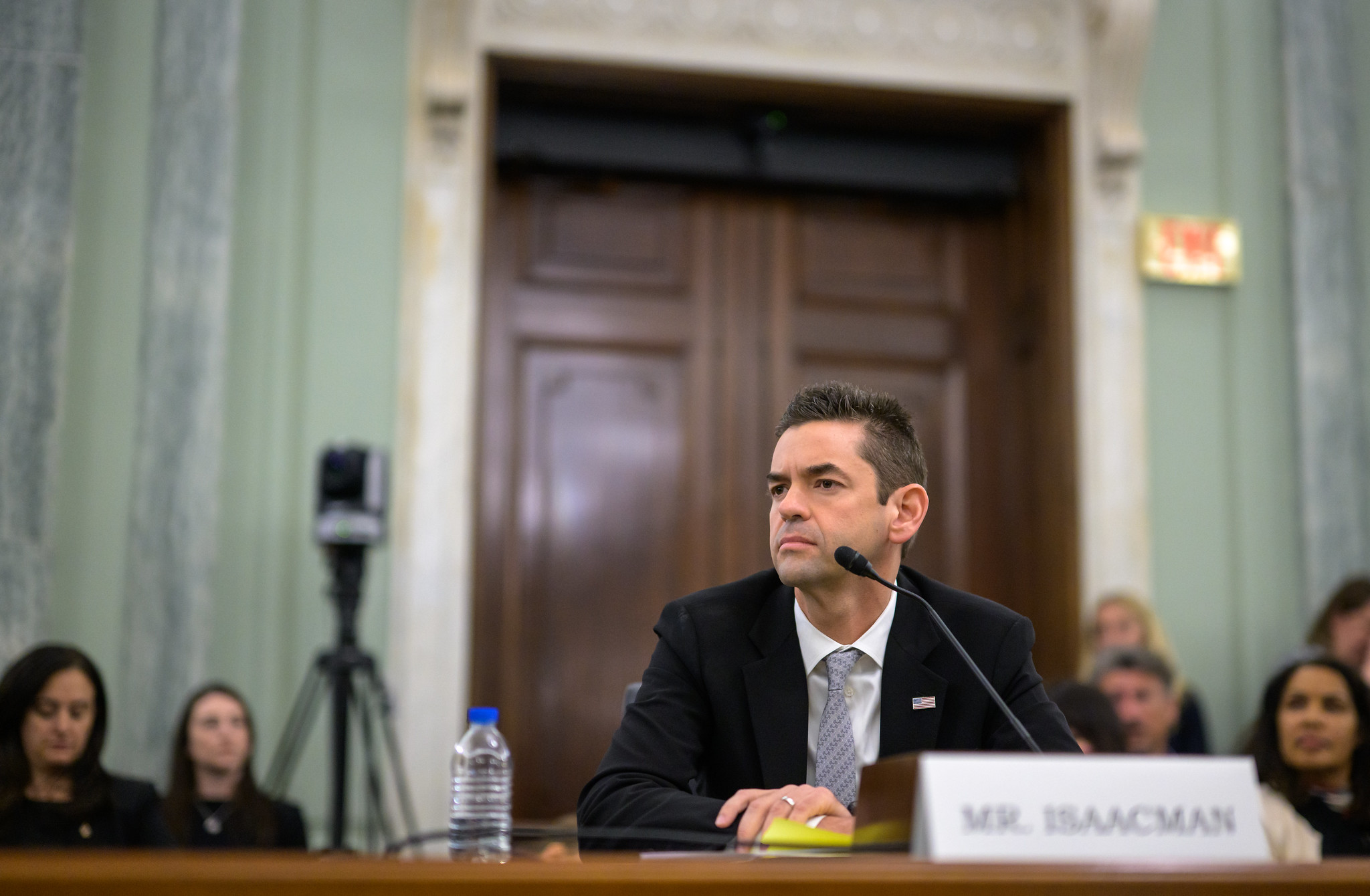

On December 3, 2025, the U.S. Senate Committee on Commerce, Science and Transportation will hold a hearing to examine the re-nomination of Mr. Jared Isaacman for NASA Administrator.
A central issue at the Hearing will be the implications of Mr. Isaacman’s leaked “Project Athena Strategic Plan” (the Plan), which outlines potential reasons for and actions to reform NASA.
Some Senators likely believe implementation of the Athena Plan would be harmful to the civil space program and NASA interests in their states. I believe the plan should be taken very seriously as it provides an opportunity to openly debate NASA’s purpose and priorities in a new era of space competition.
The top five issues that the Senate and Isaacman should focus on are:
#1 – NASA leadership and re-organization. NASA has many challenges in executing missions on-time, on-budget and with technical excellence. NASA has too often become “institution-driven” and not “mission-driven.” The Plan’s core message calls for NASA leadership and reorganization to be driven by mission performance; strengthening the agency’s focus on mission outcomes.
#2 – Cancellation of selected exploration and science programs. Senators are understandably concerned with the potential disruption from cancellations; to include loss of key personnel, damage to specialized supply chains, and local economic harm. According to Isaacman, the Plan is not cancellation-focused. Instead, it builds on both past and current government and commercial space initiatives. He argues that American space leadership relies on adaptability and long-term planning to benefit the nation. NASA personnel and facilities should serve evolving national purposes and not be maintained by inertia.
#3 – Shifting leadership in low Earth orbit from government to commercial initiatives. The International Space Station (ISS) is a magnificent achievement, but a new era of multiple commercial platforms is at hand. Isaacman has stated clearly that the ISS will not be retired earlier than scheduled as there is much work still to be done. NASA can support new economic growth by being a reliable customer for LEO facilities, funding cutting-edge R&D and expanding new international partnerships.
#4 – New approaches to NASA leadership in science. Senators have been hearing from scientists and space advocates about administration-proposed cuts to science, to include climate monitoring. Isaacman has a personal record of supporting and benefiting from scientific research. His draft Plan emphasizes the continued importance of science across NASA’s core mission areas. He can rightly contend that NASA has ventured into some fields that are the responsibility of other agencies, and the Plan seeks to realign NASA’s science focus on those missions that only NASA can effectively accomplish. Other U.S. agencies, international partners and the private sector offer opportunities to do more in space-based research.
#5 – The Plan recommends a “Starfleet Academy.” The Plan argues for a new, non-defense-oriented academy focused on multi-level skill development for peaceful and commercial U.S. space activities, proposing investment now to build sustained generational aerospace benefits. Notwithstanding the idealistic name, Senators will reasonably ask whether a new institution would duplicate existing service academies, colleges, and universities in space-related education. What would be new?
Release of the draft Athena plan was unintended by Isaacman, but it has drawn attention to the fundamental roles of NASA. While he should expect tough questioning from the Senators, the hearing is an opportunity for Isaacman to argue his vision for the U.S. future in space and how it serves national interests. There continues to be a bipartisan consensus about human space exploration, first to the moon and then to Mars. There is agreement on the foundational role of private industry and the importance of international partners. The real debate is over how to implement national space policy and what NASA’s roles should be.
The hearing will be a success if the Senators and Isaacman can avoid becoming bogged down in the details of the Athena Plan; but instead focus on how NASA can boldly implement reforms and initiatives to create a space program worthy of a great nation.
Edward J. Stanton, Jr. has over 35 years of aerospace industry and governmental leadership experience spanning multiple space exploration programs, satellite and space-based asset utilization, systems engineering and integration, commercial domestic and international space initiatives, and is a U.S. Army veteran.
SpaceNews is committed to publishing our community’s diverse perspectives. Whether you’re an academic, executive, engineer or even just a concerned citizen of the cosmos, send your arguments and viewpoints to opinion@spacenews.com to be considered for publication online or in our next magazine. The perspectives shared in these opinion articles are solely those of the authors.










Related Posts

Stay Informed With the Latest & Most Important News
Previous Post
Next Post



Advertisement
-
 01Two Black Holes Observed Circling Each Other for the First Time
 -
 02From Polymerization-Enabled Folding and Assembly to Chemical Evolution: Key Processes for Emergence of Functional Polymers in the Origin of Life
 -
 03Astronomy 101: From the Sun and Moon to Wormholes and Warp Drive, Key Theories, Discoveries, and Facts about the Universe (The Adams 101 Series)
 -
 04True Anomaly hires former York Space executive as chief operating officer
 -
 05Φsat-2 begins science phase for AI Earth images
 -
 06Hurricane forecasters are losing 3 key satellites ahead of peak storm season − a meteorologist explains why it matters
 -
 07Binary star systems are complex astronomical objects − a new AI approach could pin down their properties quickly