
Now Reading: Time travels faster on Mars than on Earth, and here’s why
-
01
Time travels faster on Mars than on Earth, and here’s why


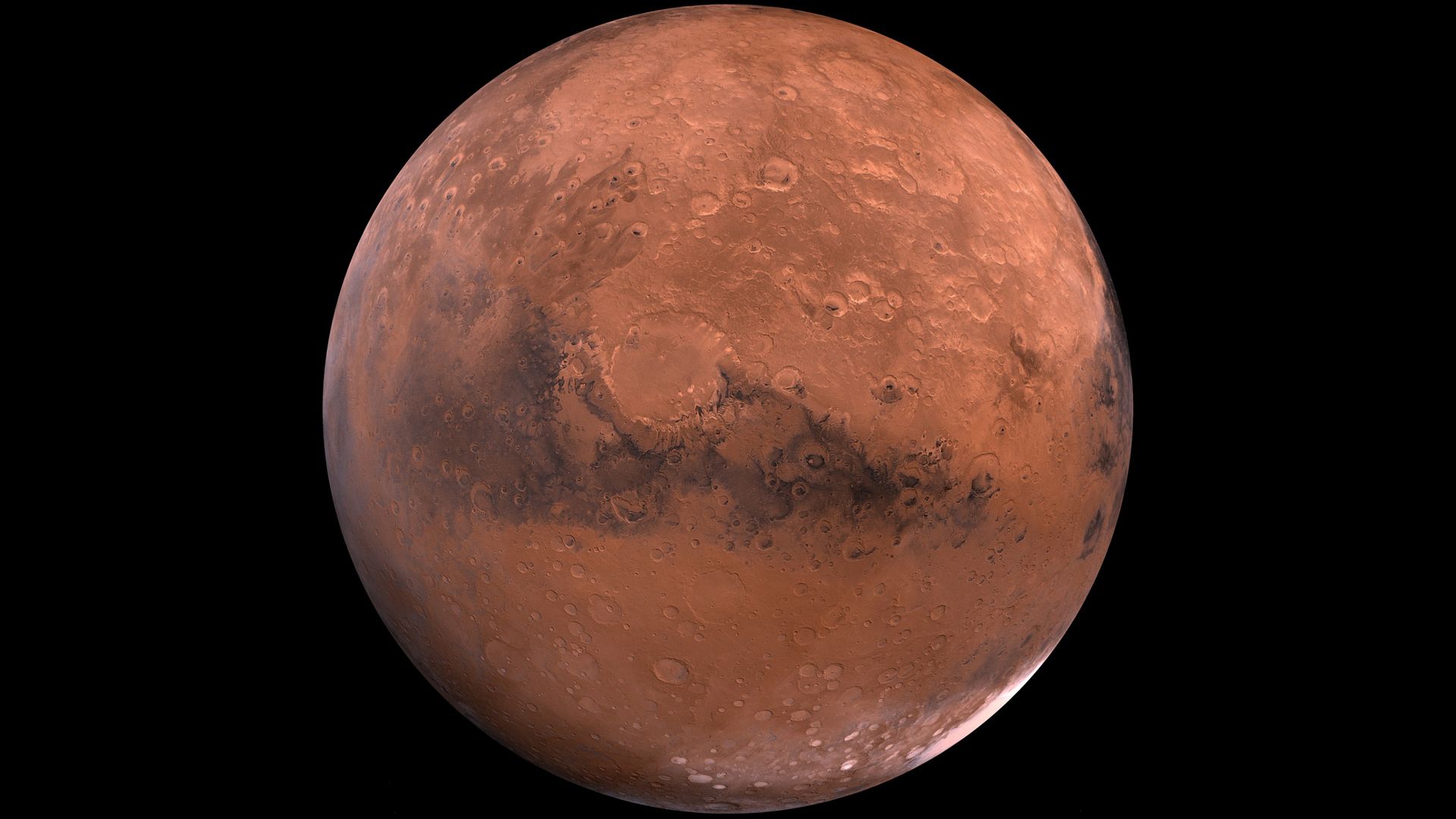
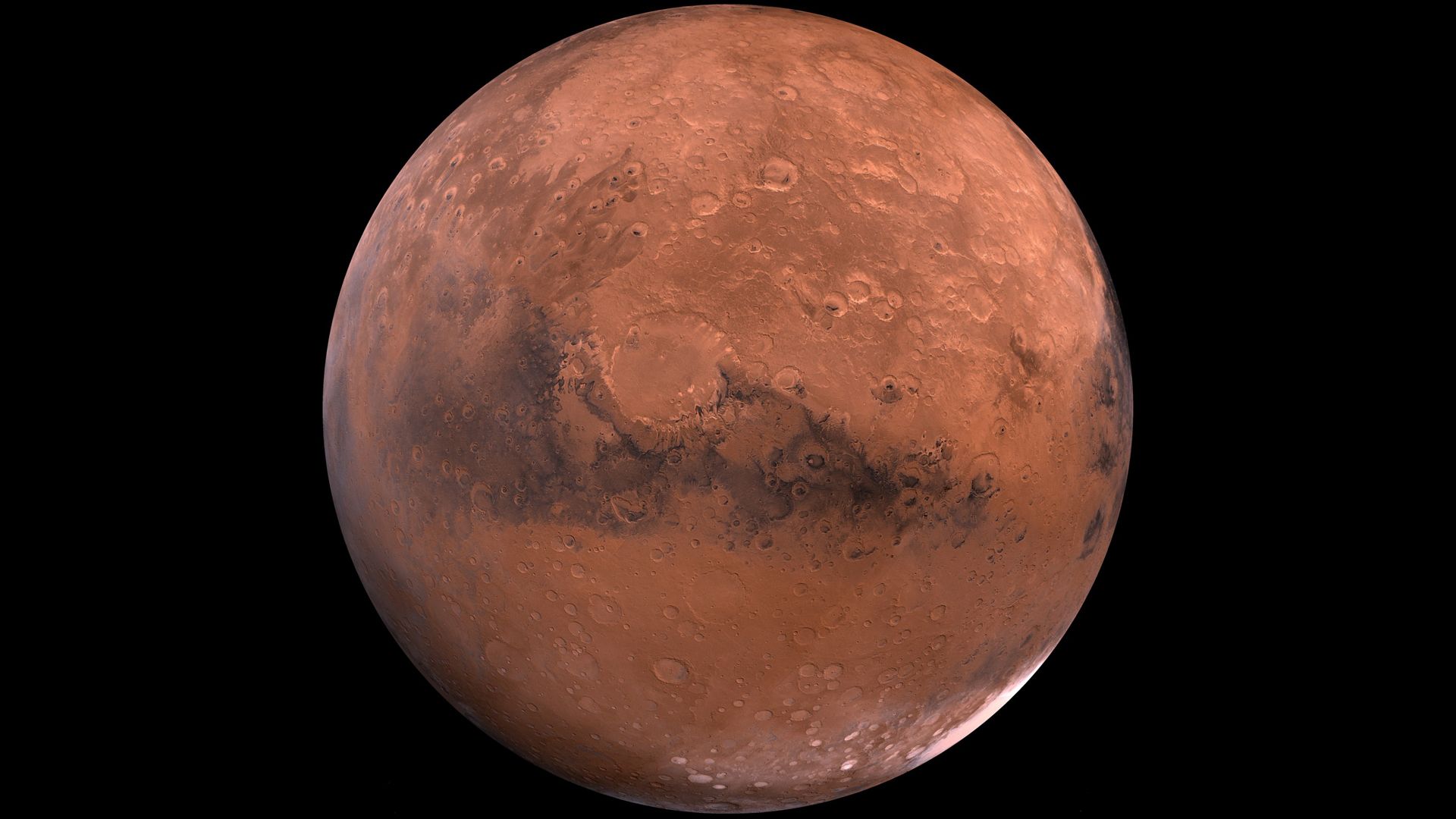
Time passes, on average, 477 millionths of a second faster per day on Mars than on Earth thanks to the impact of Albert Einstein’s theory of general relativity. Scientists say this will have repercussions for future navigation and communication networks that may span the inner solar system.
Neil Ashby and Bijunath Patla of NIST, the National Institute of Standards and Technology in the U.S., calculated the time discrepancy between Mars and Earth by considering the strength of gravity on Mars (which is five times weaker than on Earth), the velocity and eccentricity of the Red Planet’s orbit around the sun, and the gravitational influence of not only the sun but also Mars’ nearest neighbors, Earth and our moon.
Einstein‘s theory of general relativity describes how clocks can appear to run faster or slower depending upon which frame of reference they are in, which is governed by velocity and gravitational field. We call the effect time dilation, and it is the same phenomenon that can result in the twin paradox, whereby one twin goes off into space on a rocket ship moving at near the speed of light, while the other twin stays at home on Earth. When the astronaut twin returns home, they are younger than the twin that remained on Earth, because clocks tick more slowly the closer you get to the speed of light. Similarly, time passes more slowly close to a black hole because the gravitational field is much stronger than on Earth.
Because Mars is farther from the sun than Earth is, it orbits the sun at a slower pace, which automatically leads to clocks ticking more slowly on Mars than on Earth. However, because Mars’ orbit around the sun is more eccentric (a little more elliptical) than Earth’s, it means that Mars speeds up in its orbit slightly when a little closer to the sun, and slows down when a little farther away. Similarly, Mars’ distance from the gravitational fields of the sun and the Earth–moon system also differ during the course of a Martian year. Combined, this results in how fast clocks tick on Mars relative to Earth. To an astronaut on Mars, one second will still seem to last one second, but from an observer on Earth, that second on Mars will seem to pass fractionally faster compared to a second that the observer measures on a clock on Earth. While the average difference between clocks on Mars and Earth is 477 microseconds per day, this can increase or decrease by as much as 226 microseconds depending where Mars is in its orbit relative to Earth and our moon.
While the time dilation between Mars and Earth is nowhere near as dramatic as on a relativistic starship or at a black hole’s event horizon, it is enough to potentially play havoc with future navigation and communication networks that we might assemble around Mars. For example, 5G needs to be accurate to within a tenth of a microsecond. Knowing the discrepancy will also allow networks on Earth and Mars to become synchronized (allowing for the light travel time between the planets) ensuring more efficient transmission of information between the two.
“It may be decades before the surface of Mars is covered by the tracks of wandering rovers, but it is useful now to study the issues involved in establishing navigation systems on other planets and moons,” said Ashby. “Like current global navigation systems like GPS, these systems will depend on accurate clocks, and the effects of clock rates can be analyzed with the help of Einstein’s General Theory of Relativity.”
Ashby and Patla previously calculated the difference in the passage of time on the moon compared to Earth, finding that clocks on the Moon tick 56 microseconds faster than on Earth.
“The time is just right for the moon and Mars,” said Patla. “This is the closest we have been to realizing the science-fiction vision of expanding across the solar system.”
Their results were published on Dec. 1 in The Astronomical Journal.










Related Posts

Stay Informed With the Latest & Most Important News
Previous Post
Next Post




Advertisement
-
 01Two Black Holes Observed Circling Each Other for the First Time
 -
 02From Polymerization-Enabled Folding and Assembly to Chemical Evolution: Key Processes for Emergence of Functional Polymers in the Origin of Life
 -
 03Astronomy 101: From the Sun and Moon to Wormholes and Warp Drive, Key Theories, Discoveries, and Facts about the Universe (The Adams 101 Series)
 -
 04True Anomaly hires former York Space executive as chief operating officer
 -
 05Φsat-2 begins science phase for AI Earth images
 -
 06Hurricane forecasters are losing 3 key satellites ahead of peak storm season − a meteorologist explains why it matters
 -
 07Binary star systems are complex astronomical objects − a new AI approach could pin down their properties quickly