
Now Reading: Total lunar eclipse set to captivate stargazers on March 3 2025
-
01
Total lunar eclipse set to captivate stargazers on March 3 2025


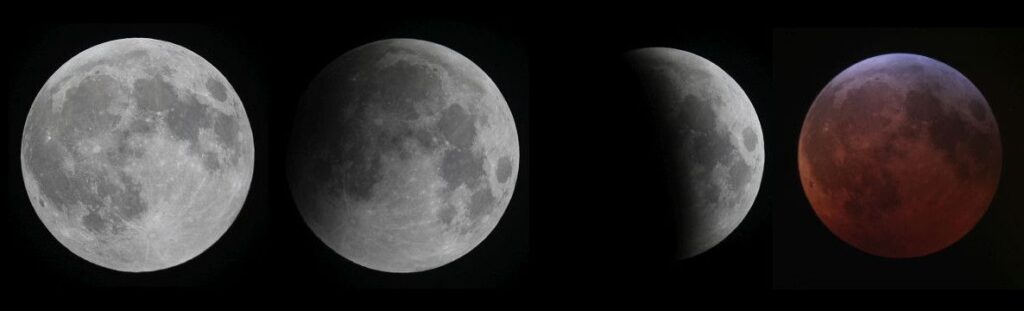
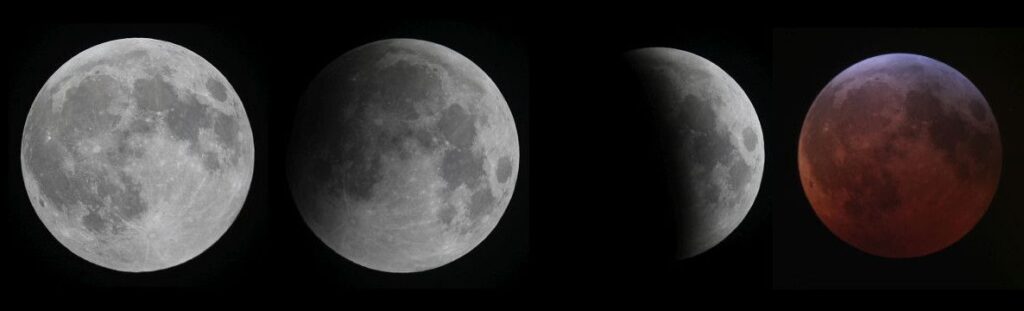
On March 3, 2025, stargazers will have the opportunity to witness a total lunar eclipse, primarily viewable across the mid-Pacific region, including New Zealand, eastern Australia, and western parts of the United States. A significant partial eclipse will also be seen stretching further to the east and west.
A lunar eclipse occurs when the Earth positions itself directly between the Sun and the Moon, casting its shadow on the Moon. During typical full moons, the lunar body is fully illuminated, but the unique alignment required for an eclipse happens less frequently due to the Moon’s tilt of approximately five degrees relative to its orbital pathway. This particular event will see the Moon completely enveloped in Earth’s umbra – the darkest part of its shadow – leading to the spectacle of totality, while penumbral and partial phases will appear before and after.
The lunar eclipse will unfold between 08:42 and 14:24 Coordinated Universal Time (UTC). Observers in areas where the Moon remains above the horizon, including parts of the Americas, Russia, Asia, and Oceania, can enjoy the event in its entirety. Unfortunately, viewers in the UK will miss out, as the Moon will not be visible from there during this occurrence.
The total eclipse phase itself will take place from 11:03 until 12:02 UTC, but the full experience will begin at 08:42 as the Moon first enters the penumbral shadow, leading to a gradual dimming of its glow. At 09:49, the Moon will transition into the umbra, entering the partial eclipse phase, before reaching totality at 11:03. Viewers can expect the distinct circular silhouette of Earth’s shadow as it passes over the lunar surface, creating a captivating celestial display.
For this celestial event, a range of viewers can appreciate the beauty of a lunar eclipse, as no special equipment is technically required. However, using a pair of steady binoculars is recommended to improve the experience. Binoculars can highlight colors and provide a broader view of the Moon’s surroundings, enriching the overall experience, particularly during totality when the Moon can appear suspended against the backdrop of space.
One exciting aspect of total lunar eclipses is the varying hues that the Moon can exhibit, which might take on shades of red or orange. This color variation is influenced by atmospheric conditions on Earth at the time, such as airborne particles, cloud cover, and the Moon’s position. Observers may also notice a colored rim around the shadow’s edge, adding to the visual intrigue.
As anticipation builds for this astronomical event, enthusiasts are encouraged to observe and document their experiences, as sharing images of the eclipse is a wonderful way to engage with the broader astronomical community.










Related Posts


Stay Informed With the Latest & Most Important News
Previous Post
Next Post



Advertisement
-
 01Two Black Holes Observed Circling Each Other for the First Time
 -
 02From Polymerization-Enabled Folding and Assembly to Chemical Evolution: Key Processes for Emergence of Functional Polymers in the Origin of Life
 -
 03Astronomy 101: From the Sun and Moon to Wormholes and Warp Drive, Key Theories, Discoveries, and Facts about the Universe (The Adams 101 Series)
 -
 04True Anomaly hires former York Space executive as chief operating officer
 -
 05Φsat-2 begins science phase for AI Earth images
 -
 06Hurricane forecasters are losing 3 key satellites ahead of peak storm season − a meteorologist explains why it matters
 -
 07Binary star systems are complex astronomical objects − a new AI approach could pin down their properties quickly