
Now Reading: Trump’s national security strategy ignores space
-
01
Trump’s national security strategy ignores space


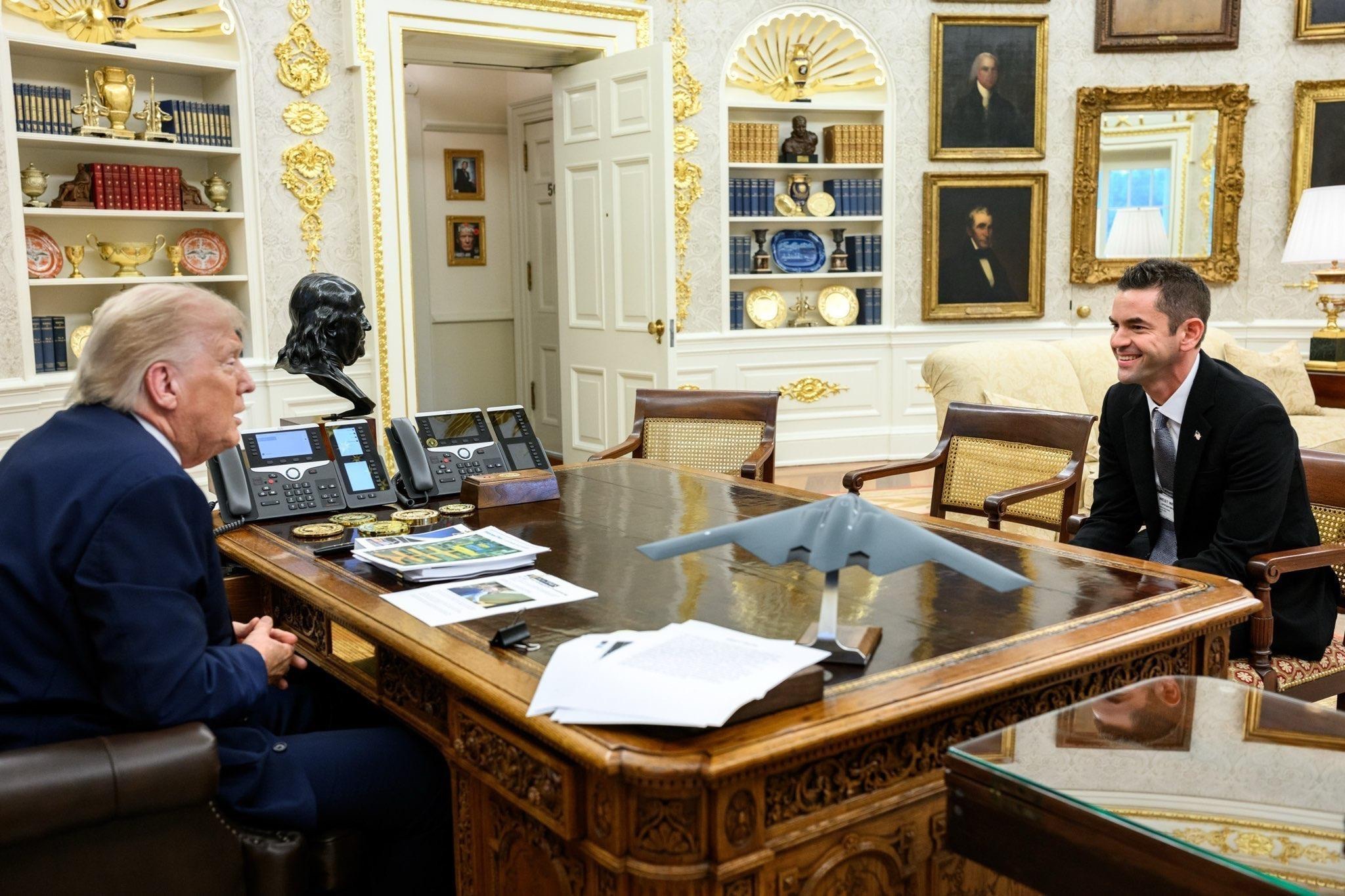

The Trump administration’s new national security strategy has rightly drawn criticism for presuming to tell our European allies how to arrange their domestic affairs. Equally as baffling is its near silence on a genuine United States national security concern — bolstering our offensive and defensive capabilities in space.
Amid much MAGA trollery that blames Europe rather than Russia for the continuing war in Ukraine, the new national security strategy makes only one reference to space in the 29 page document. That reference is in passing, mentioning space amongst a list of technology domains that deserve research investment to retain the nation’s technological edge. Whether we like it or not, space has increasingly become a warfighting domain. President Biden mentioned space 15 times in his last national security strategy. Trump treats it as an afterthought.
Top military brass from the head of U.S. Space Command to the principal space advisor at the Department of the Army has been calling for the development of offensive space capabilities.
Other nations, especially China, have been deploying space weapons and, while everyone would prefer that space remain a peaceful domain, the U.S. must ensure it is prepared to meet national security threats in whichever theater they arise in.
This is not a solely American perspective. NATO recognized space as an operational national security domain in 2019 and has been working to beef up its space capabilities.
Previous national security strategies have recognized the importance of space to the nation’s defense. Budgets for these capabilities have continued to rise. The Space Force was established during President Trump’s first administration, but it requires strategic focus and sustained funding to meet its potential, which it doesn’t appear to be receiving in Trump’s second administration.
Yet, this lack of prioritization of space in the national security strategy is not surprising in light of other actions taken by the Trump administration prioritizing divisive cultural issues over national security. There has been example after example of this phenomenon this year, such as banning transgender individuals from serving in the military at a time when the armed forces are facing a shortage of recruits. This national security strategy, which prioritizes ideological purity over strengthening the nation’s capabilities in a theater vital to the future of national security, is simply a continuation of his party line.
Even President Trump’s most ambitious national security initiative — the Golden Dome, which seeks to protect Americans from missiles using space-based interceptors combined with other protective systems — is a moonshot project without sufficient funding to achieve its aims or transparency to evaluate its technological feasibility.
Readiness in the space domain needs to be robust, resilient and continually evolving, which can include, but should not be primarily centered on, one big project with a long time horizon. There is a laundry list of space technologies that deserve additional development and sustained investment.
Trump’s erratic approach to leadership suggests he may be more interested in waging trade and cultural wars on our allies than making sure that America has what it needs to deter aggression by potential adversaries like Russia and China. They are watching and are sure to be emboldened by this foolhardy approach unless the nation changes its approach to both space specifically and national security broadly.
Mary Guenther is head of Space Policy at the Progressive Policy Institute.
SpaceNews is committed to publishing our community’s diverse perspectives. Whether you’re an academic, executive, engineer or even just a concerned citizen of the cosmos, send your arguments and viewpoints to opinion (at) spacenews.comto be considered for publication online or in our next magazine. If you have something to submit, read some of our recent opinion articles and our submission guidelines to get a sense of what we’re looking for. The perspectives shared in these opinion articles are solely those of the authors and do not necessarily represent their employers or professional affiliations.










Related Posts



Stay Informed With the Latest & Most Important News






Advertisement
-
 01Two Black Holes Observed Circling Each Other for the First Time
 -
 02From Polymerization-Enabled Folding and Assembly to Chemical Evolution: Key Processes for Emergence of Functional Polymers in the Origin of Life
 -
 03Astronomy 101: From the Sun and Moon to Wormholes and Warp Drive, Key Theories, Discoveries, and Facts about the Universe (The Adams 101 Series)
 -
 04True Anomaly hires former York Space executive as chief operating officer
 -
 05Φsat-2 begins science phase for AI Earth images
 -
 06Hurricane forecasters are losing 3 key satellites ahead of peak storm season − a meteorologist explains why it matters
 -
 07Binary star systems are complex astronomical objects − a new AI approach could pin down their properties quickly