
Now Reading: U.S. vulnerable to Russian escalation in space, new report warns
-
01
U.S. vulnerable to Russian escalation in space, new report warns



WASHINGTON — The United States remains “unacceptably vulnerable” to a dangerous form of escalation by Russia in space, including the possibility of a nuclear detonation that could cripple satellites and disrupt daily life on Earth, according to a new report published Jan. 21 by the Atlantic Council.
“In a crisis or conflict with Russia, the United States and its allies and partners would likely face Russian aggression in space,” the report says. “Its capabilities and current military doctrine make it highly plausible that Russia would consider nuclear, debris-generating and counter-commercial attacks in space against US, allied, or commercial space assets.”
The report, Countering Russian Escalation in Space, argues that Washington and its allies are underprepared for the risk that Moscow could deliberately escalate a conflict beyond Earth’s atmosphere. Such actions could range from a nuclear explosion in orbit to destructive anti-satellite attacks or sustained interference with commercial satellite services that underpin modern military operations, global communications and economic activity.
The authors, analysts John Klein and Clementine Starling-Daniels, contend that current U.S. space policy, acquisition practices and reliance on commercial providers are not enough on their own to deter or withstand these scenarios. A key problem, they argue, is a persistent mismatch between how Western governments and Russian leaders think about deterrence and escalation.
Western analysts, the report says, often underestimate Russia’s willingness to accept risk — and even self-inflicted damage — in pursuit of coercive goals.
Three dangerous scenarios
The report highlights three scenarios it describes as especially dangerous. The first is a nuclear detonation in low Earth orbit, where many military, commercial and civil satellites operate. U.S. officials have warned that such an event could render large swaths of orbit unusable for months and cripple services ranging from missile warning and communications to navigation and weather forecasting.
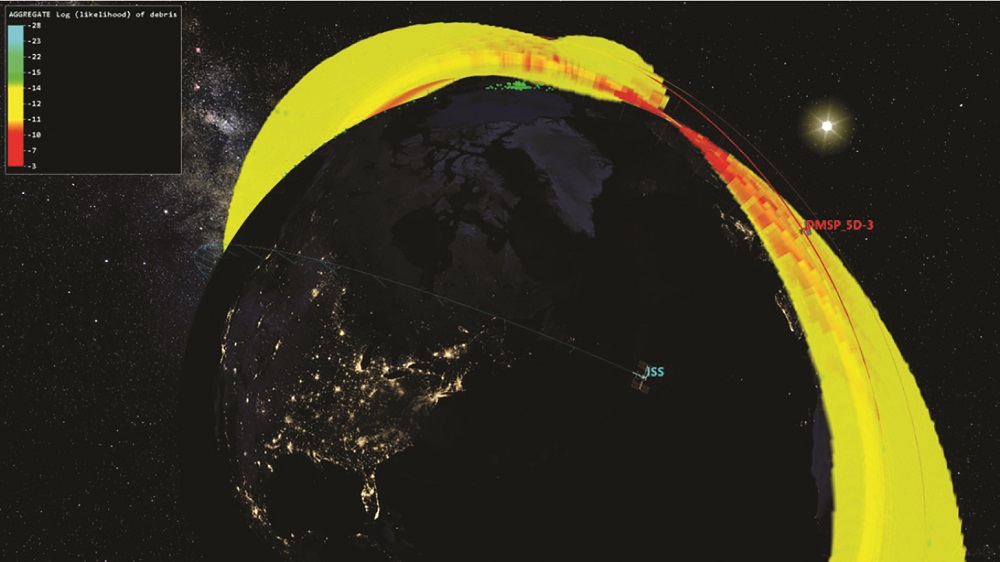
The second scenario involves debris-generating anti-satellite attacks. Russia demonstrated that capability in 2021 when it destroyed one of its own satellites in orbit, creating thousands of pieces of debris that threatened other spacecraft and forced astronauts aboard the International Space Station to take shelter. The third scenario is systematic interference with commercial space systems — including communications, imagery and navigation — that the United States and its allies increasingly rely on for military operations.
Taken together, the authors argue, these risks expose the limits of deterrence strategies that rely primarily on threats of punishment or cost imposition. Moscow’s approach to deterrence places greater emphasis on demonstrating a willingness to escalate and impose “unacceptable damage,” even at cost to itself. That mindset, the report says, lowers the threshold for risky or norm-breaking behavior in space.
‘Deterrence. by denial of benefit’
Instead of relying mainly on punitive threats, the authors recommend that the United States focus on what they call “deterrence by denial of benefit.” That approach centers on building space systems so resilient that an attack would fail to significantly degrade U.S. and allied capabilities. It includes deploying large numbers of satellites across diverse orbits, hardening spacecraft to survive radiation from a nuclear event, and ensuring the ability to rapidly replace or reconstitute systems if they are damaged.
The authors underscore the urgency of the threat by citing Gen. Chance Saltzman, chief of space operations of the United States Space Force, who has referred to the potential deployment of a Russian nuclear anti-satellite weapon as “Day Zero.” The implication, the report notes, is that “from that day, no one can count on space the next day.”
Beyond technical measures, the report calls for clearer U.S. declaratory policy on space escalation, deeper integration of commercial providers into national security planning, and closer coordination with allies to complicate Russian targeting decisions. It also urges the government to communicate the nature of space threats more clearly to the American public.
Of particular concern, the authors note, is the asymmetry in space warfare. Even a limited set of counterspace tools — such as jammers, cyberattacks or direct-ascent anti-satellite missiles — could disrupt services the United States depends on for military operations, economic activity and civilian infrastructure. That imbalance, they argue, makes space an especially attractive pressure point for a rival facing conventional disadvantages on Earth.










Related Posts

Stay Informed With the Latest & Most Important News
Previous Post
Next Post




Advertisement
-
 01Two Black Holes Observed Circling Each Other for the First Time
 -
 02From Polymerization-Enabled Folding and Assembly to Chemical Evolution: Key Processes for Emergence of Functional Polymers in the Origin of Life
 -
 03Astronomy 101: From the Sun and Moon to Wormholes and Warp Drive, Key Theories, Discoveries, and Facts about the Universe (The Adams 101 Series)
 -
 04True Anomaly hires former York Space executive as chief operating officer
 -
 05Φsat-2 begins science phase for AI Earth images
 -
 06Hurricane forecasters are losing 3 key satellites ahead of peak storm season − a meteorologist explains why it matters
 -
 07Binary star systems are complex astronomical objects − a new AI approach could pin down their properties quickly