
Now Reading: Vantor partners with Google AI to automate intelligence reports for government agencies
-
01
Vantor partners with Google AI to automate intelligence reports for government agencies

Vantor partners with Google AI to automate intelligence reports for government agencies

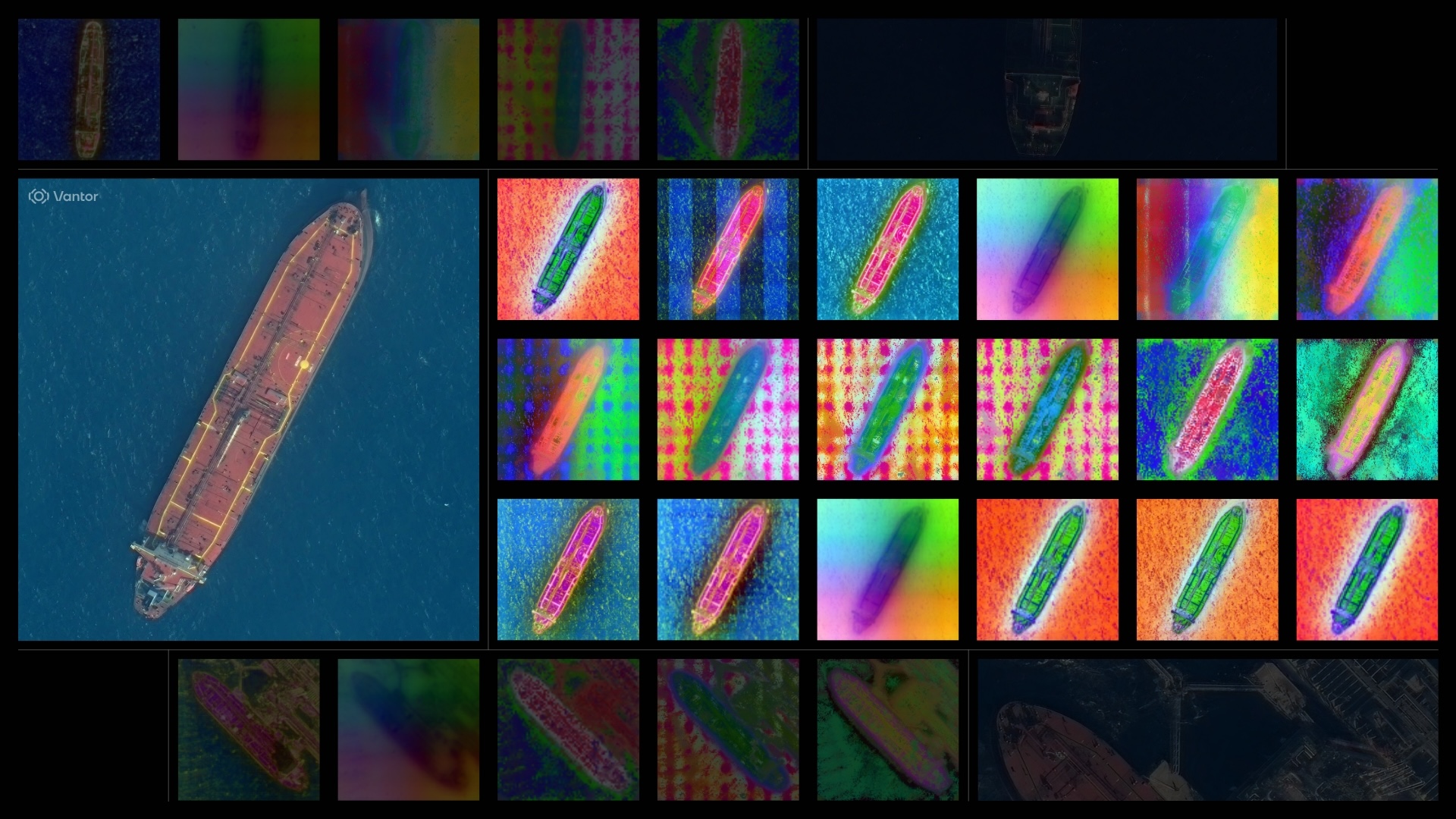

WASHINGTON — Vantor, a commercial Earth-observation satellite operator focused on government and national security markets, announced plans to run Google Earth AI models inside classified government networks to automate imagery analysis reports.
Under the partnership, Vantor will deploy Google Earth AI models within air-gapped government data centers. The AI will generate text reports from Vantor’s satellite imagery, third-party commercial imagery or customers’ sovereign data.
Google Earth AI is an initiative to apply large-scale artificial intelligence to global geospatial data, making the Earth’s physical, environmental and infrastructure data queryable and analyzable with advanced AI models rather than static imagery alone.
While Google Earth AI already works with other commercial Earth-observation data providers such as Planet Labs and Airbus under partner programs, Vantor would be the first to deploy Google models in sovereign government environments.
In a typical configuration, Earth AI capabilities run through Google Cloud infrastructure, where imagery is processed via remote APIs and managed services. In an air-gapped deployment, a government program office could ingest classified imagery into a secure network and conduct intelligence analysis without exposing data to commercial cloud systems.
Reports in minutes
The agreement with Google brings a new layer of AI capability that reduces the human labor required to generate intelligence reports from satellite imagery, said Vantor’s chief product officer Peter Wilczynski.
“The historical way of doing this was all very cloud based and very focused on slow moving analytical workflows,” he said. With Google AI embedded in the workflow, once imagery is collected, “we’ll be able to run the Earth AI models on that imagery and produce analytical reports in 10-15 minutes, as opposed to 24-36 hours.”
Wilczynski said the partnership addresses both latency and security. “Rather than running the models in the Google Cloud platform public cloud, we’re going to be able to run these models in air-gapped environments for the U.S. government, as well as sovereign data centers for international governments,” he said.
Those data centers would operate like news bureaus, “where we’re able to generate actual text based news stories about what’s changing in the world using these Earth AI models.”
“Our AI is really focused on understanding pixels, and a lot of Google AI is really focused on understanding text,” Wilczynski said.
Google, which has invested billions of dollars training AI models, can translate imagery-derived insights into narrative form. “And the thing that we’re really excited about with this partnership is sort of creating a bridge between pixels and text, what people would call semantic understanding,” he said.
Vantor said the automation will create efficiencies but added that it has no plans to reduce headcount. Instead, Wilczynski described a hybrid model in which analysts work alongside AI systems. As customers seek to expand their intelligence capabilities, he said, they will be able to scale “with a combination of human and computer analysts, as opposed to just with human analysts.”
Beyond faster report generation, the companies said the integration could lay groundwork for more autonomous tasking of satellite constellations, as AI systems interpret changes on the ground and help determine where to collect next.










Related Posts
Stay Informed With the Latest & Most Important News
Previous Post
Next Post

Advertisement
-
 01Two Black Holes Observed Circling Each Other for the First Time
 -
 02From Polymerization-Enabled Folding and Assembly to Chemical Evolution: Key Processes for Emergence of Functional Polymers in the Origin of Life
 -
 03Astronomy 101: From the Sun and Moon to Wormholes and Warp Drive, Key Theories, Discoveries, and Facts about the Universe (The Adams 101 Series)
 -
 04True Anomaly hires former York Space executive as chief operating officer
 -
 05Φsat-2 begins science phase for AI Earth images
 -
 06Hurricane forecasters are losing 3 key satellites ahead of peak storm season − a meteorologist explains why it matters
 -
 07Binary star systems are complex astronomical objects − a new AI approach could pin down their properties quickly