
Now Reading: Watch live: Galileo launch on Ariane 6
-
01
Watch live: Galileo launch on Ariane 6


12/12/2025
1093 views
22 likes
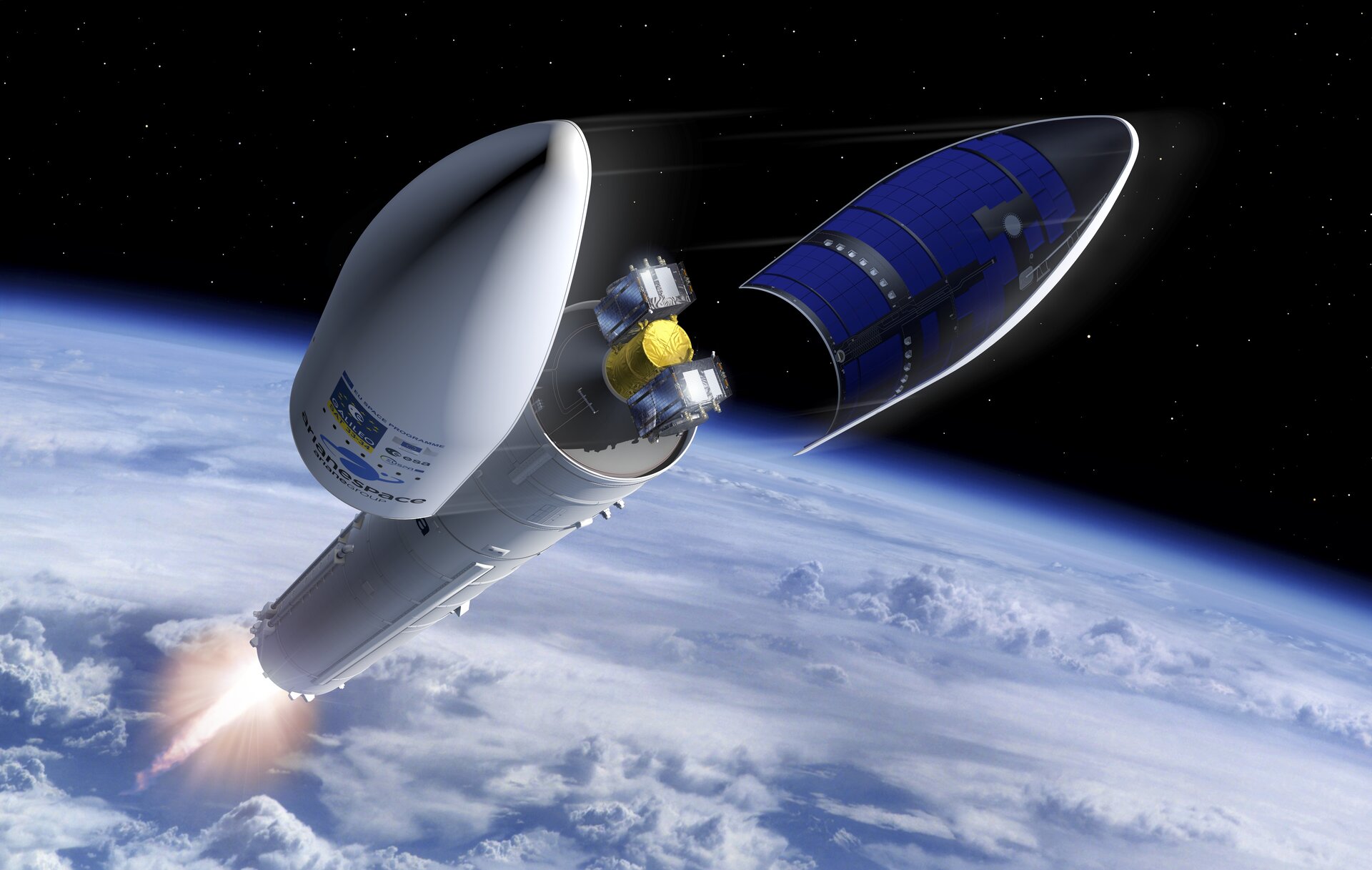
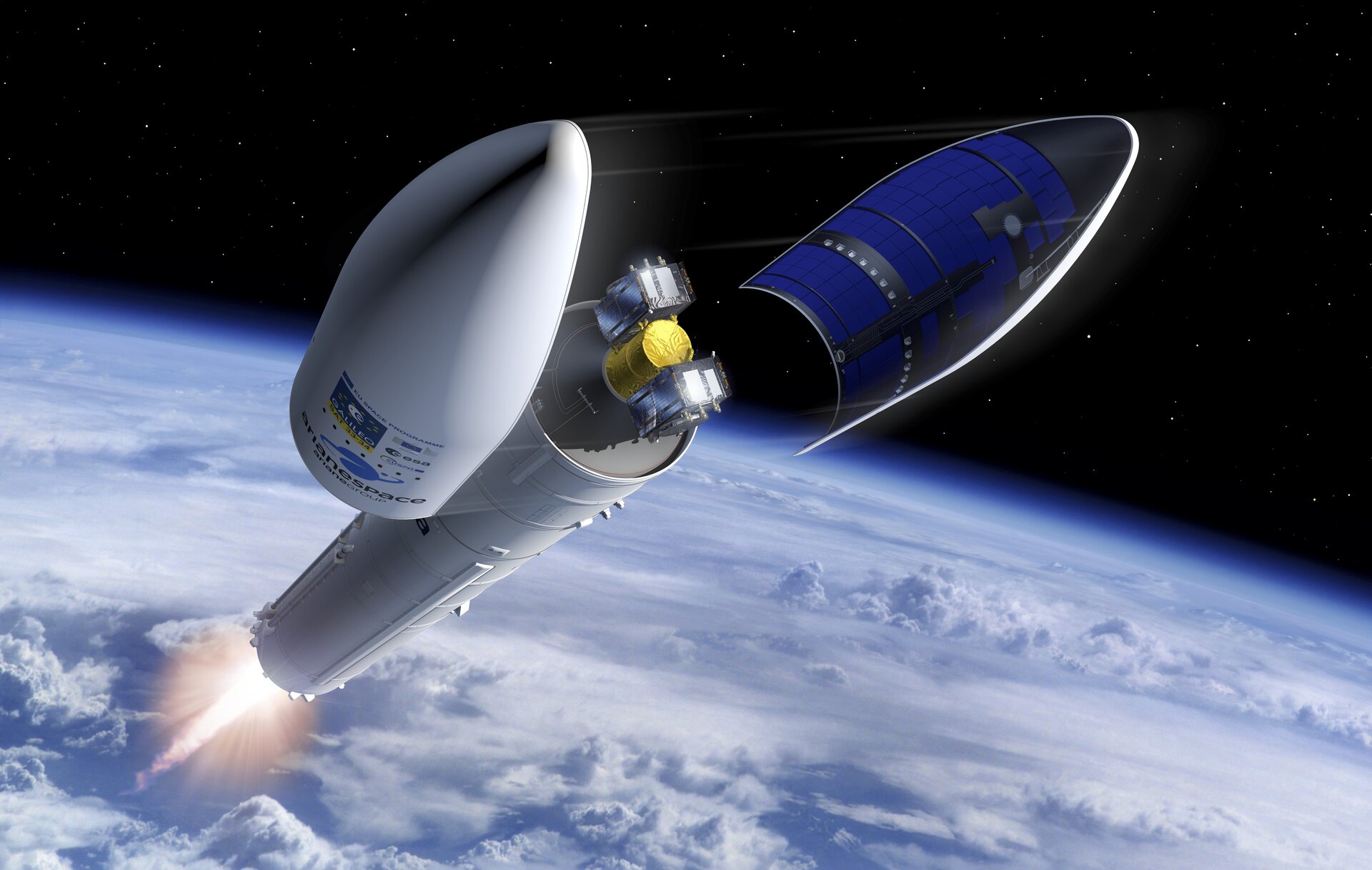
On 17 December, two Galileo satellites will be launched on an Ariane 6 rocket from Europe’s Spaceport in French Guiana in the 14th launch of operational satellites for the Galileo programme. This will be Galileo’s first launch on Ariane 6 and the fifth launch of Europe’s heavy-lift launcher.
The two Galileo satellites, designated SAT 33 and SAT 34, will improve the robustness of the Galileo system by adding spares to the constellation to guarantee the system can provide 24/7 navigation to billions of users. The satellites will join the constellation in medium Earth orbit 23 222 km above Earth’s surface.
Watch the Galileo launch live on ESA WebTV or ESA YouTube.
Programme (all times in CET)
05:35 Broadcast begins
06:01 Liftoff
06:04 Booster separation
06:06 Fairing separation
06:09 Core stage separation
06:10 – 06:21 First Vinci engine boost
09:40 – 09:42 Second Vinci engine boost
09:57 Galileo satellites separation
10:40 – 10:50 Status of the satellites and declaration of launch success
The launch broadcast will be followed by a post-launch event hosted by the European Commission in Brussels.
After reaching orbit, the satellites will be activated and checked in what is known as the early operations phase before going through in-orbit testing to assess their performance. This ensures nothing on the satellites was damaged by the severe launch conditions. Led by the EU Agency for the Space Programme (EUSPA), the checks and testing last three to four months, after which the Galileo satellites will enter service, joining the rest of the constellation in providing positioning, navigation, and timing to users worldwide.
Follow updates on the launch campaign here.
About Galileo
Galileo is currently the world’s most precise satellite navigation system, serving over five billion smartphone users around the globe since entering Open Service in 2016. All smartphones sold in the European Single Market are now guaranteed Galileo-enabled. In addition, Galileo is making a difference across the fields of rail, maritime, agriculture, financial timing services and rescue operations.
A flagship programme of the EU, Galileo is managed and funded by the European Commission. Since its inception, ESA leads the design, development and qualification of the space and ground systems, as well as procuring launches. ESA is also entrusted with research and development activities for the future of Galileo within the EU programme Horizon Europe. EUSPA acts as the service provider, overseeing the market and application needs and closing the loop with users.
For more info about Galileo: https://www.usegalileo.eu/EN/
About Ariane 6
Ariane 6 is Europe’s heavy-lift launcher and a key element of ESA’s efforts to ensure autonomous access to space for Europe’s citizens. Its modular and versatile design allows it to launch all types of missions, from low-Earth orbit to deep space.
Ariane 6 is designed and built by ArianeGroup. It has three main components each working in stages to escape Earth’s gravity and take satellites to orbit: two or four boosters, and a core and upper stage. For this launch, the rocket will be in its two-booster configuration.
The core stage and the boosters provide thrust for the first phase of flight. The core stage is powered by the Vulcain 2.1 engine (fuelled by liquid oxygen and hydrogen), with the main thrust at liftoff provided by the P120C boosters.
The upper stage is powered by the reignitable Vinci engine, also fuelled by liquid oxygen and hydrogen. The upper stage will fire two times to reach the required orbit for this mission.
After separation of the Galileo satellites, the Ariane 6 upper stage will move to a stable graveyard orbit far away from operational satellites.










Related Posts
Stay Informed With the Latest & Most Important News
Previous Post
Next Post

Advertisement
-
 01Two Black Holes Observed Circling Each Other for the First Time
 -
 02From Polymerization-Enabled Folding and Assembly to Chemical Evolution: Key Processes for Emergence of Functional Polymers in the Origin of Life
 -
 03Astronomy 101: From the Sun and Moon to Wormholes and Warp Drive, Key Theories, Discoveries, and Facts about the Universe (The Adams 101 Series)
 -
 04True Anomaly hires former York Space executive as chief operating officer
 -
 05Φsat-2 begins science phase for AI Earth images
 -
 06Hurricane forecasters are losing 3 key satellites ahead of peak storm season − a meteorologist explains why it matters
 -
 07Binary star systems are complex astronomical objects − a new AI approach could pin down their properties quickly