
Now Reading: ‘We helped usher in the modern era of AI in NGA.’
-
01
‘We helped usher in the modern era of AI in NGA.’


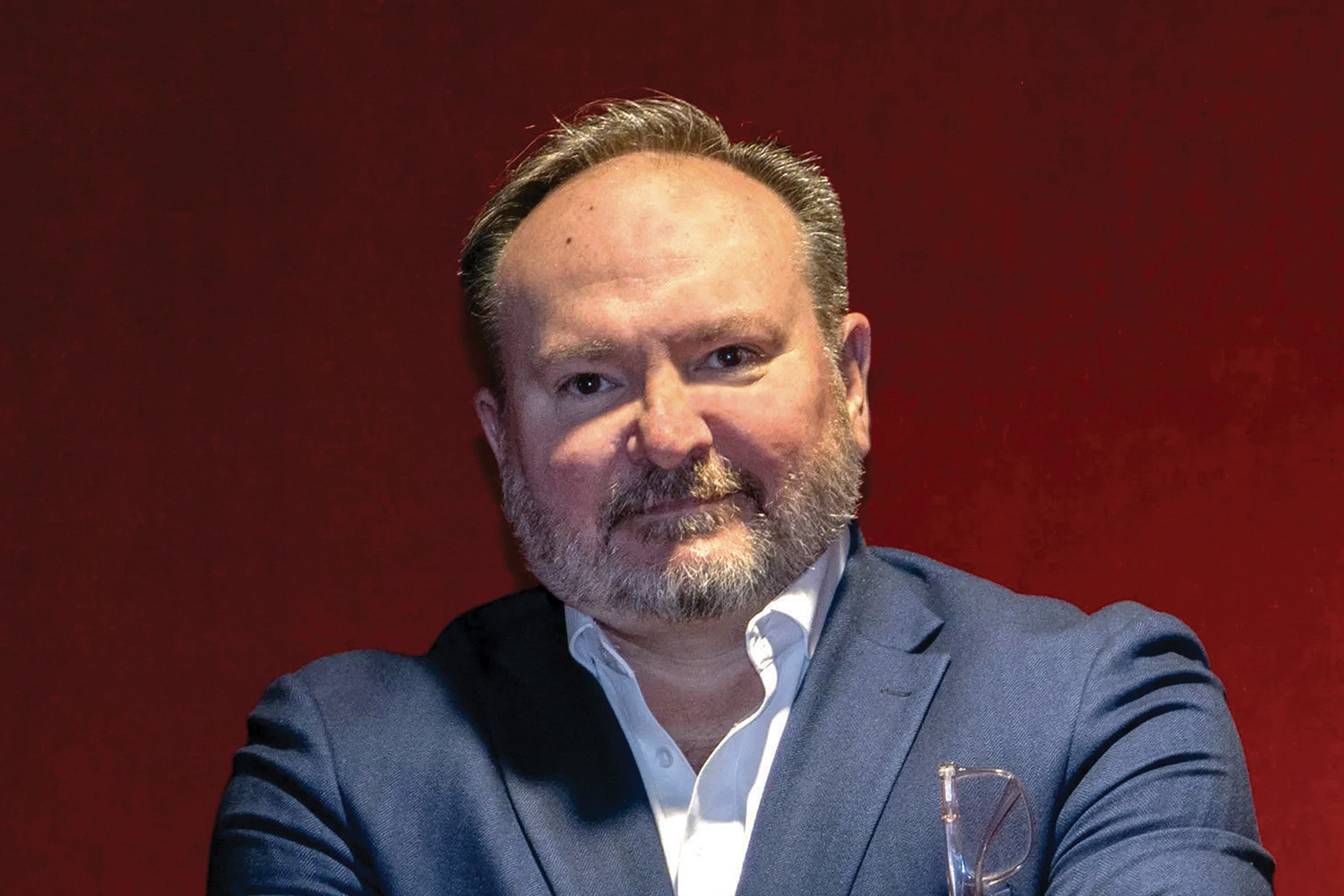

In 2025, more than 322,000 civil servants left jobs voluntarily or were dismissed out of a workforce of roughly 2.4 million. The 13% drop in staffing is the largest single-year decline since the end of World War II. In total, more than 5,000 people who were part of the federal space workforce left their positions. Senior executives with decades of experience retired alongside younger staffers whose posts were eliminated or who sought opportunities in the private sector or academia. This is one of eight conversations with some of the remarkable people who recently left the federal workforce.
Mark Munsell
Last position: National Geospatial-Intelligence Agency Chief Artificial Intelligence officer and Director of Digital Innovation
Government agencies are known for outsourcing software development, making Mark Munsell a rarity: a senior executive who excels at coding. Before opting for early retirement in May, Munsell wrote more than 1 million lines of code over the course of his career.
Digital transformation is the throughline in Munsell’s career. Beginning in 1990, he rose quickly through the ranks of the National Oceanic and Atmospheric Agency and Defense Mapping Agency, before spending the bulk of his career at the National Geospatial-Intelligence Agency (NGA).
Between government jobs, Munsell founded Internet Marine and Aviation Planning Services, an online flight planning startup purchased by Science Applications International Corp., served as a Northrop Grumman technical director and Amazon Web Services principal program manager.
Why did you want to work for the federal government?
I always felt compelled to serve. I was in ROTC and thought I would go into the Air Force or some version of the military. But my eyes are awful, so I had to look for other service opportunities. Working for the government was the next best step. I was working for a civil engineering firm designing subdivisions and bridges, when I saw an advertisement for a surveyor/cartographer/photogrammetrist for the National Oceanic and Atmospheric Administration in Norfolk, Virginia. I sent off my application. Six weeks later, they sent me an offer letter. Even though it was not military, it was a uniformed service. I felt like I was doing something good for my country.
What are some highlights of your career?
Because I was good at writing software, I immediately started doing digital transformation. They promoted me up to NOAA headquarters. Then in 1995, after a five year wait, the Defense Mapping Agency offered me a job. Again, following my pattern for digital disruption, I replaced a $30 million project in about eight months by slinging code. They had the new system for almost 30 years.
In the late 90s, software engineering was being outsourced. There was a Reduction in Force in 1997. I was working for a boss on a project on a Friday. I came back on Monday with the same boss on the same project making twice as much money because they outsourced me. While that was good for my family, it was bad for the agency and bad for the country. The government can be too short sighted with this zeal to outsource because you need people with those skills as leaders in the government.
During the dot-com era, I co-founded a start-up company. With angel investment and server racks built from wood in my basement, I built this very cool application for online flight planning. We started with three people, built it to about an 80-person company and sold it five years later.
When did you return to the government?
In 2005, the folks from NGA reached out to me. The urge to serve was different that time. We were in these long wars. I thought I could contribute, and it was important for me to show my family that I would help our country during those years of combat. I deployed to Iraq to work as the liaison to the 18th Airborne Corps. I worked on some very important operations and had a lot of responsibility that helped shape my perspective of service.
I continued to look at every problem from a digital-transformation angle. How could we could automate it and write software to make it better? That led to me being promoted through a series of analytic and operational jobs. I was the deputy of the Chief Information Officer organization. I established a reputation of continuous improvement, continuous modernization. I then became the chief technology officer.
I’m very proud of the fact that I had these senior executive jobs, and I did them from St Louis, not NGA headquarters. Living in St. Louis called for an immense amount of travel.
I then left the government and spent about a year at Amazon Web Services. That was a good experience but a lonely time, because COVID hit. I am such an extrovert. I need to be around people. And I couldn’t talk to my old friends at NGA because I was in the cooling-off time.
Then I got a call from Jim McCool. He said, “They’d like me to lead this AI organization in NGA. I’m looking for a deputy, maybe somebody in St Louis. Do you know anybody?” I said, “How about me? This is right up my alley, very challenging. And I’d love to help.”
We helped usher in the modern era of AI in NGA. I became the agency’s first chief AI officer. I set the agency strategy for AI. I’m proud of being able to set that in motion the right way.
What challenges did you face?
To do AI in our serious work is difficult. I had two roles as chief AI officer. One was to be a proponent, to convince people to experiment and try to implement it. The other was to ensure implementation that was secure, responsible and accurate. The agency offers advice to the President and intelligence to commanders. These are very serious services. If you’re going to use AI in those services, you have to be cognizant of the qualities and the shortcomings. Because it’s new, you might not have certain policies in place. No matter what, we always defaulted to the law of armed conflict, and a human making the decision with the proper certifications, credentials and training.
Why did you leave NGA?
My wife had retired two years prior. Plans were lining up for me to retire. I knew that I could do more on the outside. The organizations that I’m working with can move faster. We can be more agile. We can try things, prototype things, pilot things and bring new ideas to market faster. All of that was very appealing to me. Being able to interact freely and openly with policymakers at the city level, at the state level or at the federal level was important too. I was very happy to get an early retirement.
What are you doing now?
I’m leading GeoSTL, a non-profit effort to help the geospatial ecosystem in St. Louis. I meet new people every week. I talk to new companies all the time. I look at different problems every day. I get to work with people that are trying to start companies. I get to brag about how geospatial technology can solve social, economic, scientific and national security problems. I get to proudly talk about my city and region and my tradecraft to companies that might want to move here. I am blessed that people see me as an ambassador. It checks all the right boxes for me to do this work.
An abridged version of this article was first published in the February 2026 issue of SpaceNews Magazine.










Related Posts


Stay Informed With the Latest & Most Important News
Previous Post
Next Post




Advertisement
-
 01Two Black Holes Observed Circling Each Other for the First Time
 -
 02From Polymerization-Enabled Folding and Assembly to Chemical Evolution: Key Processes for Emergence of Functional Polymers in the Origin of Life
 -
 03Astronomy 101: From the Sun and Moon to Wormholes and Warp Drive, Key Theories, Discoveries, and Facts about the Universe (The Adams 101 Series)
 -
 04True Anomaly hires former York Space executive as chief operating officer
 -
 05Φsat-2 begins science phase for AI Earth images
 -
 06Hurricane forecasters are losing 3 key satellites ahead of peak storm season − a meteorologist explains why it matters
 -
 07Binary star systems are complex astronomical objects − a new AI approach could pin down their properties quickly