
Now Reading: Weather delays NASA’s SpaceX Crew-12 flight to the International Space Station
-
01
Weather delays NASA’s SpaceX Crew-12 flight to the International Space Station

Weather delays NASA’s SpaceX Crew-12 flight to the International Space Station

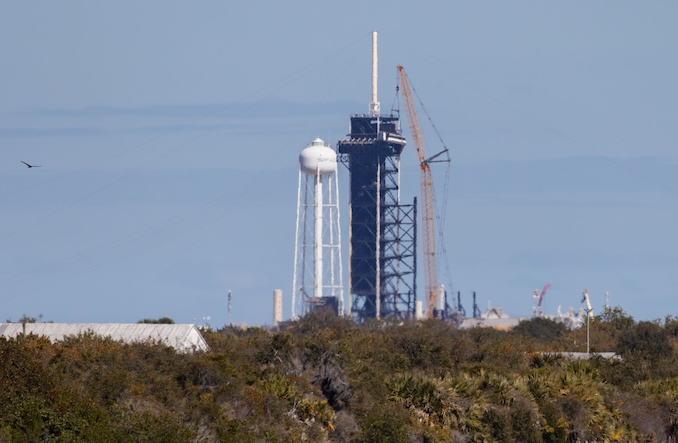
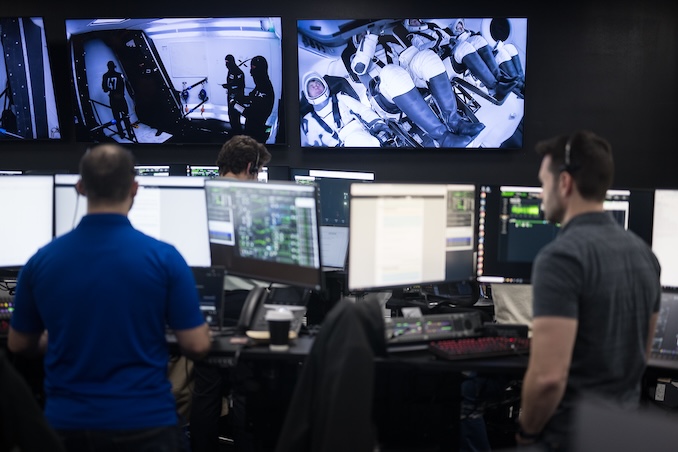
The launch of the next crew rotation mission to the International Space Station will have to wait at least another day after NASA and SpaceX leadership determined weather along the flight path would be unacceptable.
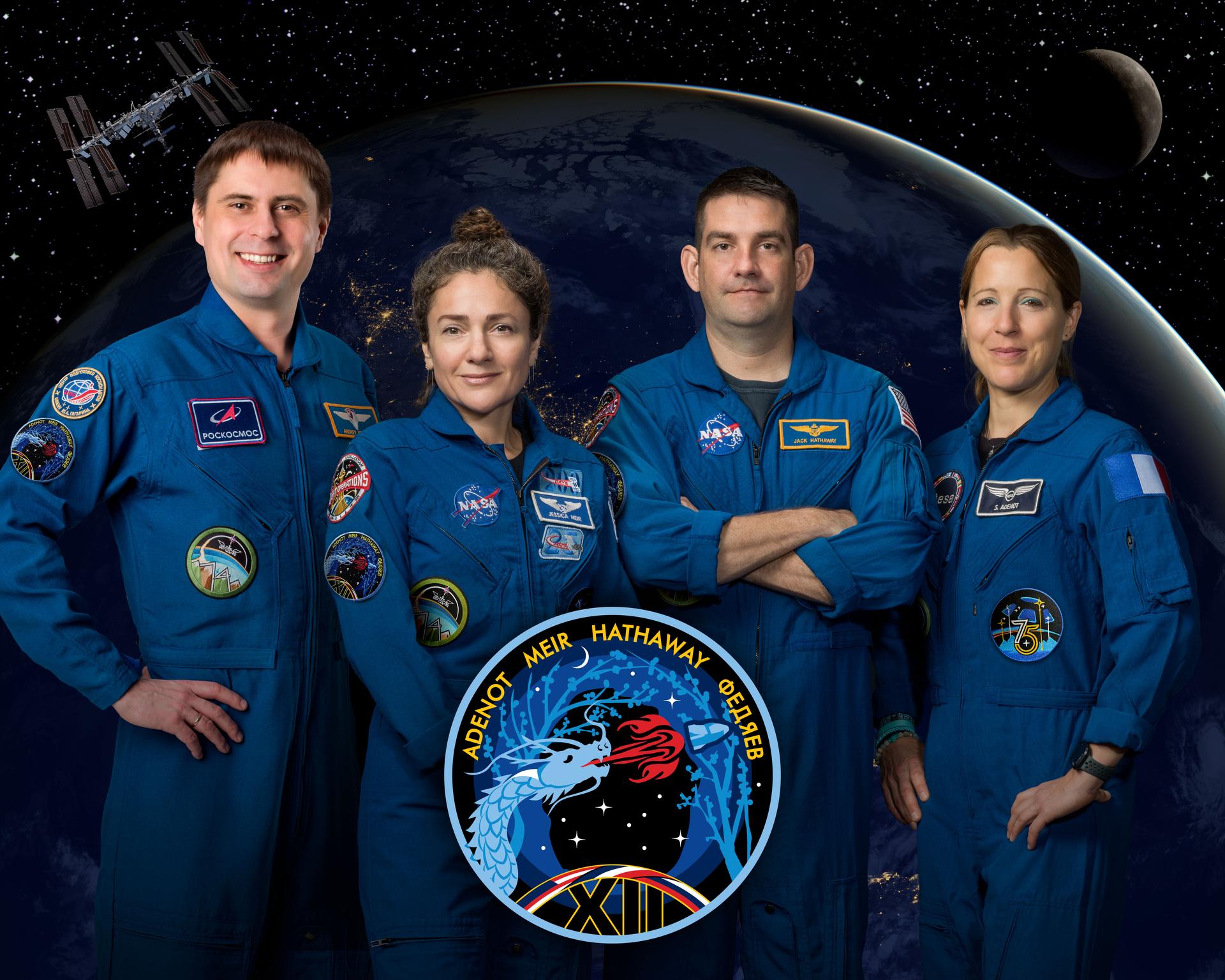
Leaders moved the launch of Crew-12 from pad 40 at Cape Canaveral Space Force Station to no earlier than Thursday, Feb. 12. That would place liftoff at 5:38 a.m. EST (1038 UTC) for NASA astronauts Jessica Meir and Jack Hathaway along with European Space Agency astronaut Sophie Adenot and Roscosmos cosmonaut Andrey Fedyaev.
During a prelaunch briefing on Monday, NASA’s Commercial Crew Program Manager Steve Stich said weather along the ascent corridor for SpaceX’s Falcon 9 rocket would’ve been unacceptable, if the Crew Dragon spacecraft needed to abort following liftoff.
“We could see high winds along a lot of that track, up to 24 to 28 knots, especially in what we would consider our higher risk areas, the staging area,” Stich said. “There’s a low pressure system that’s kind of moving in and setting over that staging area and it’s driving those winds up. And we can really see the models agreeing over the last 24 hours.”
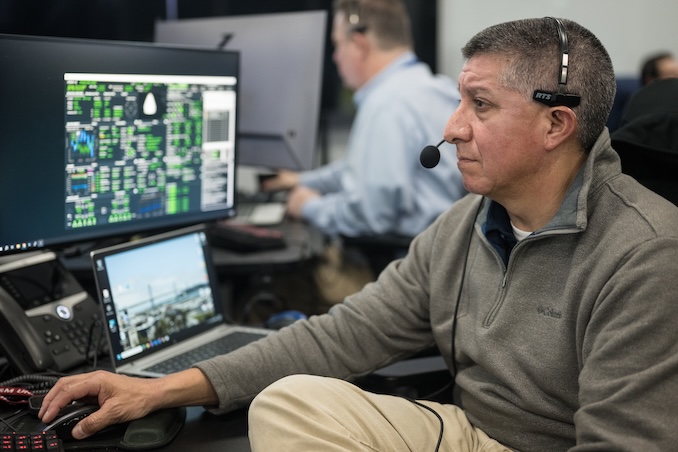
Stich noted that while Feb. 12 is the current target date, that too doesn’t look great from a weather perspective. Teams will further evaluate after getting the latest weather models on Tuesday morning.
“The good news is we have good opportunities for the remainder of the week and so, we’ll go ahead and launch when we’re ready, when we have favorable weather,” Stich said.
The launch preparations come as United Launch Alliance (ULA) is preparing for its first flight of 2026. A Vulcan rocket is scheduled to lift off from Space Launch Complex 41, just down the road from where Crew-12 is set to depart, during a two-hour window that opens at 3:30 a.m. EST (0830 UTC).
Because of the close timing between the two, Stich said Crew-12 has priority on the Eastern Range and if the weather permits, ULA would have to stand down from attempting a launch on Thursday. But if NASA waives off a launch attempt on Thursday prior to getting into launch day work, ULA would be able to launch its Vulcan rocket on the USSF-87 mission for the U.S. Space Force.
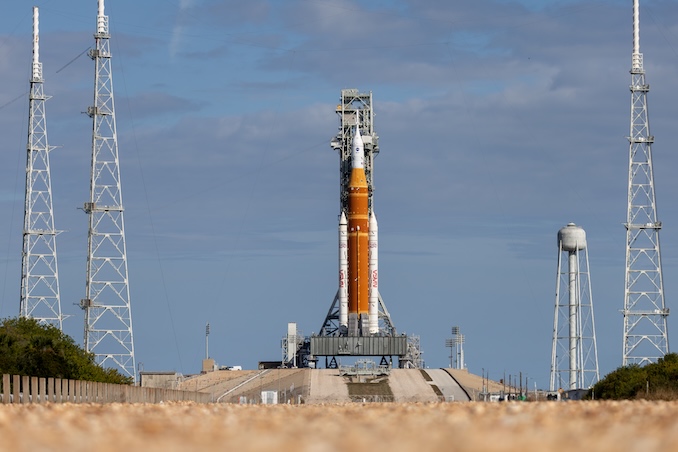
Stich said the other big obstacle on the range is the upcoming wet dress rehearsal tanking test for the Artemis 2 launch campaign. As of Monday afternoon, NASA hasn’t announced a date for that fueling demonstration.
“Right now, we don’t see conflicts this week, but we continue to talk to them all the time,” Stich said, referring to the Artemis 2 launch and ground teams. “They’ve made progress at changing out a few seals and they’re doing some testing on those seals and we’ll make sure we have an integrated operation where we can go fly on Crew-12, since we have a vehicle at the pad that’s ready to go and Dragon fueled with hypergols, and then we’ll work them in as well when they’re ready to go do their wet dress.”
If NASA decides that a launch on Thursday, Feb. 12, is not possible, the agency has a backup on Friday. Feb. 13, which would see a liftoff at 5:15 a.m. EST (1015 UTC). In that scenario, the Dragon spacecraft — nicknamed Freedom — would dock with the ISS about 3:15 a.m. EST (0815 UTC) on Saturday, Feb. 14.
Stich said a launch attempt on Saturday would be tricky since it creates a longer than ideal transit time from liftoff to the Dragon catching up with the ISS and docking, also referred to as “long phasing.”
“It takes quite a number of hours to get to ISS. It’s around 42 to 44 hours,” Stich said. “We would look at that one very carefully because the Dragon is a great spacecraft, but it has a limited, finite ability to be in space. And so, we want to make sure we optimize the amount of time we spend on the front versus the time we could spend on the back end.”
He noted that they also have viable launch options on Feb. 15-17 as well, if those dates become needed.
Launch preparations
Over the weekend, SpaceX conducted a static fire test of its Falcon 9 rocket at SLC-40 to ensure the health of its vehicle before proceeding to a launch attempt. During his remarks on Monday, William Gerstenmaier, SpaceX’s vice president of Build and Flight Reliability, said they did have to replace a component following the engine burn demonstration.
“We found one check valve that was a little sluggish and held back a little bit of pressure. It’s on a transfer tube seal,” Gerstenmaier said. “We typically see that with static fires. We haven’t done many static fires lately, but in this case, we saw that.
“We removed the check valve, put a new one in. We boroscoped the line. We saw a little bit of moisture in the line. That’s probably indicative of what caused the problem. There’s likely some ice formation that may have caused a slight pressure rise, but again, that’s part of the diligence we go through to make sure everything is absolutely ready to go fly.”
Crew-12, SpaceX, and @NASA completed a full rehearsal of launch day activities pic.twitter.com/9zNdQvfZlk
— SpaceX (@SpaceX) February 9, 2026
Following that work on Sunday, on Monday morning, NASA and SpaceX went through a launch day rehearsal with the flight team of Crew-12 along with the rest of the launch support team. The so-called dry dress rehearsal went smoothly, according to Gerstenmaier.
“This is only our second launch from pad 40 with crew, so this is a chance for us to make sure things were really ready and that activity went extremely smooth this morning.”
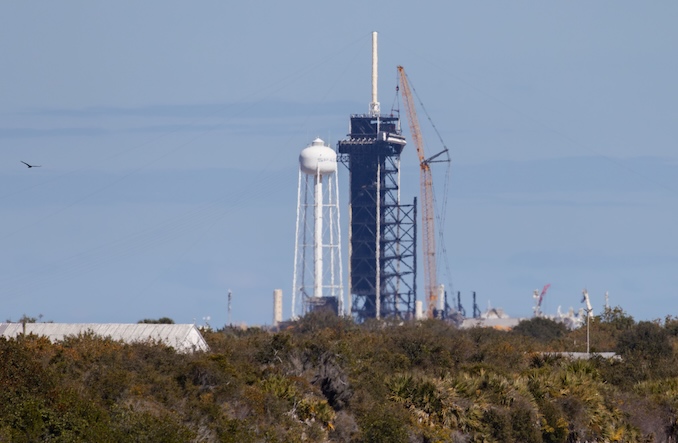
Part of the reason why Crew-12 and future Dragon flights are set to launch from SLC-40 is because of work towards future Starship flights at Launch Complex 39A and also focusing on Falcon Heavy missions at that pad as well.
Additionally, teams are working to remove the crew access arm at LC-39A to do some repair work.
“We’re going to do some maintenance on some bearings on the crew arm. I think the general plan is we’ll keep the crew arm on the ground after we do those repairs, but we’re ready to put the crew arm back up again, if we need to go back and launch crew from pad 39A,” Gerstenmaier said. “It doesn’t say we’re backing away from 39A for crew flights. We’ll just have it in reserve when it’s needed and we need to do this repair of the bearings on the arm.”
Gerstanmaier said the crew access arm needs to come down from the tower in order to get to the bearings. SpaceX attached a crane to the arm last week and has been doing some work from cherry pickers in preparation for its removal.
“These are the bearings that actually hold the arm to the tower. They’re unique to 39A. They’re very different than they are for the arm that’s on 40 and to physically get access to those, the arm needs to be removed,” Gerstenmaier said.
“Those bearings have to come out and they have to be reinstalled. We’ll do that work at the Kennedy Space Center. And the intent there is, we don’t need to put the arm back up because, again as I described […] when we get a call up for a mission and we have to go fly a mission, if it requires that, we have plenty of time to get the arm back up. That’s the easy piece.”










Related Posts
Stay Informed With the Latest & Most Important News
Previous Post
Next Post





Advertisement
-
 01Two Black Holes Observed Circling Each Other for the First Time
 -
 02From Polymerization-Enabled Folding and Assembly to Chemical Evolution: Key Processes for Emergence of Functional Polymers in the Origin of Life
 -
 03Astronomy 101: From the Sun and Moon to Wormholes and Warp Drive, Key Theories, Discoveries, and Facts about the Universe (The Adams 101 Series)
 -
 04True Anomaly hires former York Space executive as chief operating officer
 -
 05Φsat-2 begins science phase for AI Earth images
 -
 06Hurricane forecasters are losing 3 key satellites ahead of peak storm season − a meteorologist explains why it matters
 -
 07Binary star systems are complex astronomical objects − a new AI approach could pin down their properties quickly