
Now Reading: Wildfire smoke lofted miles high could have an unexpected effect on Earth’s climate
-
01
Wildfire smoke lofted miles high could have an unexpected effect on Earth’s climate


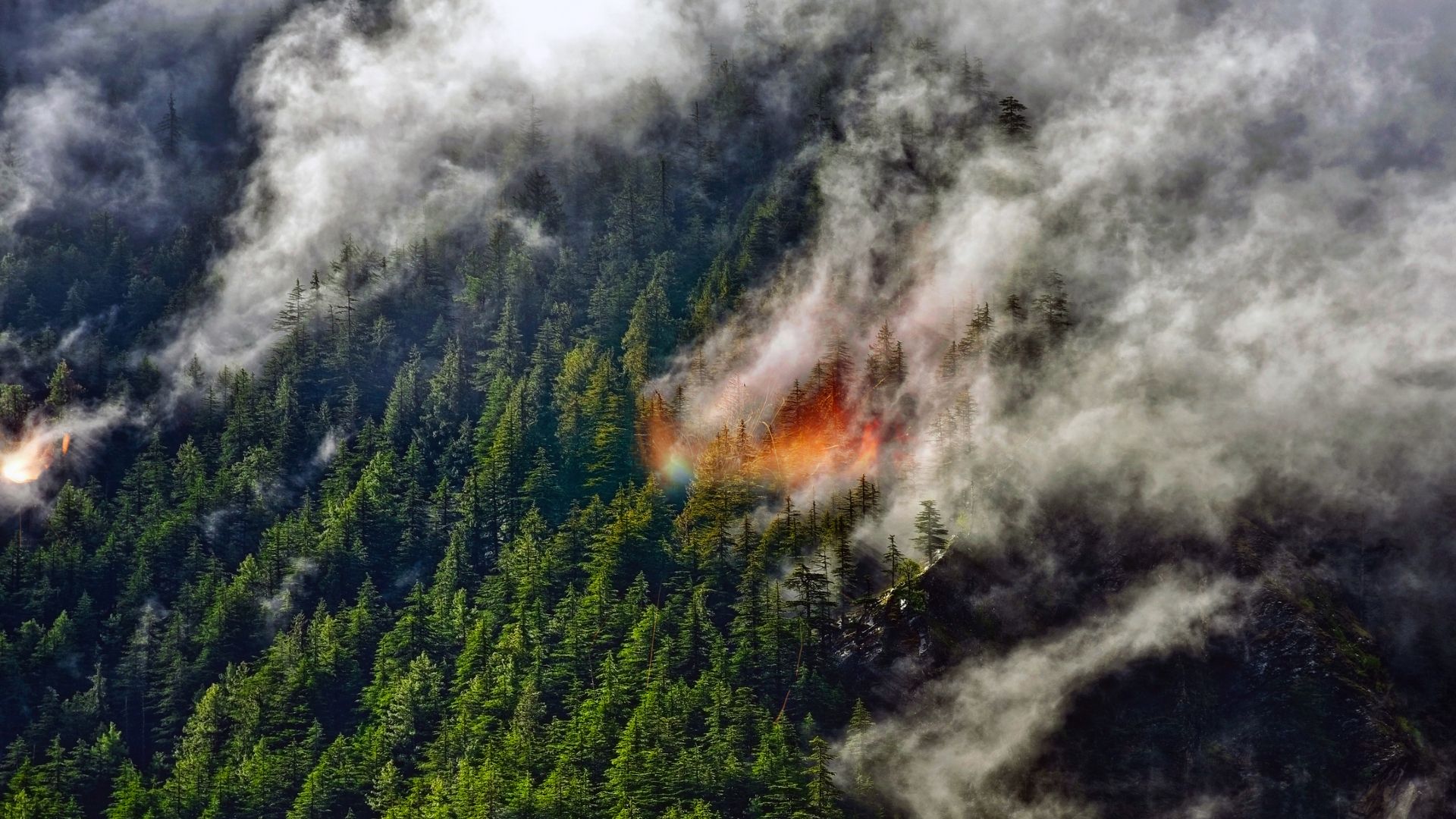
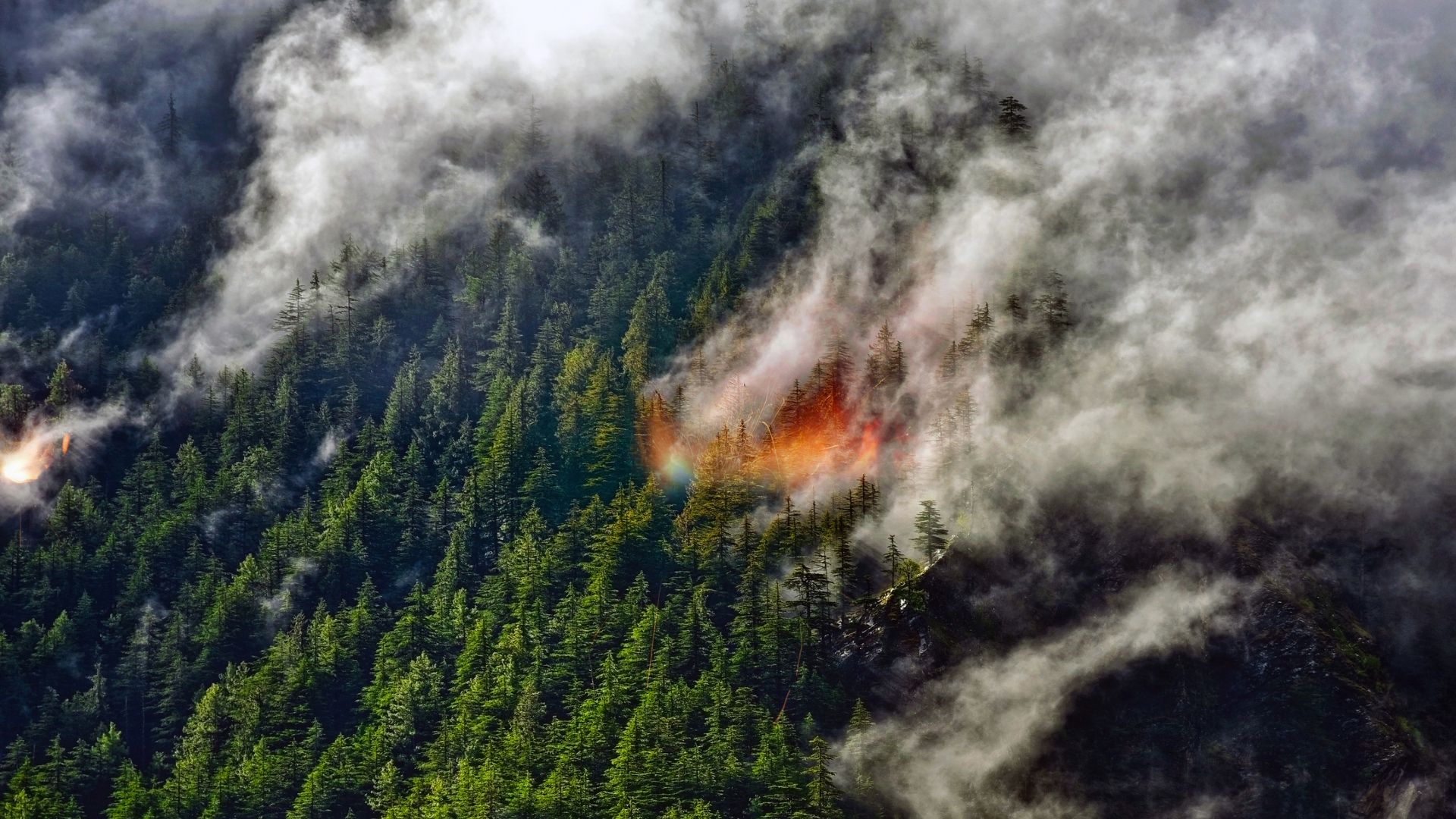
Wildfires don’t just scorch landscapes. Some are so intense that they create their own weather systems, such as pyrocumulonimbus thunderstorms that loft smoke up to 10 miles (16 kilometers) into the atmosphere. While it’s long been known that this high-altitude smoke can persist in the atmosphere for weeks or months, their effect on climate has been hard to measure, due to the difficulties in collecting samples. That is, until now.
Atmospheric scientists at the Harvard John A. Paulson School of Engineering and Applied Sciences report the first direct measurements of five-day-old wildfire smoke in the upper troposphere, about nine miles (14.5 kilometers) above Earth’s surface. They discovered large smoke particles that aren’t represented in current climate models, and these particles appear to actually cool the atmosphere.
Inside the smoke cloud, researchers detected aerosols roughly 500 nanometers wide — about twice the size of typical wildfire aerosols at lower altitudes. The team suggests the large size can be attributed to efficient coagulation.
“Particles can coagulate at any place in the atmosphere,” Yaowei Li, the lead author of a study on the research, said in a statement. “But in that specific region, the air mixes very slowly. That allows wildfire smoke particles to remain concentrated and collide more often, making coagulation much more efficient.”
Such aerosols play a role in changing the amount of radiation that gets to the Earth’s surface, whether by absorbing sunlight or reflecting back toward space. In this study, the larger particles had a striking effect: They increased outgoing radiation by 30% to 36 compared to lower-altitude particles, producing a measurable cooling effect that current climate models don’t account for.
More research is needed to determine further effects of such high-altitude wildfire smoke on both weather and climate. Study co-author and project scientist John Dykema suggests that the large coagulated smoke particles could affect atmospheric circulation through local heating, potentially shifting jet streams. “I think all of these things are possible, and we don’t currently have enough information to say which way they could go,” he said.
The study was published on Dec. 10 in the journal Science Advances.
Join our Space Forums to keep talking space on the latest missions, night sky and more! And if you have a news tip, correction or comment, let us know at: community@space.com.










Related Posts
Stay Informed With the Latest & Most Important News
Previous Post
Next Post



Advertisement
-
 01Two Black Holes Observed Circling Each Other for the First Time
 -
 02From Polymerization-Enabled Folding and Assembly to Chemical Evolution: Key Processes for Emergence of Functional Polymers in the Origin of Life
 -
 03Astronomy 101: From the Sun and Moon to Wormholes and Warp Drive, Key Theories, Discoveries, and Facts about the Universe (The Adams 101 Series)
 -
 04True Anomaly hires former York Space executive as chief operating officer
 -
 05Φsat-2 begins science phase for AI Earth images
 -
 06Hurricane forecasters are losing 3 key satellites ahead of peak storm season − a meteorologist explains why it matters
 -
 07Binary star systems are complex astronomical objects − a new AI approach could pin down their properties quickly