
Now Reading: Will Proba-3 phone home? European solar-eclipse satellite goes dark
-
01
Will Proba-3 phone home? European solar-eclipse satellite goes dark


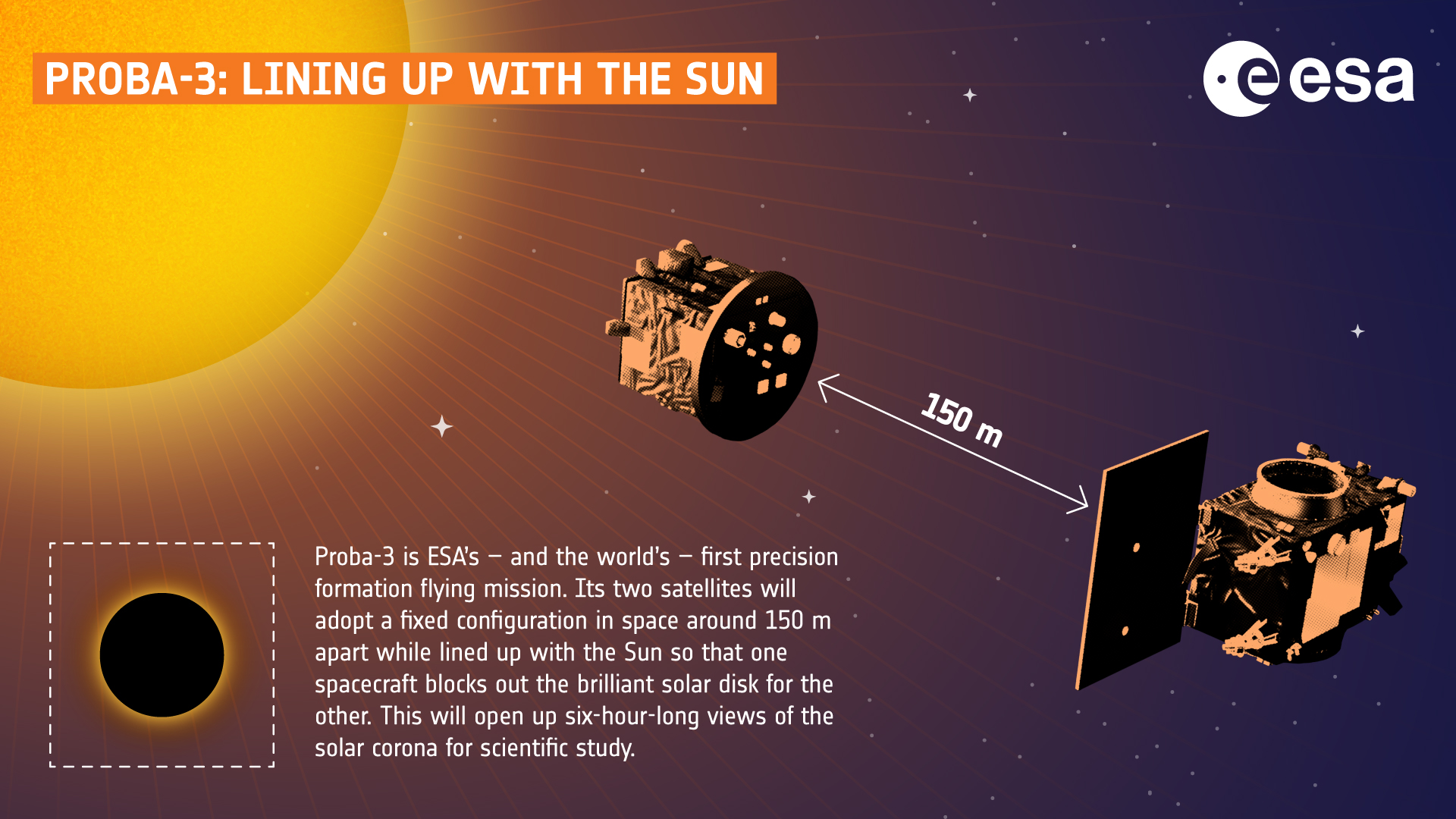
Europe has lost contact with one of its two Proba-3 spacecraft, after an anomaly caused the vehicle to lose orientation.
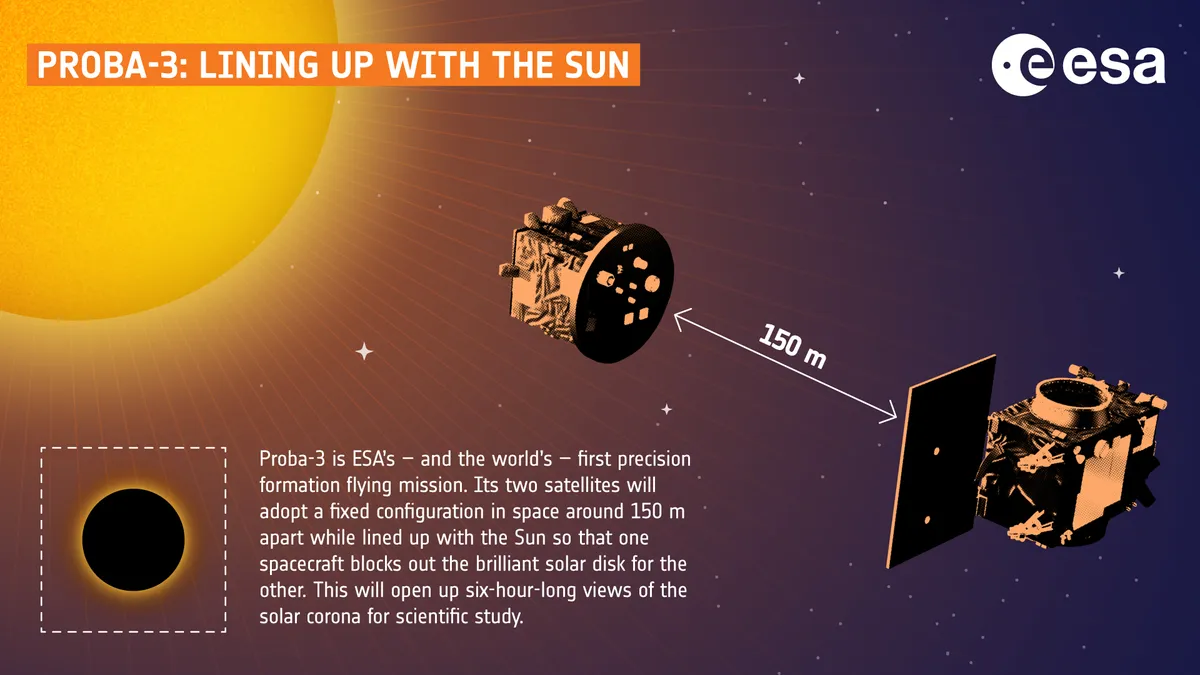
The European Space Agency‘s (ESA) Proba-3 mission launched to Earth orbit from India in December 2024. Proba-3 consists of two spacecraft designed to fly in precise formation to create artificial solar eclipses in space, allowing scientists to study the sun’s faint outer atmosphere, or corona. But the mission may be in jeopardy after an anomaly that occurred the weekend of Feb. 14 caused one of the probes to lose orientation.
The Proba-3 spacecraft entered their precise station-keeping formation in May 2025, demonstrating for the first time ever the ability for two spacecraft to remain in such synchronicity. Then, in June 2025, the mission captured its first photos of an artificial solar eclipse.
Now, ESA is trying to determine what exactly went wrong last month. “The root cause of the anomaly is under investigation, and mission teams are working hard to recover the situation,” the agency said in an update on March 6.
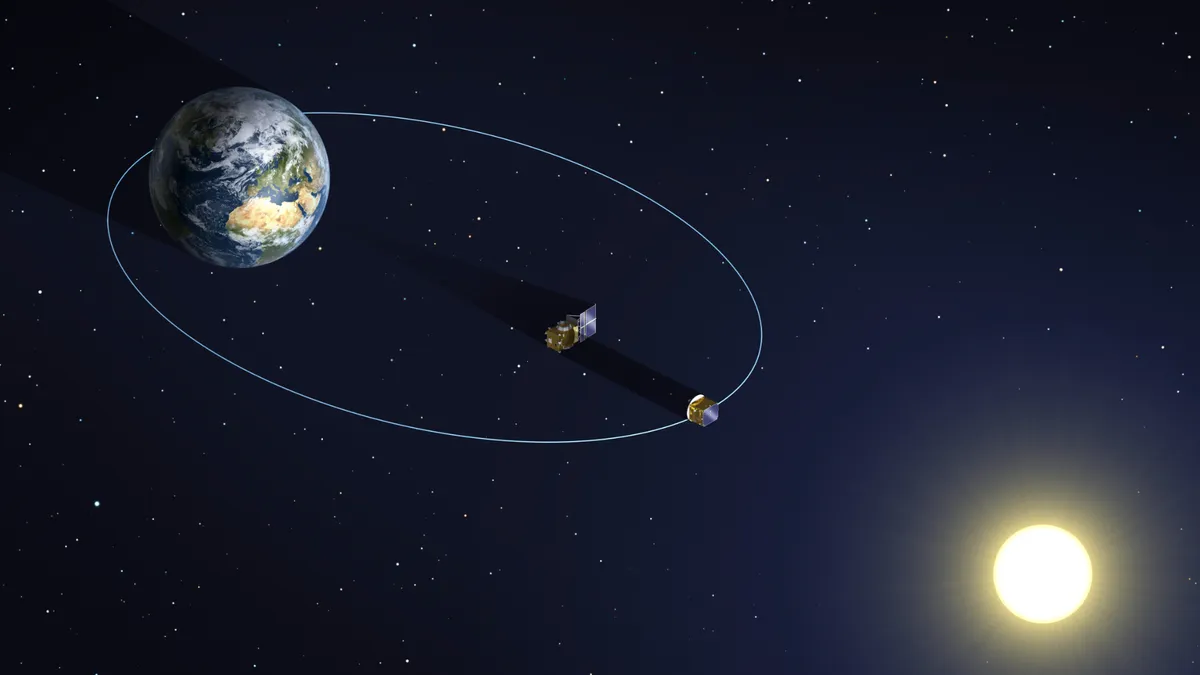
The anomaly caused an apparent chain reaction that prevented the Coronagraph from entering safe mode and led to a “progressive loss of attitude,” the ESA update said. The change in orientation pointed the spacecraft’s solar panels away from the sun, quickly draining its batteries and triggering a “survival mode.”
As they search for a cause, mission operators are investigating how they might safely steer the Occulter probe closer to the Coronagraph to assist in diagnosing the issue and reestablishing contact. ESA officials said they will provide updates “as new information becomes available.”










Related Posts

Stay Informed With the Latest & Most Important News
Previous Post
Next Post


Advertisement
-
 01Two Black Holes Observed Circling Each Other for the First Time
 -
 02From Polymerization-Enabled Folding and Assembly to Chemical Evolution: Key Processes for Emergence of Functional Polymers in the Origin of Life
 -
 03Astronomy 101: From the Sun and Moon to Wormholes and Warp Drive, Key Theories, Discoveries, and Facts about the Universe (The Adams 101 Series)
 -
 04True Anomaly hires former York Space executive as chief operating officer
 -
 05Φsat-2 begins science phase for AI Earth images
 -
 06Hurricane forecasters are losing 3 key satellites ahead of peak storm season − a meteorologist explains why it matters
 -
 07Binary star systems are complex astronomical objects − a new AI approach could pin down their properties quickly