NASA DARES 2025 Date/Time: Monday, May 18th, 2026, 7:00–8:30 pm CDT Please join us Monday evening, May 18th, for the NASA Astrobiology Community Update at AbSciCon 2026, featuring updates from

NASA DARES 2025 Date/Time: Monday, May 18th, 2026, 7:00–8:30 pm CDT Please join us Monday evening, May 18th, for the NASA Astrobiology Community Update at AbSciCon 2026, featuring updates from

AbSciCon 2026 This media advisory is available online at: https://news.agu.org/press-release/abscicon26-tipsheet-1-exoplanet-earth-evolution-biosignatures-habitable-worlds/ Astrobiology Science Conference 2026 Monona Terrace Community and Convention CenterOne John Nolen DriveMadison, Wisconsin 5370317 – 22 May 2026 Press contact:Sean Cummings,

AbSciCon 2026 This media advisory is available online at: https://news.agu.org/press-release/abscicon26-tipsheet-2-technosignatures-life-in-space-existential-questions-robot-explorers/ Astrobiology Science Conference 2026 Monona Terrace Community and Convention CenterOne John Nolen DriveMadison, Wisconsin 5370317 – 22 May 2026 Press contact:Sean Cummings,
Astronomers have tracked a dramatic “changing-look” active galactic nucleus (AGN) whose central supermassive black hole appeared to switch off and then rapidly reignite. The galaxy, HE 1237−2252, dimmed in X-rays
Our solar system is currently passing through the Local Interstellar Cloud, a region of highly diluted gas and dust between the stars. On its path, Earth continuously accumulates iron-60, a
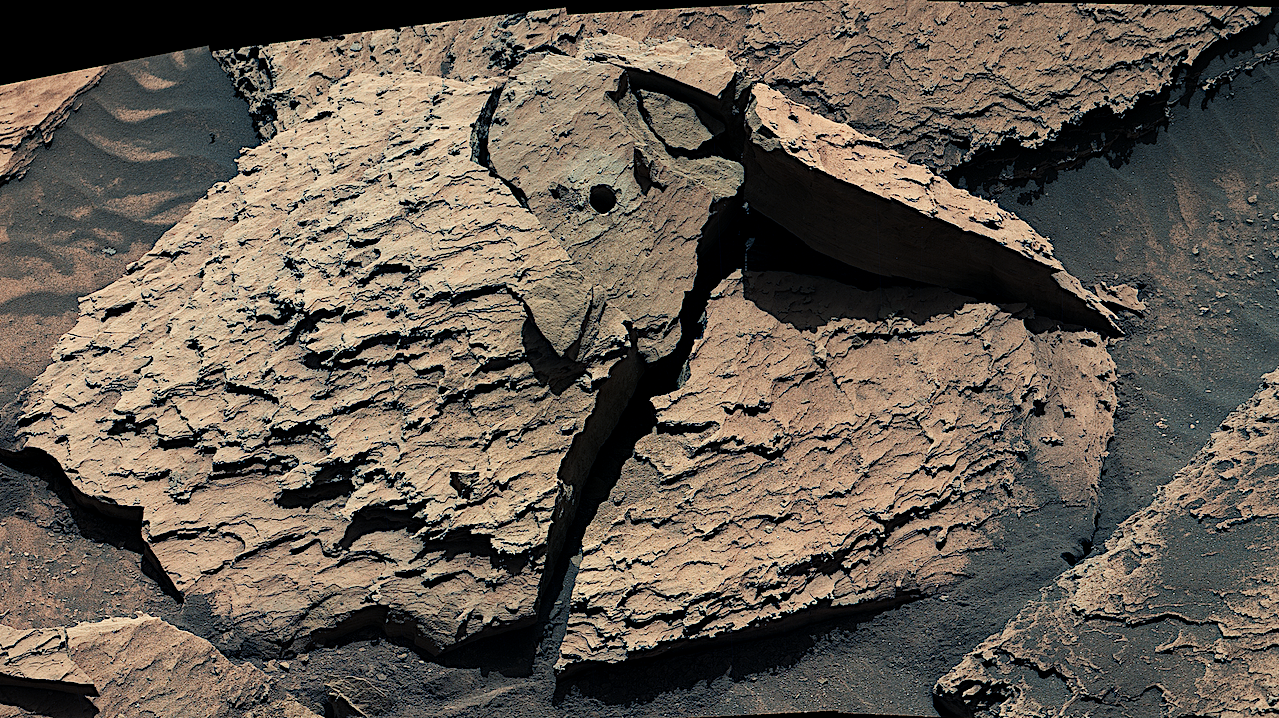
After NASA’s Curiosity Mars rover drilled a sample from this rock on April 25, 2026, it withdrew its robotic arm and pulled the entire rock off the surface with it.
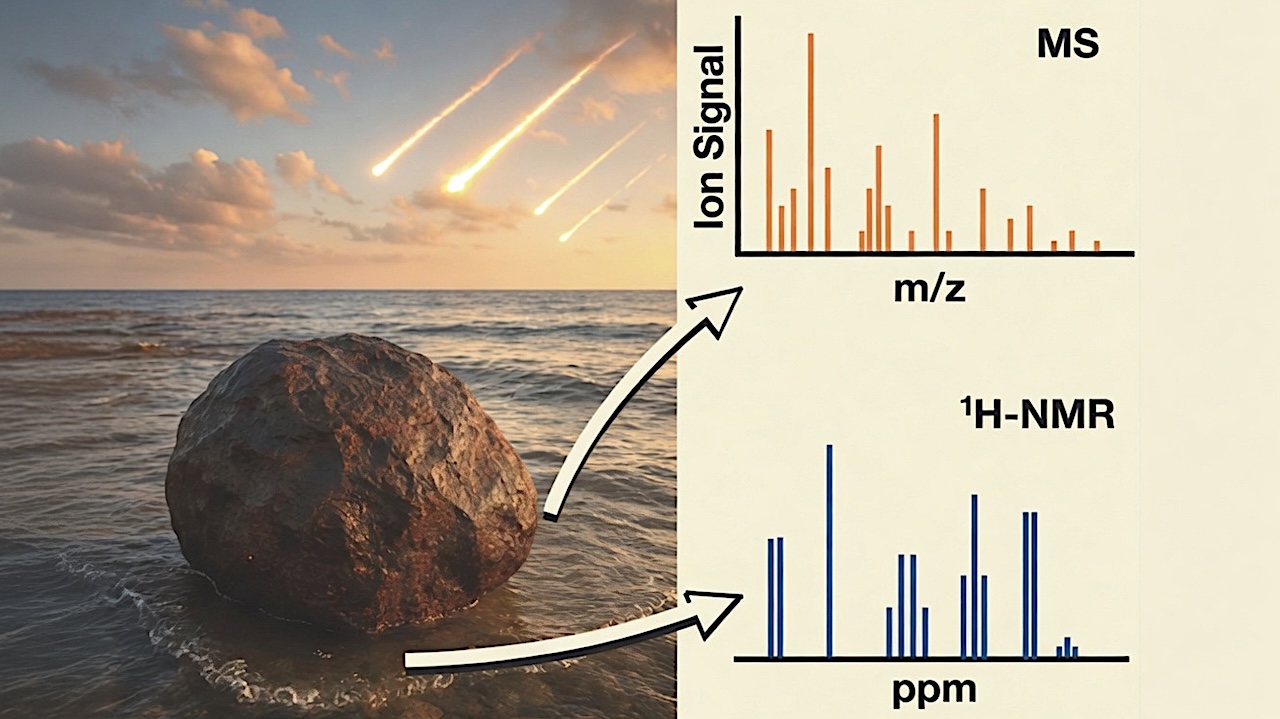
Graphical Abstract Experiments exploring potential emergence-of-life chemistry in a laboratory setting critically depend on simulating realistic early-Earth environments. Such experimental conditions include the implementation of controlled high temperatures and pressures,
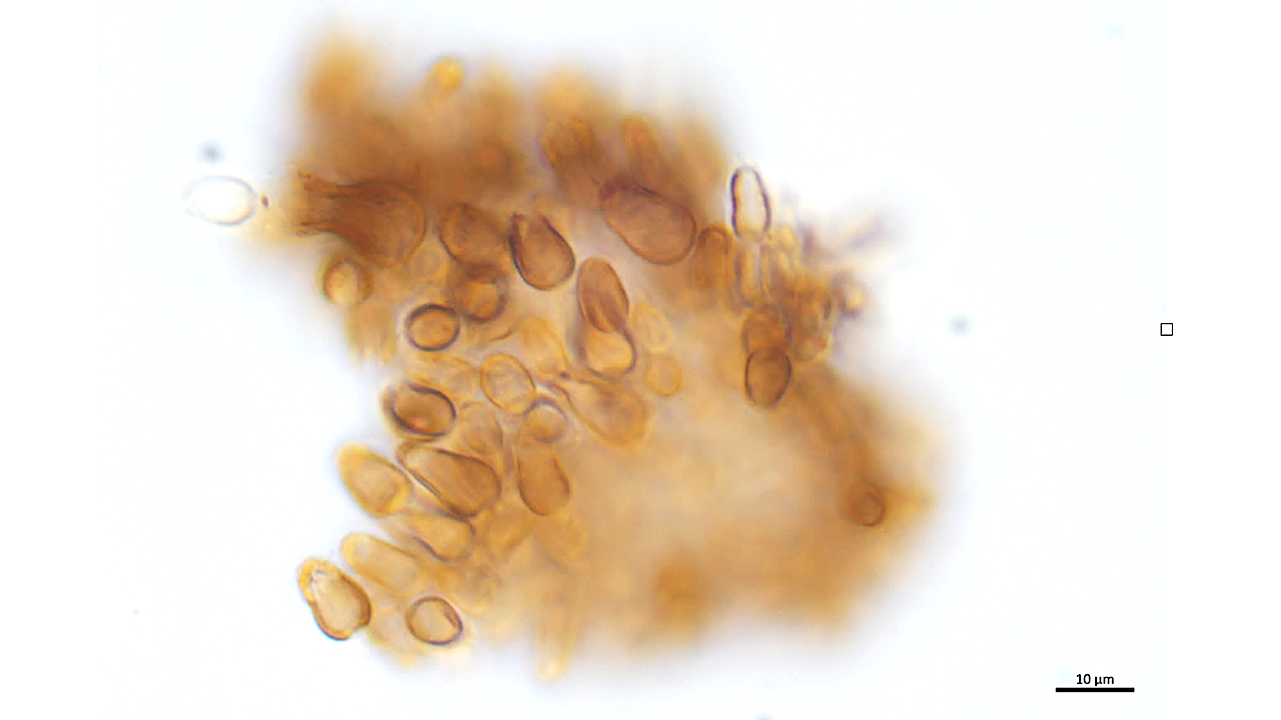
Cell-free EDTA-treated EPS pigmented sheath — Scientific Reports From the first botanical characterization of cyanobacteria about two centuries ago to contemporary studies, only two categories of extracellular UV-screening pigments have
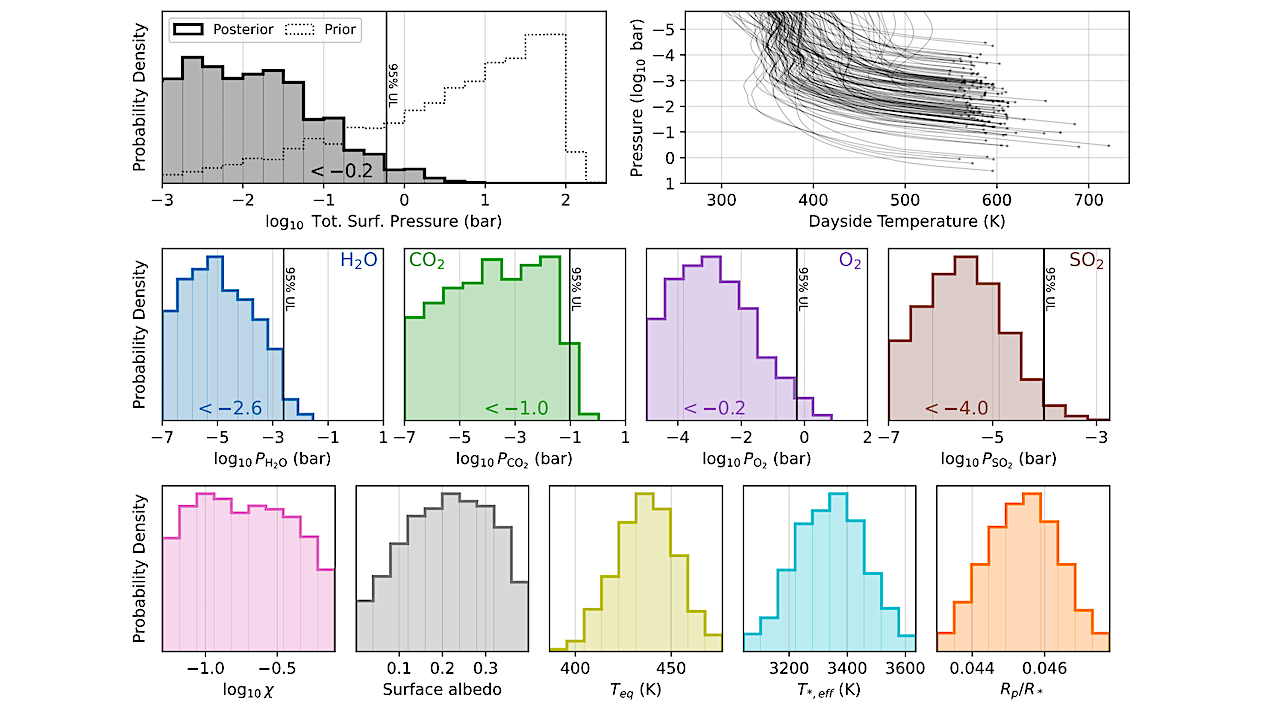
1D marginalized posterior distributions for key parameters in the atmospheric fit to the 16-bin MIRI LRS eclipse spectrum. The top-left panel shows the derived posterior on total surface pressure (solid
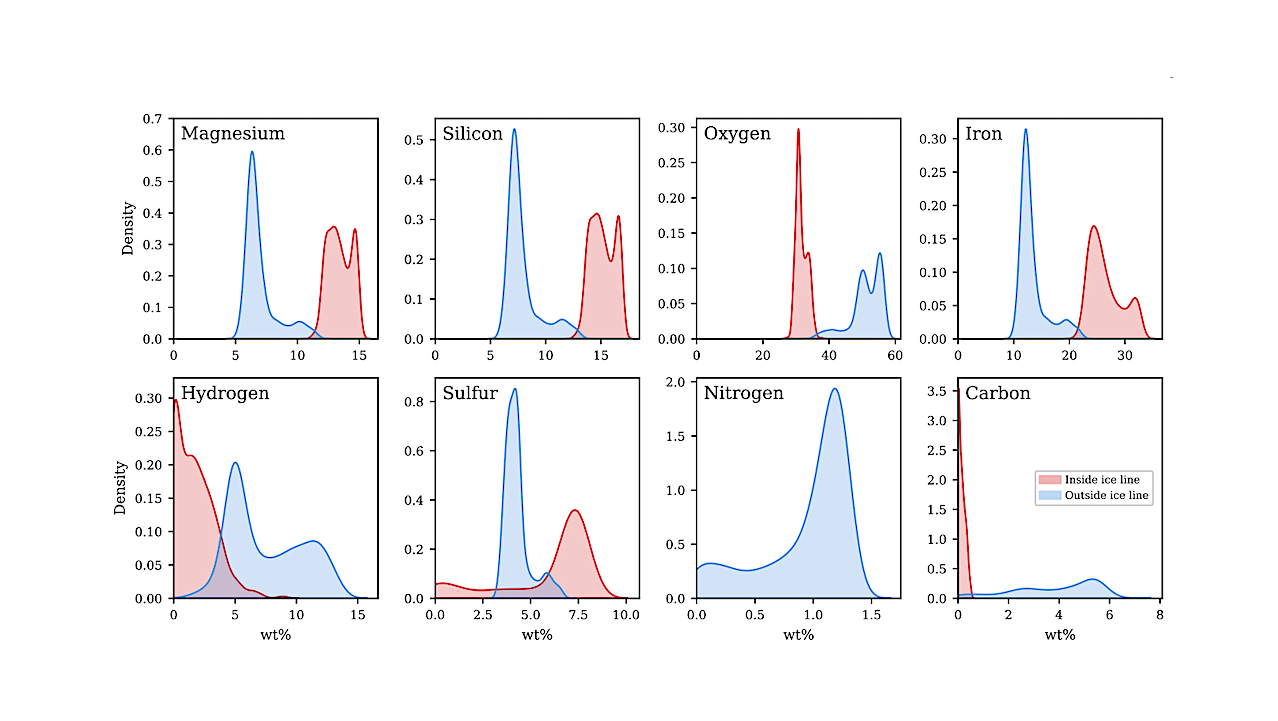
Kernel density estimates of the bulk elemental mass fractions of the initial planet population. The population is separated into planets that formed inside and outside the water ice line. Planets