
Now Reading: Seraphim closes second early-stage space fund above $100 million target
-
01
Seraphim closes second early-stage space fund above $100 million target


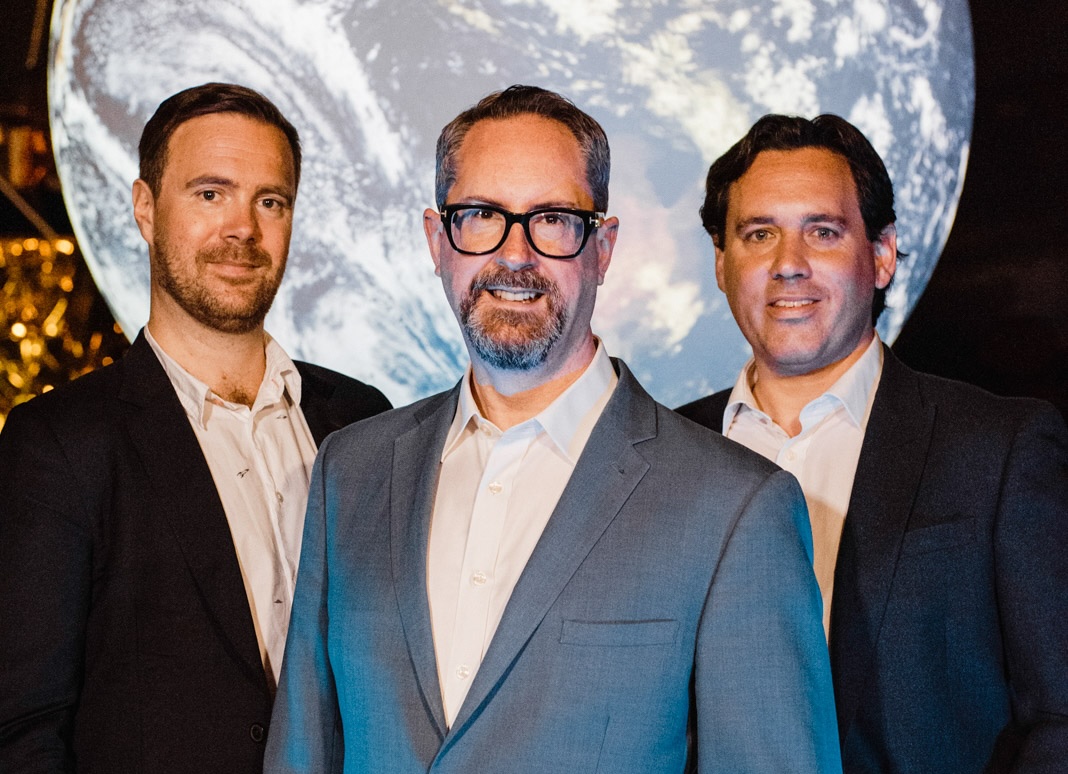

TAMPA, Fla. — Seraphim Space announced Feb. 25 it has completed fundraising for its second private early-stage venture fund, after exceeding its $100 million target to back young space technology startups.
The British firm declined to disclose the fund’s final size, but said new investors include Saudi satellite operator Arabsat and the U.K. government-backed British Business Bank and National Security Strategic Investment Fund.
They join existing strategic partners that include Eutelsat, SKY Perfect JSAT and Japanese technology company NEC.
Seraphim said its latest fund, Seraphim Space Ventures II (SSV II), has already made investments in 17 companies across the United States and Europe since launching in 2024.
Investments include small geostationary satellite maker AscendArc and Hubble Networks, which is developing a constellation to connect Bluetooth devices.
Since launching its inaugural private early-stage venture fund in 2016, Seraphim has also established an accelerator program and a London Stock Exchange-listed investment trust, which gives public market investors exposure to growth-stage space technology companies.
According to Seraphim, it has supported 149 companies across 33 countries to date, with portfolio investments collectively raising more than 10 billion British pounds ($13.6 billion).
The firm now manages more than $550 million in assets under management across its private and public funds.
Investing in new space frontiers
Mark Boggett, CEO of Seraphim Space, said notable investment trends include dual-use technologies aimed at strengthening resilience and operational security, in-orbit logistics and satellite data applications leveraging artificial intelligence advances.
He pointed to SpaceX’s recent merger with xAI, an AI company also run by Elon Musk, as validation of space technology increasingly serving as foundational infrastructure for AI and digital systems.
“Over time, the makeup of Seraphim’s investments has evolved alongside the SpaceTech sector itself,” Boggett said via email.
“Early funds were heavily weighted towards core space infrastructure and hardware-led companies, reflecting where innovation and risk appetite sat in the market at that time. As the sector matured, the focus shifted towards software-driven, data-intensive companies, particularly those applying AI and machine learning to satellite-derived data, companies building the digital infrastructure layer in the sky.”
Boggett said the firm has also increased its exposure to dual-use commercial/government technologies with defense, security and national resilience applications, reflecting growing focus on sovereignty and space as critical infrastructure.
While the United States continues to dominate space investment, he said Europe’s share has increased modestly and activity across Asia is also steadily expanding.
“Seraphim is actively reviewing a large pipeline of early-stage SpaceTech companies for potential investment in 2026,” he said.
“Opportunities are emerging across defense and security, climate and sustainability, life sciences and next-generation space infrastructure,” he added, driven by commercial demand and government programs.










Related Posts



Stay Informed With the Latest & Most Important News
Previous Post
Next Post




Advertisement
-
 01Two Black Holes Observed Circling Each Other for the First Time
 -
 02From Polymerization-Enabled Folding and Assembly to Chemical Evolution: Key Processes for Emergence of Functional Polymers in the Origin of Life
 -
 03Astronomy 101: From the Sun and Moon to Wormholes and Warp Drive, Key Theories, Discoveries, and Facts about the Universe (The Adams 101 Series)
 -
 04True Anomaly hires former York Space executive as chief operating officer
 -
 05Φsat-2 begins science phase for AI Earth images
 -
 06Hurricane forecasters are losing 3 key satellites ahead of peak storm season − a meteorologist explains why it matters
 -
 07Binary star systems are complex astronomical objects − a new AI approach could pin down their properties quickly