
Now Reading: Artemis 2 astronauts praise performance of Orion
-
01
Artemis 2 astronauts praise performance of Orion


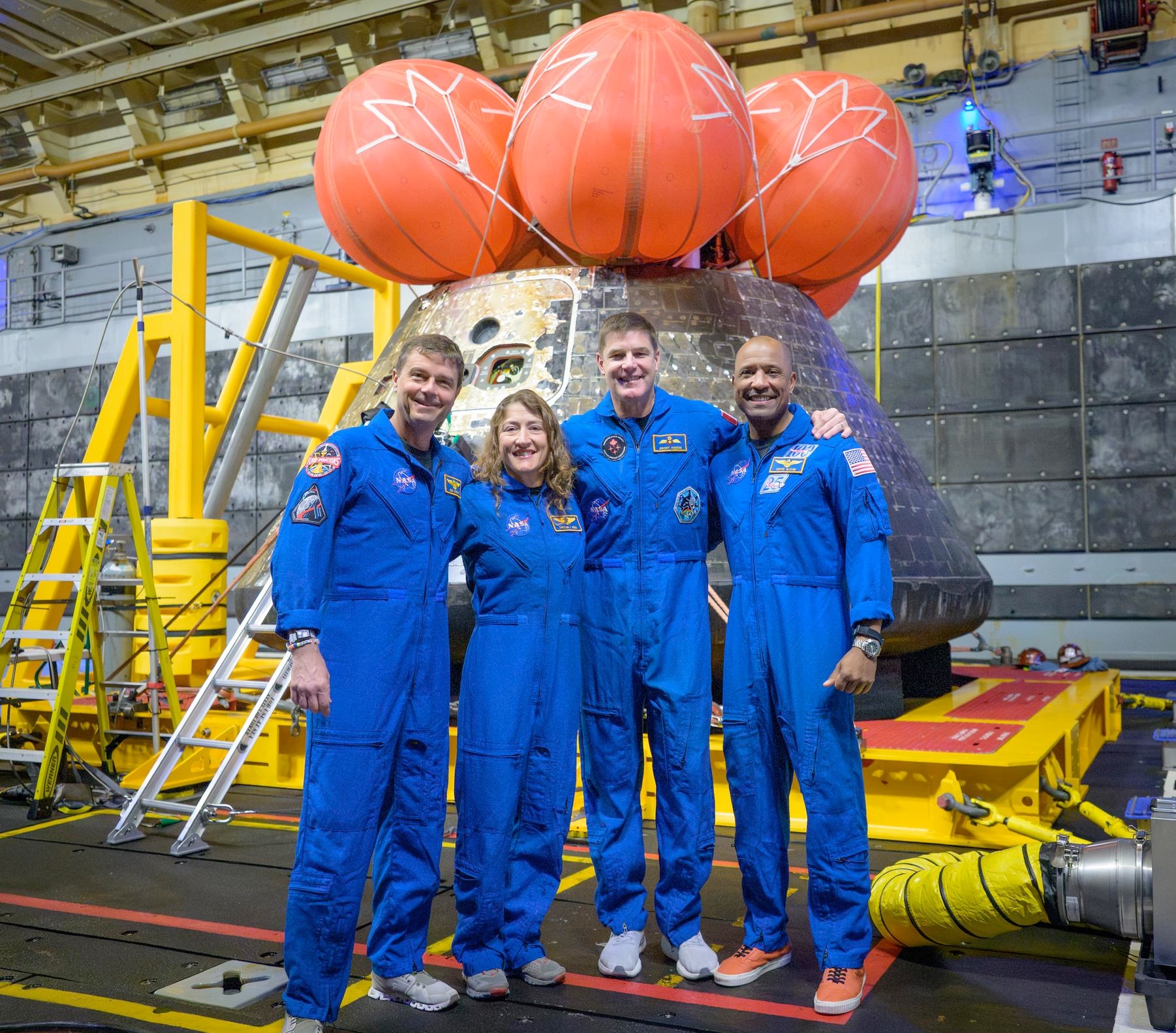

COLORADO SPRINGS — The astronauts who flew around the moon on Artemis 2 said they were confident the Orion spacecraft is ready to support future missions, including those to land humans on the lunar surface.
At an April 16 press conference, the four Artemis 2 astronauts said that despite some minor issues during the mission, they felt the spacecraft flew as well as or better than expected on the nine-day flight.
“There are always things we need to improve,” Reid Wiseman, the commander of the mission, said. “There’s way this machine needs to be improved. But in my own personal opinion, they could put the Artemis 3 Orion on the Space Launch System tomorrow and launch it, and the crew would be in great shape.”
An example of that was a manual piloting demonstration when the crew flew Orion around the SLS upper stage. “It flew better than the sim in all areas,” said Victor Glover, the pilot, noting it was an “unreal privilege” to be the first to fly Orion. “It flew like a dream.”
The astronauts acknowledged some issues on the flight, such as valves that leaked helium used to pressurize the vehicle’s propulsion system. There were also problems with the toilet, but Wiseman emphasized the issue was with a wastewater vent line, not the toilet itself.
“I just want to say 100% point blank, that was a wonderful toilet. The toilet worked great,” he said. “For those great engineers that made that toilet, I don’t want them hanging their head low. They should hang it very high.”
Some other lessons learned include making it easier to access food stored in the spacecraft and finding ways to manage the exercise each astronaut performed. However, he stressed those were minor issues.
“The thing that really surprised me on this mission was how well the spacecraft handled and how well the machine supported the four humans on board,” he said.
One concern before the flight was the performance of the heat shield, given the unexpected erosion seen on the Artemis 1 heat shield. NASA redesigned the heat shield for future Orion missions to solve that issue, but for Artemis 2 revised the reentry profile to limit the heating.
“I will tell you, looking out the window that whole way in, it was a smooth ride,” Wiseman said. When the astronauts inspected the capsule after it was recovered, they saw “a little bit of char loss” on the edge of the heat shield, where it met the capsule’s conical structure, but no other obvious damage. “For four humans just looking at a heat shield, it looked wonderful to us.”
That performance gives the astronauts confidence going into future missions, including landings on the moon.
“We were very much lifted up by the notion that we would get to contribute to astronauts doing this all over again, much sooner than we thought,” Christina Koch, mission specialist on Artemis 2, said of the feelings she and her crewmates felt before launch about NASA’s revisions to the Artemis architecture. “We are feeling even more excited and just ready to take that on as an agency.”
She said that, within a couple of days of returning, she and other crewmembers got into spacesuits to perform simulated lunar geology tasks as part of planning for future lunar missions.
Jeremy Hansen, the other mission specialist, said those future missions will carry with them new risks. “We have to be willing to accept a little more risk than we were willing to accept in the past, and to just trust that we will figure it out in real time,” he said.
Wiseman said his crew was ready to go land on the moon if they had a lander. “If we had a first flight lander on board that thing, I know at least three of my crewmates would have been in it, trying to land on the moon,” he said. “If you had given us keys to the lander, we would have taken it down and landed on the moon.”










Related Posts

Stay Informed With the Latest & Most Important News
Advertisement
-
 01Two Black Holes Observed Circling Each Other for the First Time
 -
 02From Polymerization-Enabled Folding and Assembly to Chemical Evolution: Key Processes for Emergence of Functional Polymers in the Origin of Life
 -
 03Astronomy 101: From the Sun and Moon to Wormholes and Warp Drive, Key Theories, Discoveries, and Facts about the Universe (The Adams 101 Series)
 -
 04True Anomaly hires former York Space executive as chief operating officer
 -
 05Φsat-2 begins science phase for AI Earth images
 -
 06Hurricane forecasters are losing 3 key satellites ahead of peak storm season − a meteorologist explains why it matters
 -
 07Binary star systems are complex astronomical objects − a new AI approach could pin down their properties quickly