
Now Reading: Rare ‘ring of fire’ eclipse seen by few | Space photo of the day for Feb. 26, 2026
-
01
Rare ‘ring of fire’ eclipse seen by few | Space photo of the day for Feb. 26, 2026


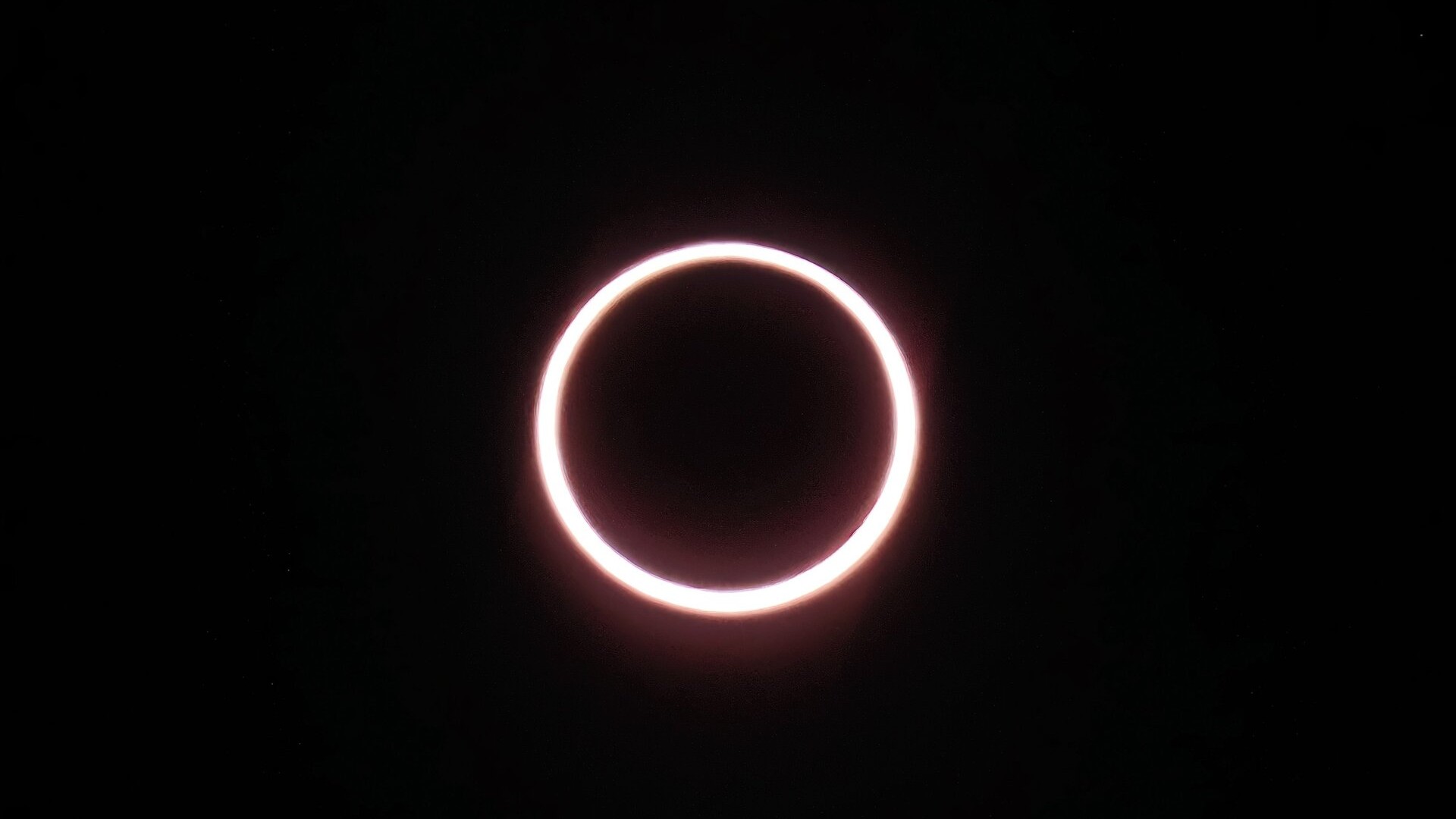

A blazing ‘ring of fire’ appeared in the frozen skies above Antarctica during the annular solar eclipse on Feb. 17, 2026. This spectacle was witnessed by only a handful of people on Earth.
What is it?
An annular solar eclipse occurs when the moon passes directly in front of the sun while it is positioned a bit farther away because of its slightly elliptical orbit around Earth. As a result, it does not completely cover the sun’s disk as it would during a total solar eclipse. Instead, a thin ring of sunlight remains visible around the moon‘s silhouette, a glowing ‘ring of fire’.
This particular eclipse was visible to very few people. The narrow path of annularity crossed only a small slice of Antarctica, placing the crew at the Concordia Research Station among the fortunate few able to witness the full effect from the icy plateau.
Peak annularity occurred at 7:47 p.m. local time (6:47 a.m. EST / 1247 GMT) and lasted just two minutes, though the border eclipse — including the partial phases — spanned roughly two hours.
Why is it amazing?
Concordia sits over 680 miles (1,100 kilometers) inland at an altitude of nearly 10,500 feet (3,200 meters), one of the most isolated research stations on the planet. In the summer, the sun barely dips below the horizon and in the winter, it disappears entirely for months as temperatures plunge to -112 degrees Fahrenheit (-80 degrees Celsius).
While spacecraft like Proba-2 got a glimpse of the eclipse from orbit, this ground-based view from Antarctica is among the rarest perspectives of all. A unique view, for the very few, at the bottom of the world.










Related Posts

Stay Informed With the Latest & Most Important News
Previous Post
Next Post


Advertisement
-
 01Two Black Holes Observed Circling Each Other for the First Time
 -
 02From Polymerization-Enabled Folding and Assembly to Chemical Evolution: Key Processes for Emergence of Functional Polymers in the Origin of Life
 -
 03Astronomy 101: From the Sun and Moon to Wormholes and Warp Drive, Key Theories, Discoveries, and Facts about the Universe (The Adams 101 Series)
 -
 04True Anomaly hires former York Space executive as chief operating officer
 -
 05Φsat-2 begins science phase for AI Earth images
 -
 06Hurricane forecasters are losing 3 key satellites ahead of peak storm season − a meteorologist explains why it matters
 -
 07Binary star systems are complex astronomical objects − a new AI approach could pin down their properties quickly