
Now Reading: Pragmata’s tale of AI slop, humanity, & lunar conquest makes it the timeliest sci-fi game of the year
-
01
Pragmata’s tale of AI slop, humanity, & lunar conquest makes it the timeliest sci-fi game of the year

Pragmata’s tale of AI slop, humanity, & lunar conquest makes it the timeliest sci-fi game of the year

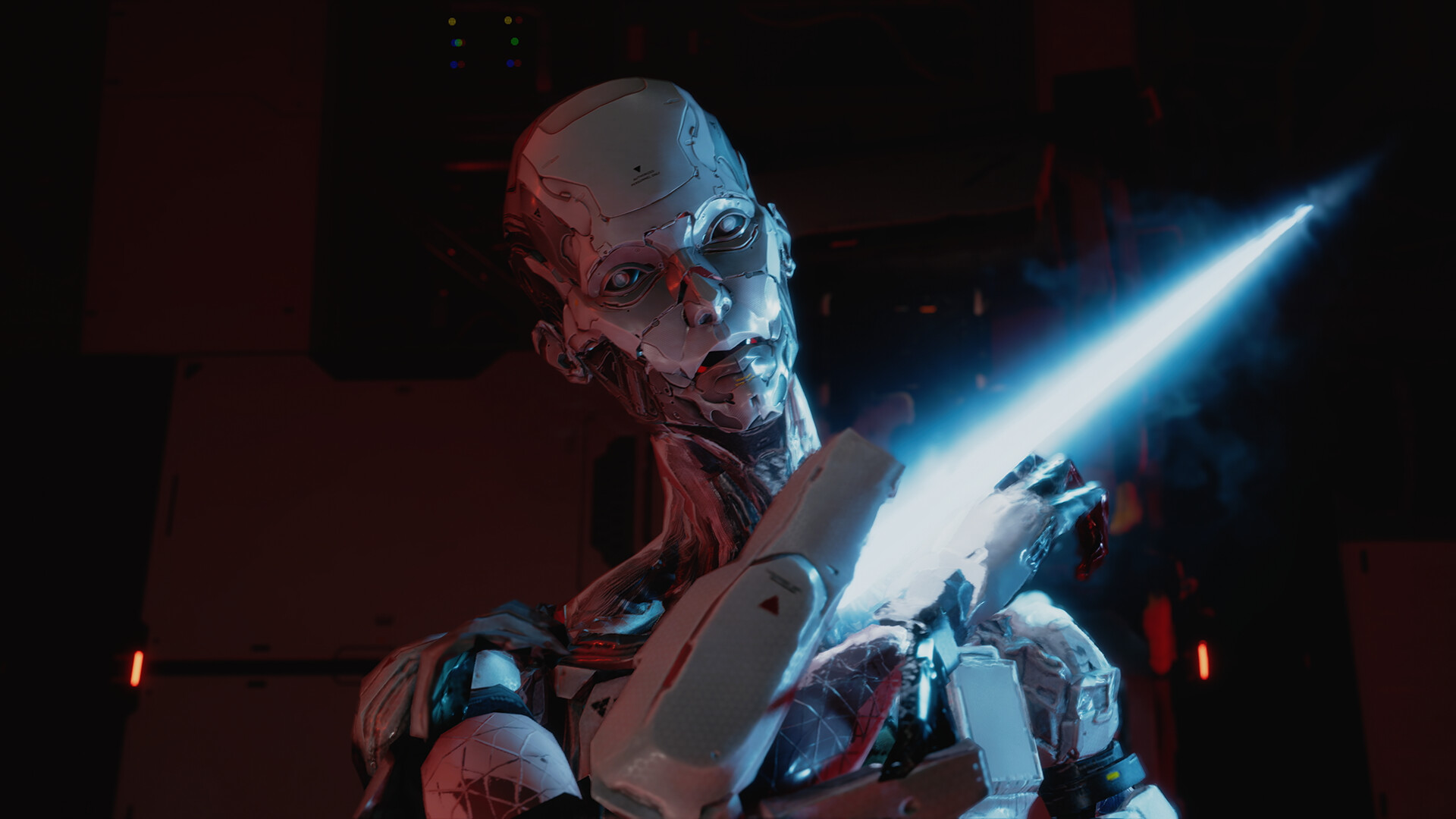
2026 is a remarkably stacked year for space and sci-fi games, but Capcom might have just dropped the most relevant one already. Pragmata is a love letter to the sci-fi action games from the PS3 and Xbox 360 generation, yet its updated take on familiar tropes and a vibrant heart make it special.
The marketing and previews sold Pragmata’s concise pitch very well: You’re on the moon as a system auditor named Hugh Williams. Something has gone wrong, and a mysterious artificial intelligence called IDUS has taken over a “Big Tech” company’s installations. Your only ally is a little android girl named Diana. Survive, warn Earth, and return home. The plot never gets more complex than that at any point, but the game’s use of these hackneyed story elements and themes is agile and smart.
Article continues below
AI as an uncanny imitation of reality

We’ve had an absolute deluge of AI games that task players with battling through abandoned, torn-down research facilities and space stations. Others throw us into Terminator-like post-apocalypses without a flavor or voice of their own. Then, we’ve also had sci-fi series like Halo, which focuses on an alien invasion while using the idea of a companion AGI for extra spice and drama.
Pragmata does quite a bit of all that, but its perspective on AI feels more prescient. For starters — and without late-game spoilers — IDUS doesn’t (immediately) pose a threat to humanity. It’s more of a contained “Big Tech” experiment gone wrong, and thankfully, it happened on the Moon. But that’s also a big issue; with comms to Earth shut down and only Hugh’s group is aware of what’s going down, IDUS has more than enough space and time to grow into a larger menace. It’s a rather literal warning on the dangers of unchecked AI.

That menace isn’t entirely cold metal optimized to eradicate humanity or a corruption of the human body. Instead, IDUS has produced uncanny copies of animals found on Earth and even humans, but with unique features that always lean into the unsettling and deformed.
The basic killer drones roaming the facilities are oddly elongated, while the latter giants look like the most messed-up maneaters in Attack on Titan. Spider-like invisible robots mix the idea of many arms and a ‘ribcage trap’ in a way that both makes sense and feels like the delirium of a rogue AI. You can see the underlying vision behind their creation, but it all came out wrong.
Pragmata is, quite explicitly, a game about battling AI slop. IDUS isn’t erasing what we represent or replacing humans with something better and different. It’s imitating, much like its uninspired living creators. At some point, it took over, but it only iterates on the ideas and corporeal shapes that already exist elsewhere, recreating structures and locations that, while functional, are inaccurate. Creation never comes from nothing, but regurgitation isn’t creation. There’s no originality in IDUS’ creations, only perversion. It’s incapable of walking the same fine line that Pragmata’s developers have with this unassuming mix of conventional sci-fi concepts.
Humanity, no matter where, is the answer

Pragmata’s not-so-secret sauce is, first and foremost, its beating heart. Hugh and Diana are fun to be around, not miserable or hopeless. This is another ‘dad game’ on a surface level, yes, but there’s no repressed trauma to overcome or several deep-cutting emotions twisting them and the journey ahead. As an adopted child, Hugh instantly bonds with a lost child full of innocence, but their resolve is infectious.
Many would tell you a good story needs more friction, but plenty of animated flicks get along fine with a few earnest emotional beats that don’t bring down the mood. Pragmata is exactly like that, like an old-timey Pixar movie that never slows down but can deliver effective character moments regardless.
A regular Joe and his adopted android daughter can carry a breezy adventure with only sincerity and optimism in the face of danger. In a life-or-death situation, past and future don’t really matter much. Pragmata never feels weighty or downbeat, and that sets it apart from its relatives.

Hugh and Diana represent the only logical answer to everything a soulless AI system stands for: Choosing to believe in ourselves and our imperfections, to dream big even if the data suggests the end could be near. The enemy is that which doesn’t feel and only believes it thinks.
Humanity and caring about others will save us. Resident Evil veteran Haruo Murata’s script makes sure to point out early on that Diana and the other Pragmatas are different, and it’s up to the player to decide whether an artificial person is really a person. The game won’t bore you with ramblings we’re all familiar with. Instead, you’ll get quieter scenes like a heartwarming chat at a man-made beach, a brief respite amid the endless robotic horrors.
To the Moon

The Moon also carries some implicit meaning as the setting. It’s barren and lifeless; a perfect place to create life that isn’t real. Humans brought plants and animals from Earth without much trouble, but that isn’t enough. The Moon must be the home of something different and better. The material known as “luna filament” has incredible properties that enable the 3D-printing of replicas and new technologies, but you can’t get rid of fakeness. Of course, that doesn’t matter to the corporate machine; it does a briefly cool thing that no one asked for and can increase productivity, so they push the new tech to the limit no matter what.
Pragmata kicks off with a ship approaching our natural satellite, but unlike Artemis 2‘s recent mission, there’s nothing magical about it. For the squad of workers visiting, it’s just routine. For the company in charge out there, it’s just a safe space to experiment without being limited by concerns of any kind. “It’s free real estate,” many would say. Looking at budget cuts to NASA and other essential space agencies, I fear we’re nearing a similar scenario where the conquest of outer space is outsourced to forces we can’t trust.
Despite its anxieties over such matters, Pragmata wants to believe we can do better and regain the lost wonder. Around the halfway point, Hugh and Diana go for a spacewalk and take a good look at our planet. They want to get here, but they also feel fortunate enough just to be there and get a good look at how far we’ve come. The rest can wait.
Pragmata is now available to buy on PC (Steam), PS5, Xbox Series X|S, and Nintendo Switch 2.










Related Posts
Stay Informed With the Latest & Most Important News
Previous Post
Next Post



Advertisement
-
 01Two Black Holes Observed Circling Each Other for the First Time
 -
 02From Polymerization-Enabled Folding and Assembly to Chemical Evolution: Key Processes for Emergence of Functional Polymers in the Origin of Life
 -
 03Astronomy 101: From the Sun and Moon to Wormholes and Warp Drive, Key Theories, Discoveries, and Facts about the Universe (The Adams 101 Series)
 -
 04True Anomaly hires former York Space executive as chief operating officer
 -
 05Φsat-2 begins science phase for AI Earth images
 -
 06Hurricane forecasters are losing 3 key satellites ahead of peak storm season − a meteorologist explains why it matters
 -
 07Binary star systems are complex astronomical objects − a new AI approach could pin down their properties quickly