
Now Reading: Astrobiology Mars Analog Atacama Desert As Seen From Orbit
-
01
Astrobiology Mars Analog Atacama Desert As Seen From Orbit


Date Created:2026-02-13 larger image
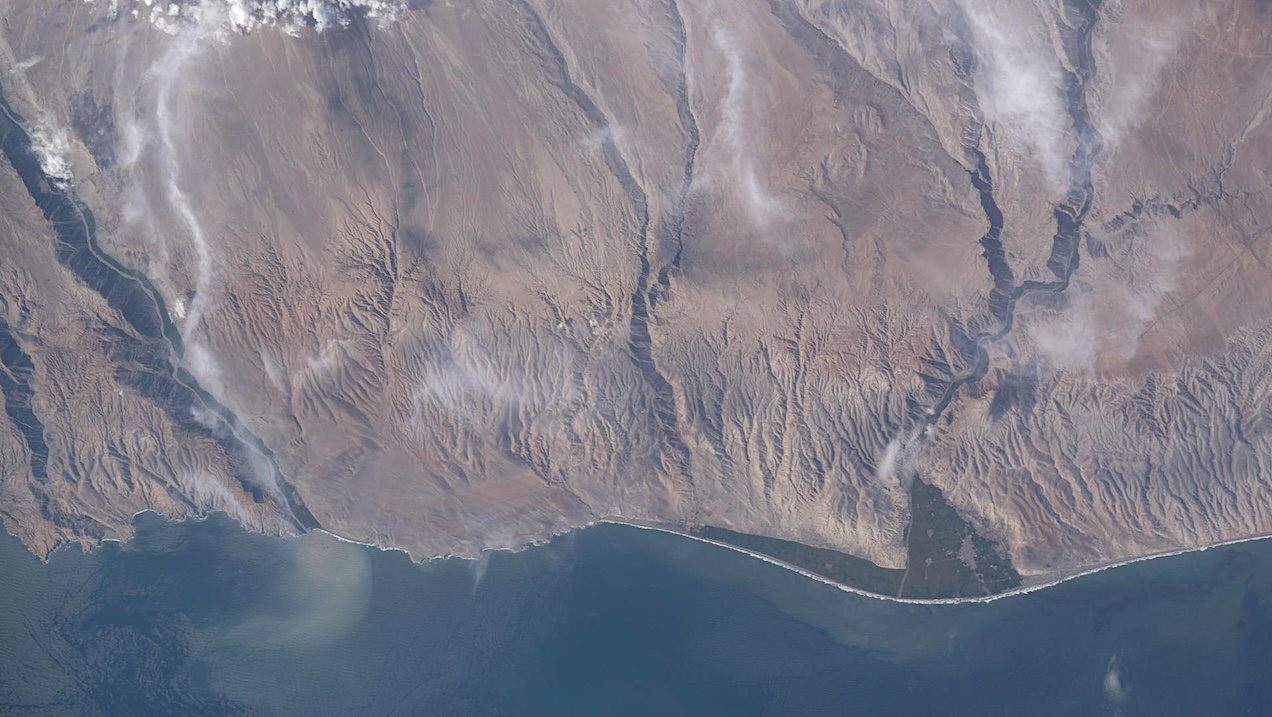
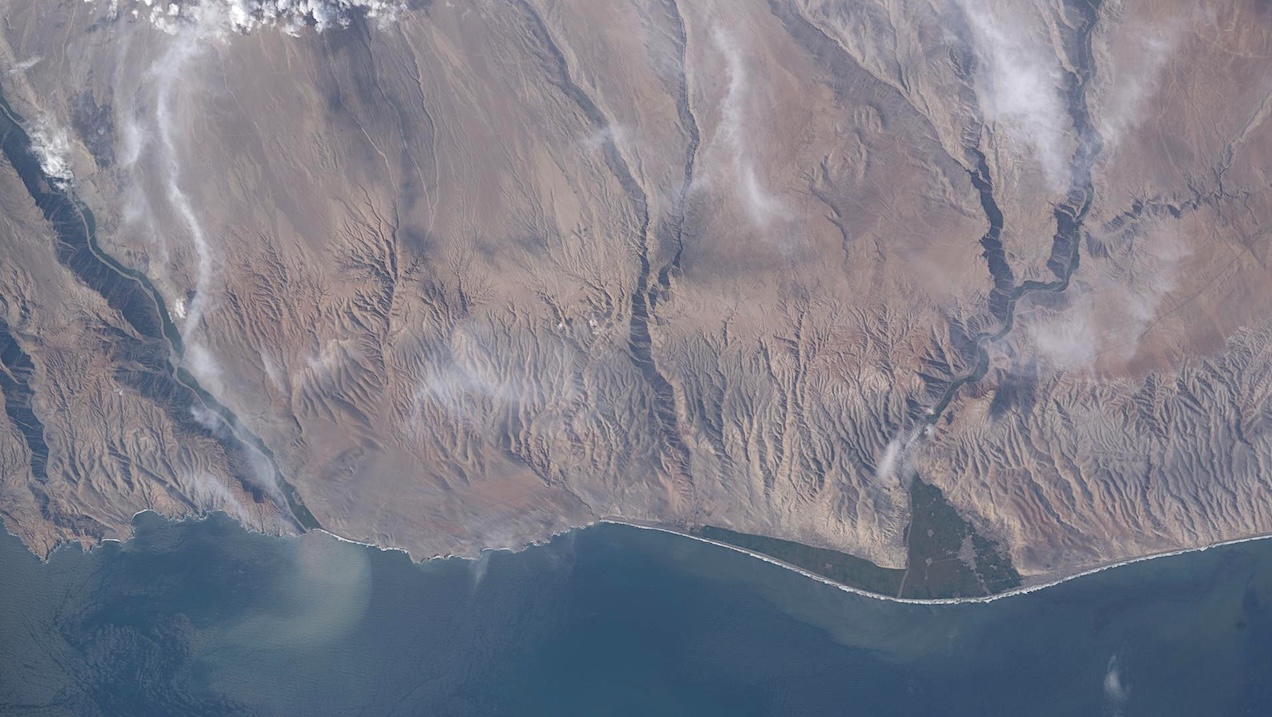
A portion of the Atacama Desert along Peru’s southern Pacific coast, featuring barren plains, rocky cliffs, vast sand dunes, and fertile river valleys, is pictured from the International Space Station as it orbited 265 miles above the South American nation.
NASA uses Chile’s Atacama Desert as a premier Mars analog, employing the Atacama Rover Astrobiology Drilling Studies (ARADS) project to test life-detection instruments and autonomous drilling technologies. Due to its extreme aridity, high UV radiation, and Mars-like geology, researchers use this site to study microbial life and refine methods for finding potential signs of past or present life on Mars.
Key Aspects of NASA’s Atacama Research
- ARADS Project: Led by NASA’s Ames Research Center, this project uses the K-REX2 rover to test drilling (up to 2 meters) and sample analysis in hyper-arid soil.
- Mars Analogy: The Atacama’s salt flats, volcanic plateaus, and extreme dryness mimic Martian conditions, making it an ideal testing ground for future rover technologies.
- Biosignature Detection: Research has focused on identifying microbes in arid, oxidizing soils (such as at the “Red Stone” site) to test the limits of current, and future, life-detection instruments.
- Life-Detection Tools: Beyond drilling, the project tests instruments that analyze soil for signs of organic life, which is critical for future missions.
This research, supported by partners like the Jet Propulsion Laboratory and various universities, helps validate techniques for finding evidence of life that might be buried just below the Martian surface
Astrobiology











Related Posts

Stay Informed With the Latest & Most Important News
Previous Post
Next Post


Advertisement
-
 01Two Black Holes Observed Circling Each Other for the First Time
 -
 02From Polymerization-Enabled Folding and Assembly to Chemical Evolution: Key Processes for Emergence of Functional Polymers in the Origin of Life
 -
 03Astronomy 101: From the Sun and Moon to Wormholes and Warp Drive, Key Theories, Discoveries, and Facts about the Universe (The Adams 101 Series)
 -
 04True Anomaly hires former York Space executive as chief operating officer
 -
 05Φsat-2 begins science phase for AI Earth images
 -
 06Hurricane forecasters are losing 3 key satellites ahead of peak storm season − a meteorologist explains why it matters
 -
 07Binary star systems are complex astronomical objects − a new AI approach could pin down their properties quickly