
Now Reading: Dew And Frost Do Not Serve As Water Sources For Rock-dwelling Organisms In The Dry Valleys Of Antarctica
-
01
Dew And Frost Do Not Serve As Water Sources For Rock-dwelling Organisms In The Dry Valleys Of Antarctica

Dew And Frost Do Not Serve As Water Sources For Rock-dwelling Organisms In The Dry Valleys Of Antarctica

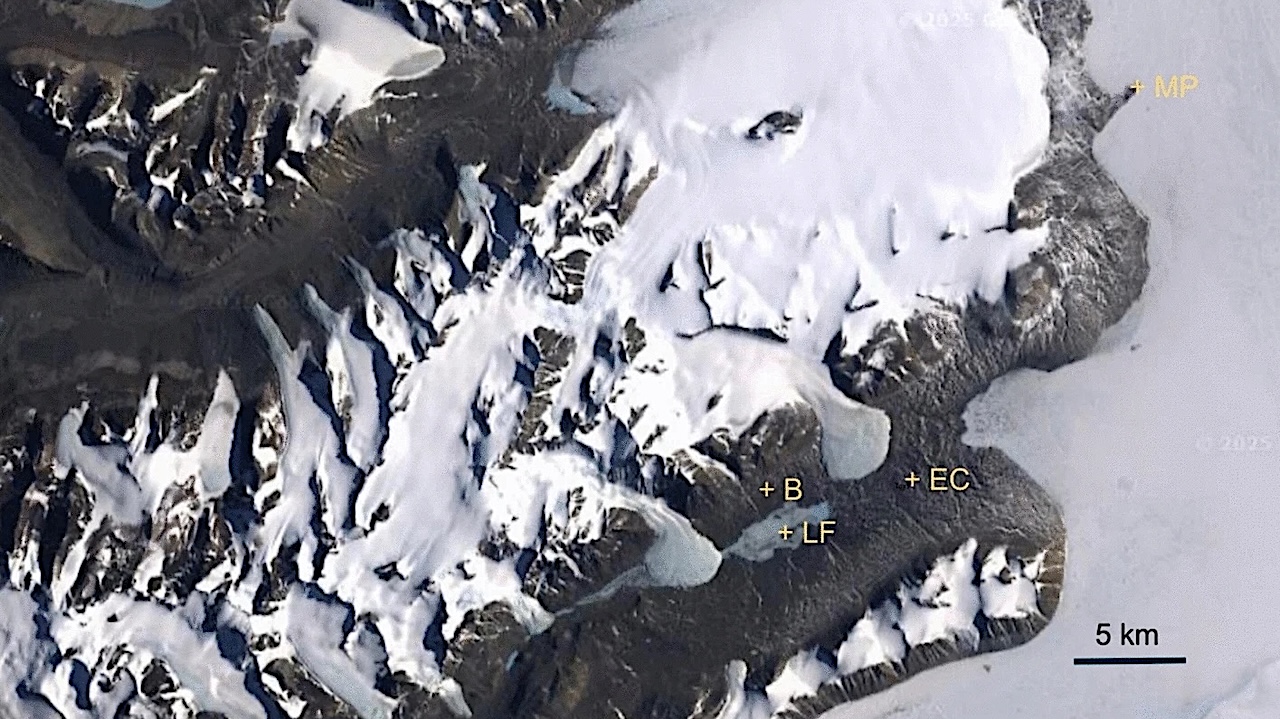
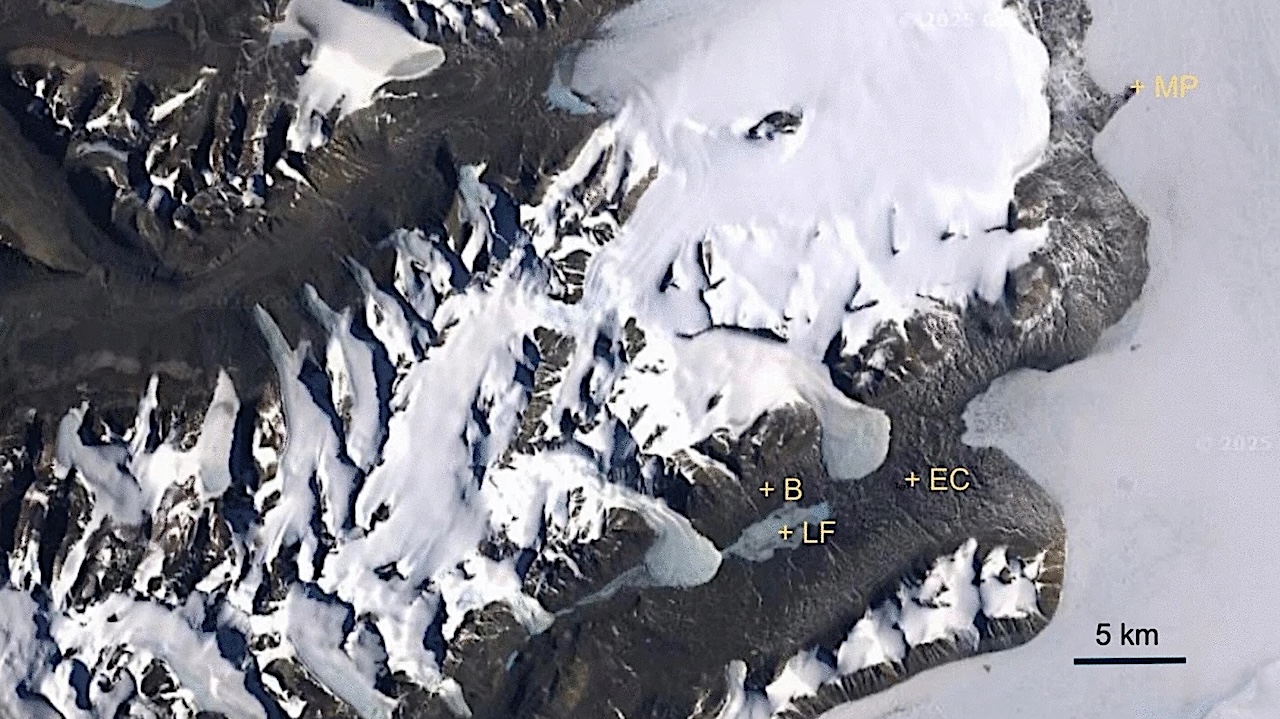
Location of all three MET stations, Lake Fryxell (LF), Explorer Cove (EC) and Marble Point (MP). The site investigated by Büdel et al. (2008) is marked as B. Note the proximity of Lake Fryxell and Explorer Cove to the Büdel site (all within the MDV inland) and the coastal location of the Marble Point — Springer Nature via PubMed
Rock-dwelling chlorolichens and cyanobacteria provide most of the total biomass of the ice-free zone of Antarctica, i.e., the McMurdo Dry Valleys (MDV), and yet, the water sources of MDV are not clear.
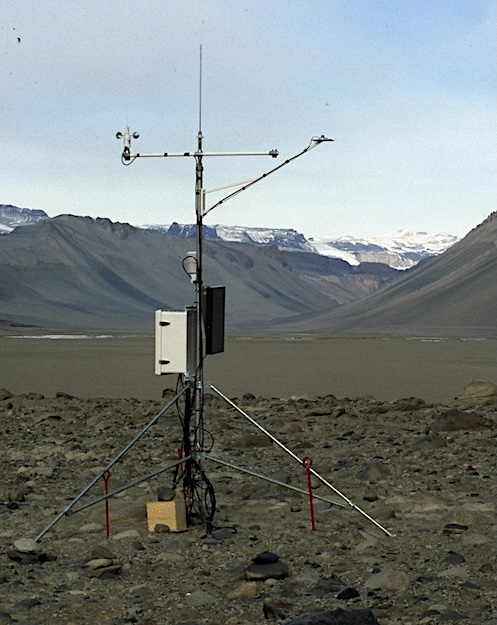
Met station at Taylor Valley showing typical granite stones and boulders inhabited by chasmoendolithic cyanobacteria (photograph by Ian Campbell) — Springer Nature via PubMed
In addition to snowmelt water that provides water to the lichen-dominated cryptoendolithic communities, many scholars also advocate the use of dew or frost as important water sources for chasmoendolithic cyanobacteria. The implications of these suggestions are large, especially due to the fact that the MDV serves as an important analogue for life on Mars.
Based on 5-year long analysis of the four growing months (November, December, January, February) in three stations, we show that the likelihood of both sources to take place is low.
Rock temperatures as measured by one of the stations (Marble Point) allowed us to also perform a detailed analysis. Rock temperatures never reached the dewpoint temperature, excluding the formation of dew. As for frost, the likelihood is extremely low during the growing season and an optimistic evaluation yields a possible occurrence of frost for 0.8 h per year.
We, therefore, conclude that neither dew nor frost may serve as a meaningful water source for the chasmoendolithic cyanobacteria, which, therefore, rely on snowmelt water only. The endolithic communities of the MDV may be justifiably regarded as the best analogue for life on Mars.
Astrobiology,










Related Posts


Stay Informed With the Latest & Most Important News
Previous Post
Next Post




Advertisement
-
 01Two Black Holes Observed Circling Each Other for the First Time
 -
 02From Polymerization-Enabled Folding and Assembly to Chemical Evolution: Key Processes for Emergence of Functional Polymers in the Origin of Life
 -
 03Astronomy 101: From the Sun and Moon to Wormholes and Warp Drive, Key Theories, Discoveries, and Facts about the Universe (The Adams 101 Series)
 -
 04True Anomaly hires former York Space executive as chief operating officer
 -
 05Φsat-2 begins science phase for AI Earth images
 -
 06Hurricane forecasters are losing 3 key satellites ahead of peak storm season − a meteorologist explains why it matters
 -
 07Binary star systems are complex astronomical objects − a new AI approach could pin down their properties quickly