
Now Reading: Missile detection satellites designed by BAE Systems pass early review
-
01
Missile detection satellites designed by BAE Systems pass early review


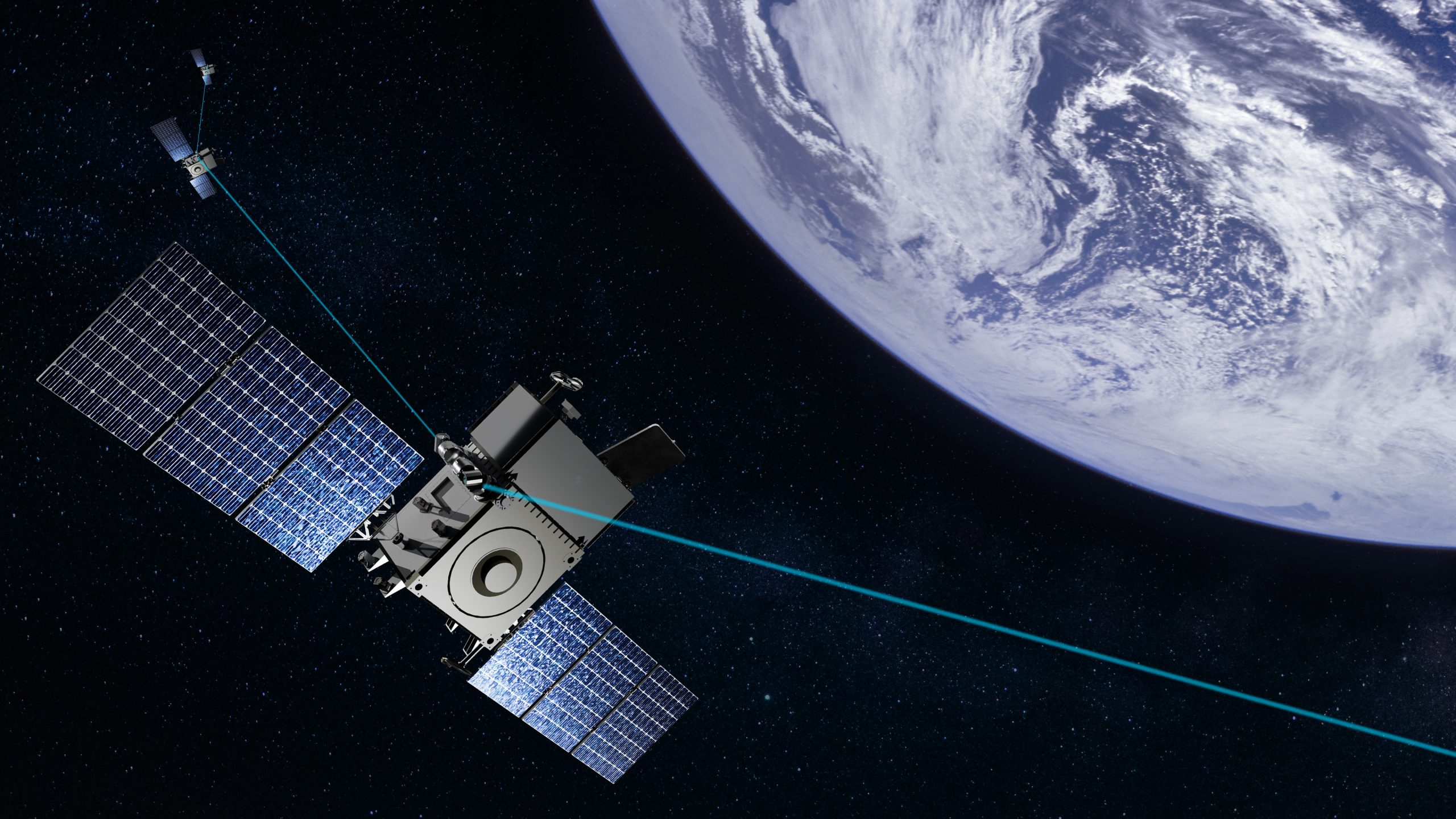

WASHINGTON — A missile-tracking satellite constellation being developed by BAE Systems for the U.S. Space Force has cleared an early design milestone.
The Space Systems Command said March 9 the program passed a preliminary design review, an assessment that evaluates whether the system architecture and technical approach are mature enough to proceed toward final design.
BAE Systems is building 10 satellites under a $1.2 billion contract awarded in May 2025. The spacecraft will operate in medium Earth orbit and are designed to detect and track missile launches, including advanced threats such as hypersonic weapons.
“Using advanced digital tools allowed us to ensure the design is sound and ready for the next phase, which is the Critical Design Review planned for this summer,” chief systems engineer 1st Lt. Sabrina Taylor said in a statement.
The satellites are part of the Space Force’s proliferated resilient missile warning and tracking program, a new constellation intended to complement existing missile-warning satellites while improving the military’s ability to follow maneuvering threats throughout flight.
The service is building the constellation in incremental batches known as “epochs.” So far it has acquired 22 satellites.
The first 12, called Epoch 1, were ordered in 2024 from Boeing subsidiary Millennium Space Systems in two contracts worth about $900 million. The 10 satellites under development by BAE Systems make up Epoch 2, the next increment of the constellation.
The spacecraft are equipped with infrared sensors that detect the heat signatures produced by missile launches. The satellites relay tracking data to missile defense systems and military command networks.
Multi-layered defense
The decision to place sensors in medium Earth orbit reflects the Pentagon’s effort to build a layered missile-warning architecture across multiple orbital regimes.
For decades the United States relied mainly on satellites in geosynchronous orbit about 36,000 kilometers above Earth. From that altitude the satellites can monitor vast regions of the planet and are well suited to detecting the bright plume of a ballistic missile launch.
But tracking missiles after their boost phase — particularly hypersonic glide vehicles flying at lower altitudes — can be difficult from geosynchronous orbit because the targets appear closer to the Earth’s horizon.
To address that challenge, the Pentagon in 2020 began developing a missile-tracking layer in low Earth orbit through the Space Development Agency. LEO satellites provide better viewing angles of objects flying in the upper atmosphere and can track dimmer, maneuvering targets. Their limited field of view means large constellations are required to maintain global coverage.
Medium Earth orbit, typically between 10,000 and 20,000 kilometers above Earth, sits between the two approaches. From that altitude, satellites can observe much larger areas than LEO spacecraft while maintaining more favorable viewing geometry than GEO systems for objects flying in the atmosphere or near space.
The long-term plan is a layered sensing network spanning geosynchronous, medium and low Earth orbits, with each layer providing complementary coverage to detect and track missile threats worldwide.










Related Posts

Stay Informed With the Latest & Most Important News
Previous Post
Next Post




Advertisement
-
 01Two Black Holes Observed Circling Each Other for the First Time
 -
 02From Polymerization-Enabled Folding and Assembly to Chemical Evolution: Key Processes for Emergence of Functional Polymers in the Origin of Life
 -
 03Astronomy 101: From the Sun and Moon to Wormholes and Warp Drive, Key Theories, Discoveries, and Facts about the Universe (The Adams 101 Series)
 -
 04True Anomaly hires former York Space executive as chief operating officer
 -
 05Φsat-2 begins science phase for AI Earth images
 -
 06Hurricane forecasters are losing 3 key satellites ahead of peak storm season − a meteorologist explains why it matters
 -
 07Binary star systems are complex astronomical objects − a new AI approach could pin down their properties quickly