
Now Reading: All DNA/RNA Nucleobases Are Found On Asteroid Ryugu
-
01
All DNA/RNA Nucleobases Are Found On Asteroid Ryugu


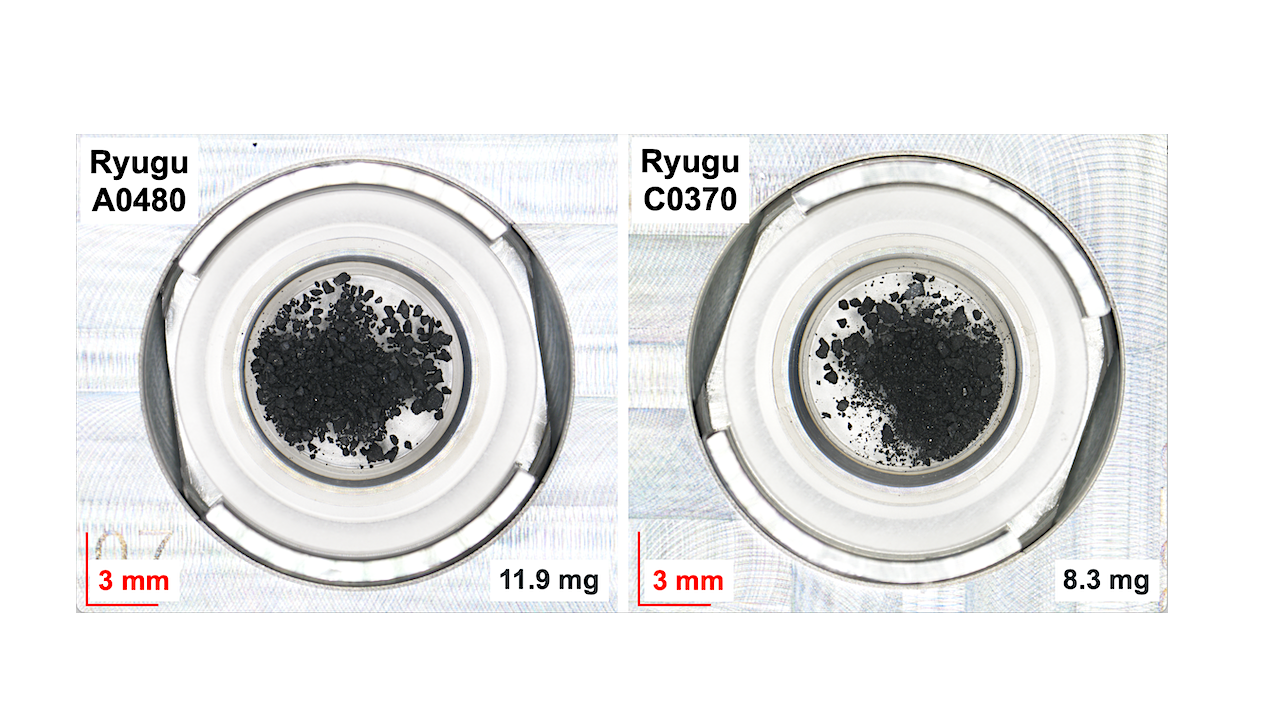
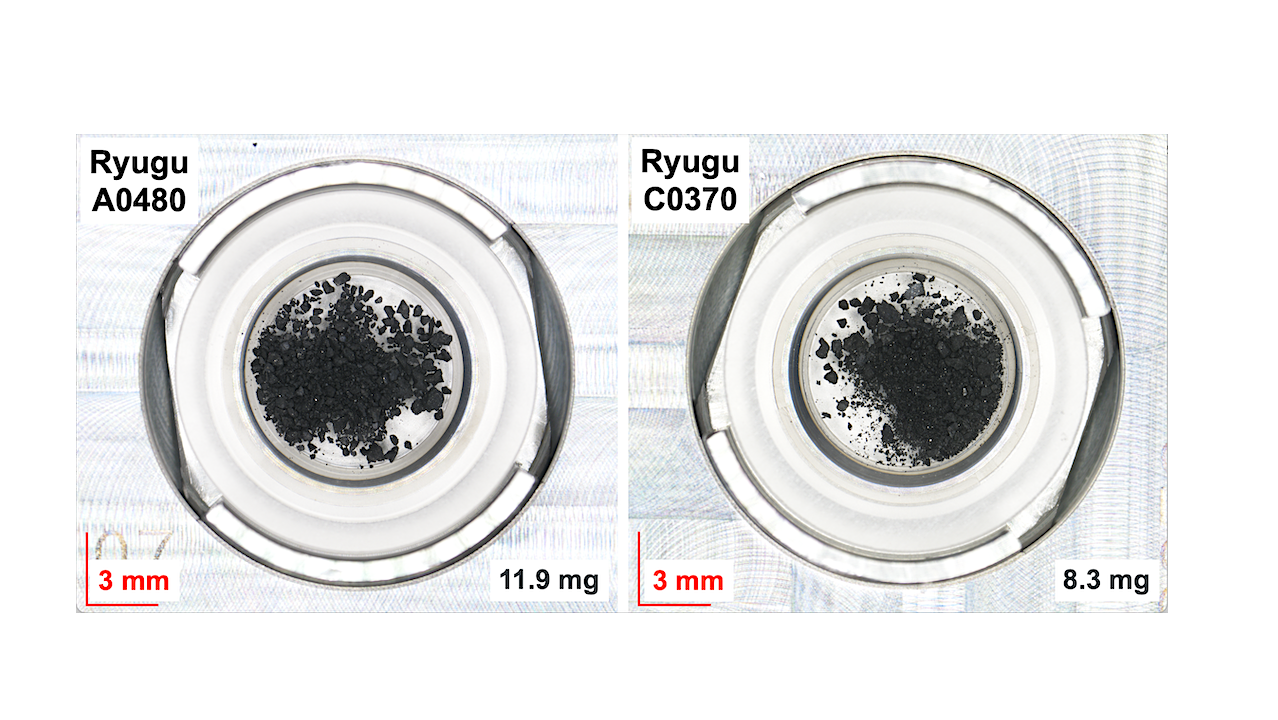
Microscope images of Ryugu samples collected from the first and second landing sites of the Hayabusa2 mission, respectively. Credit: Jaxa/Jamstec
Samples from the asteroid Ryugu collected and returned to Earth by the Japanese Hayabusa 2 mission contain all five nitrogenous bases—adenine, guanine, cytosine, thymine, and uracil—that make up nucleic acids, the biomolecules that make life possible on Earth. The study was published today in Nature Astronomy.
All the nitrogenous bases found in DNA and RNA—adenine, guanine, cytosine, thymine, and uracil—are present, in approximately equal proportions, in the asteroid Ryugu . This is according to an analysis of samples brought back to Earth by the Japanese Aerospace Exploration Agency (JAXA) Hayabusa-2 mission , the results of which were published today in the journal Nature Astronomy .
Nitrogenous bases are fundamental components of DNA and RNA, the molecules that form the basis of life on Earth. Their presence in uncontaminated extraterrestrial material—such as samples collected on asteroids and meteorites—is crucial to understanding how these compounds can form in the absence of biological processes and subsequently be transported to Earth by traveling through the Solar System.
Previous analyses of the Ryugu samples had already detected the presence of uracil , while studies of meteorites and samples from the asteroid Bennu had highlighted a greater variety of nitrogenous bases.
In the new study, researchers analyzed two samples from the Ryugu asteroid, identifying all five canonical nucleobases in both: adenine, guanine, cytosine, thymine, and uracil. They then compared these results with the results from the Murchison and Orgueil meteorites , and with samples from the asteroid Bennu.
Significant differences in the nucleobase abundances emerged: while the Ryugu samples contain roughly comparable amounts of purines (adenine and guanine) and pyrimidines (cytosine, thymine, and uracil), the Murchison meteorite displays a higher abundance of purine bases, while the samples from Bennu and the Orgueil meteorite are relatively richer in pyrimidine bases. According to the authors, these differences reflect the different chemical, environmental, and evolutionary histories of their respective parent bodies.
Despite these differences, however, the discovery of nitrogenous bases in samples from asteroids and meteorites suggests that these compounds are widespread throughout the Solar System and that carbonaceous asteroids may have contributed to the chemical makeup of the early Earth, and thus also to life on it.
Read the article in Nature Astronomy “A complete set of canonical nucleobases in the carbonaceous asteroid (162173) Ryugu“, by Toshiki Koga, Yasuhiro Oba, Yoshinori Takano, Hiroshi Naraoka, Nanako O. Ogawa, Kazunori Sasaki, Hajime Sato, Toshihiro Yoshimura and Naohiko Ohkouchi
Astrobiology, Astrochemistry,










Related Posts
Stay Informed With the Latest & Most Important News
Previous Post
Next Post


Advertisement
-
 01Two Black Holes Observed Circling Each Other for the First Time
 -
 02From Polymerization-Enabled Folding and Assembly to Chemical Evolution: Key Processes for Emergence of Functional Polymers in the Origin of Life
 -
 03Astronomy 101: From the Sun and Moon to Wormholes and Warp Drive, Key Theories, Discoveries, and Facts about the Universe (The Adams 101 Series)
 -
 04True Anomaly hires former York Space executive as chief operating officer
 -
 05Φsat-2 begins science phase for AI Earth images
 -
 06Hurricane forecasters are losing 3 key satellites ahead of peak storm season − a meteorologist explains why it matters
 -
 07Binary star systems are complex astronomical objects − a new AI approach could pin down their properties quickly