
Now Reading: Mike Rogers, Artist and Controversial Figure in Walton Abduction Case, Passes Away
-
01
Mike Rogers, Artist and Controversial Figure in Walton Abduction Case, Passes Away

Mike Rogers, Artist and Controversial Figure in Walton Abduction Case, Passes Away

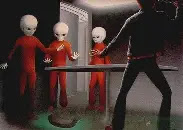

Mike Rogers, a name etched in the annals of UFO lore, was more than just a pivotal figure in the infamous Travis Walton abduction case; he was a complex individual whose life encompassed artistry, controversy, and a uniquely human struggle with truth and perception. Born in 1948, Rogers was not only a logging foreman but also an immensely talented artist whose creativity found expression in various forms—from intricate sketches to vibrant paintings. His artistic prowess played a significant role in shaping public understanding of the Walton case, as many of the illustrations depicting the events surrounding Walton’s alleged abduction were the result of Rogers’s imagination and skill.
Rogers’s involvement in the Walton case began on that fateful night in November 1975 when Walton vanished after an encounter with a strange craft. This incident would ultimately define the trajectory of Rogers’s life, intertwining his personal narrative with that of the infamous abduction story. Although he was known for his fiery temperament, which sometimes led him to see conspiracy where others saw coincidence, Rogers navigated the turbulent waters of fame and scrutiny with a blend of bravado and vulnerability. His subsequent appearances at UFO conventions and in documentaries alongside Walton painted him not just as a witness, but as a co-artist of the tale—and a participant in the broader narrative of extraterrestrial encounters in America.
Throughout his life, Rogers grappled with the weight of his experiences. The fame that followed the 1993 film “Fire in the Sky,” which dramatized Walton’s abduction tale, brought newfound public attention but also scrutiny. In interviews, he often conveyed a sense of ambivalence about his role in the narrative, particularly as he began to question the very foundations of the events he had once described with certainty. His artistic interpretations and public persona became entwined with the enigmatic mystery of UFOs, making him a figure both admired and questioned by enthusiasts and skeptics alike.
One of the notable paradoxes of Rogers’s life is his transition from a staunch defender of the Walton abduction narrative to a figure who publicly expressed doubt about the very events that shaped his identity. The declaration he made in March 2021 stating he no longer wished to be considered a witness to the abduction ignited a firestorm of controversy, forcing fans and followers of the case to reassess their beliefs. This moment, however, was not just a controversial statement; it was a reflection of a man in turmoil, caught between the truths he had crafted and the reality he was beginning to recognize.
Rogers’s legacy extends beyond the UFO community; he is a reminder of the complexities inherent in human belief systems. His life exemplified the intersection of art and belief, where the boundaries of creativity often blur the lines of authenticity. Rogers once stated, “Art is not just about creating—it’s about reshaping reality, discovering the unseen.” In his passing, the world lost not just a character of the UFO narrative but a man who dared to challenge the cosmos within and beyond himself, a seeker of truth, however elusive it may be.
The controversy surrounding the Walton incident is one that has perplexed and fascinated both enthusiasts and skeptics of the UFO phenomenon. From the very start, the narrative surrounding Travis Walton’s alleged abduction in 1975 drew a spotlight that not only illuminated Walton but also cast a long shadow over Mike Rogers and the other members of the logging crew who were present. As the tale unfolded, it became less about a singular experience and more about the myriad interpretations and implications of that night, creating a tapestry of intrigue filled with conflicting accounts and motivations.
Rogers himself oscillated between being a dedicated supporter of Walton’s story and a vocal critic. This dynamic came to a head in March 2021 when Rogers declared via social media that he no longer wished to be viewed as a witness to the events that had transpired. The implications of this statement were seismic; it challenged the very foundation of a narrative that had captivated audiences for decades. Some interpreted this as a betrayal of Walton, while others viewed it as a courageous act of honesty—an effort to strip away the myth and confront the reality of their experience.
In the aftermath of Rogers’s announcement, speculation ran rampant. Social media became a battlefield where fans of the story clashed with those who felt misled, raising the question: What constitutes a ‘truth’ when it comes to personal experiences entwined with the extraordinary? Rogers’s subsequent interviews added further fuel to the fire, especially after he mentioned in a conversation with producer Ryan Gordon that they had discussed the prospect of staging a UFO hoax. This remark fractured the already fragile belief in the narrative that had emerged surrounding Walton’s abduction.
Yet, contradictions are not uncommon in the sphere of UFO lore. After all, the very nature of the subject invites scrutiny and skepticism. During an appearance on my X-Zone radio show, for instance, Rogers was quick to downplay the significance of the well-documented Phoenix Lights incident, arguing instead that a more substantial, triangular craft had traversed Arizona that night. His insistence on this alternate narrative reflected the complexities of human perception—how two individuals can witness the same event and yet emerge with vastly different interpretations rooted in their individual biases and experiences.
Rogers’s grappling with the nature of his beliefs is emblematic of a larger phenomenon within the UFO community. People become deeply invested in these narratives, often tying their identities to the stories of encounters, abductions, and cosmic possibilities. These narratives can evolve, morphing with the individual’s understanding of themselves and their surroundings, leading to the often fractious debates we see today. It raises an intriguing question: What happens when the heralds of these events—those who lived them—begin to doubt their own convictions?
One could argue that the ultimate controversy of the Walton incident lies not only in the alleged abduction itself but in the intricate web of relationships, beliefs, and perceptions that have emerged from it. What begins as a singular event burgeons into a narrative shaped by the interplay of memory, art, and belief, replete with contradictions that leave many in a state of uncertainty. As we reflect upon the life and legacy of Mike Rogers, we are reminded that the search for truth often reveals more about the seekers than the sought, leaving us all, in some way, adrift in the vast cosmos of human experience.










Related Posts



Stay Informed With the Latest & Most Important News
Previous Post
Next Post



Advertisement
-
 01Two Black Holes Observed Circling Each Other for the First Time
 -
 02From Polymerization-Enabled Folding and Assembly to Chemical Evolution: Key Processes for Emergence of Functional Polymers in the Origin of Life
 -
 03Astronomy 101: From the Sun and Moon to Wormholes and Warp Drive, Key Theories, Discoveries, and Facts about the Universe (The Adams 101 Series)
 -
 04True Anomaly hires former York Space executive as chief operating officer
 -
 05Φsat-2 begins science phase for AI Earth images
 -
 06Hurricane forecasters are losing 3 key satellites ahead of peak storm season − a meteorologist explains why it matters
 -
 07Binary star systems are complex astronomical objects − a new AI approach could pin down their properties quickly