
Now Reading: National Geospatial-Intelligence Agency to open programs to more vendors
-
01
National Geospatial-Intelligence Agency to open programs to more vendors


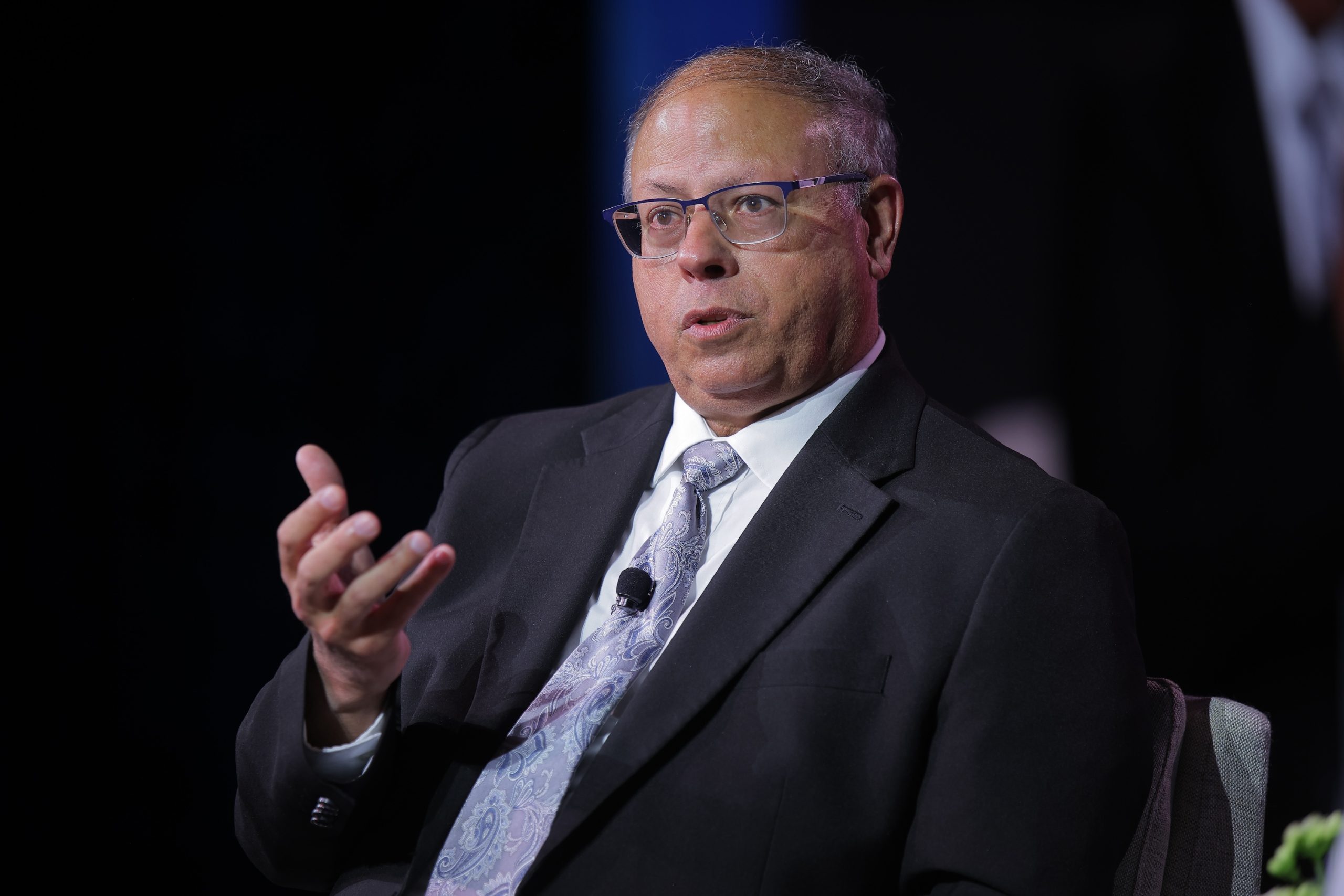

DENVER — The National Geospatial-Intelligence Agency is opening more of its programs to commercial vendors as it seeks faster access to satellite data and AI-driven analysis, a senior agency official said.
In recent years, the agency has shifted toward buying data and analytics from private companies rather than building systems internally, a strategy reflected in programs such as Luno, which contracts vendors to deliver AI-enabled geospatial intelligence products derived from satellite imagery and other sources.
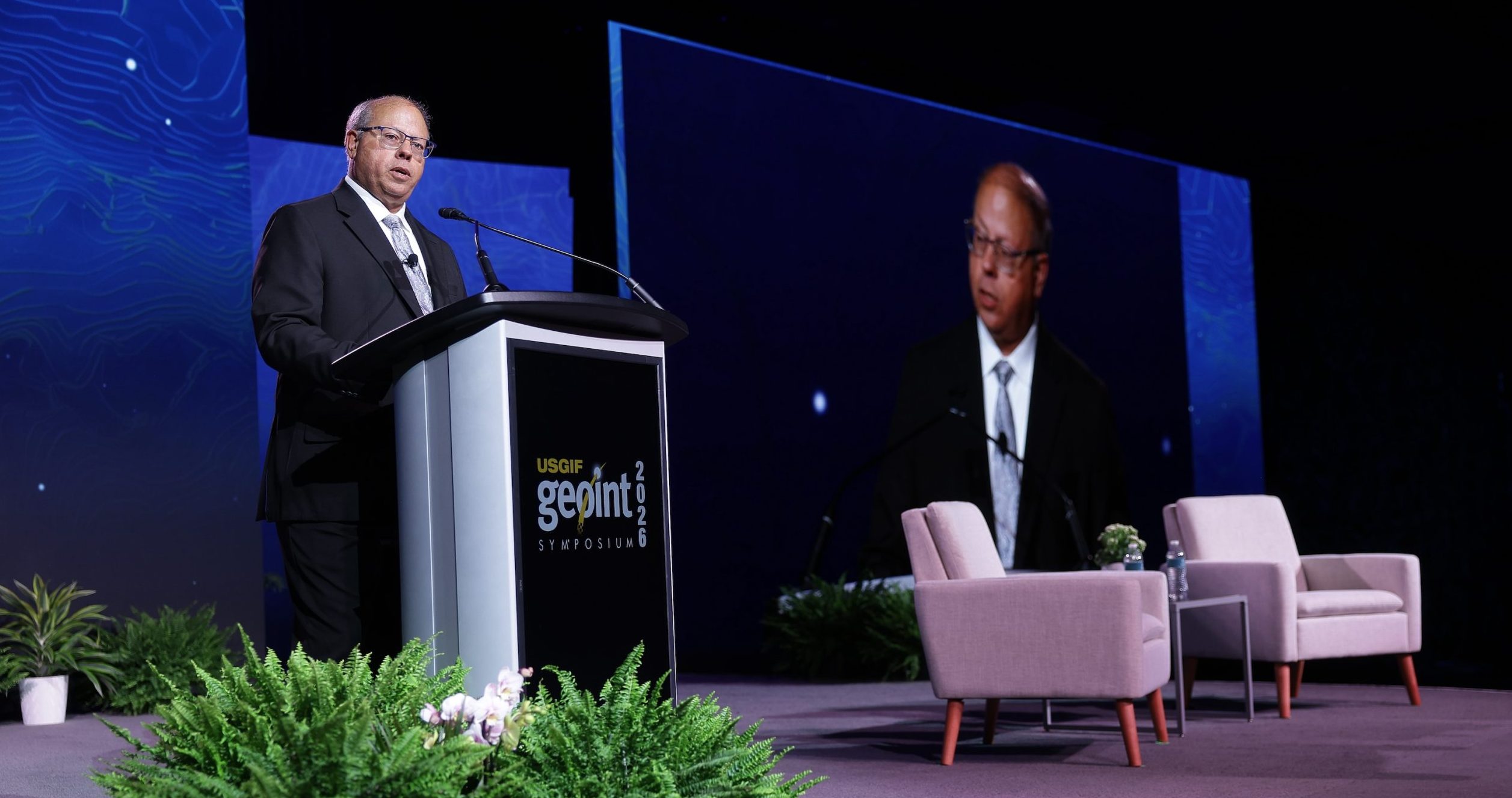
Speaking May 3 at the GEOINT Symposium, NGA’s deputy director Brett Markham said innovation in computer vision and data analytics is increasingly concentrated in the private sector, including startups and small businesses. Now NGA is trying to widen access to those programs.
“To do this, we are constantly surveying the marketplace for innovative capabilities that meet our needs,” Markham said, pointing to a surge in commercial satellite capacity. More than 13,000 satellites are currently in orbit, a number expected to rise sharply by the end of the decade, increasing the volume of data available to intelligence agencies.
The Luno program, valued at about $500 million, is central to that strategy. Unlike traditional procurement of raw imagery, Luno is designed to buy finished intelligence products such as change detection, facility monitoring and activity analysis produced using AI and other analytics tools.
The program is structured as multi-vendor contracts, allowing NGA to scale services and bring in new providers as capabilities evolve. Luno A focuses on infrastructure monitoring and change detection, while Luno B is geared toward human domain monitoring and broader situational awareness.
To accelerate adoption of commercial technology, NGA established a Rapid Capabilities Office. Markham said this was in response to a Trump administration executive order directing agencies to expand use of private-sector tools to compete with adversaries such as China.
The new office is intended to streamline acquisition and move emerging technologies into operational use more quickly. “The RCO is charged with delivering immediate benefits … providing rapid access to emerging commercial technologies,” Markham said, with a goal of reducing timelines from years or months to weeks or days.
Initial focus areas include rapid prototyping of commercial AI tools, particularly computer vision systems and large language models that can automate time-sensitive analytic tasks.
NGA is looking to broaden participation from smaller firms. The agency is encouraging companies to join its Mentor-Protégé Program, which pairs small businesses with established contractors to build technical capabilities and compete for future work.
Upcoming outreach efforts include an industry day in July at NGA headquarters in Springfield, Virginia, focused on data and analytics providers, and a “small business collider” event in June at the agency’s St. Louis campus.
At the same time, NGA is rebuilding parts of its workforce after reductions tied to last year’s government-wide DOGE efficiency push. The agency is hiring for specialized roles in areas such as data engineering and AI.
About 1,000 applicants attended a recent hiring event in Springfield, with several hundred offers extended, Markham said. A similar event planned for St. Louis has already drawn more than 1,000 expressions of interest.
“We identified very specific skill sets that we felt are necessary for our workforce moving forward … best suited to enable an AI-savvy workforce,” he said.










Related Posts


Stay Informed With the Latest & Most Important News
Previous Post
Next Post





Advertisement
-
 01Two Black Holes Observed Circling Each Other for the First Time
 -
 02From Polymerization-Enabled Folding and Assembly to Chemical Evolution: Key Processes for Emergence of Functional Polymers in the Origin of Life
 -
 03Astronomy 101: From the Sun and Moon to Wormholes and Warp Drive, Key Theories, Discoveries, and Facts about the Universe (The Adams 101 Series)
 -
 04True Anomaly hires former York Space executive as chief operating officer
 -
 05Φsat-2 begins science phase for AI Earth images
 -
 06Hurricane forecasters are losing 3 key satellites ahead of peak storm season − a meteorologist explains why it matters
 -
 07Binary star systems are complex astronomical objects − a new AI approach could pin down their properties quickly