
Now Reading: Space Force adds cyber units to guard rocket launches
-
01
Space Force adds cyber units to guard rocket launches


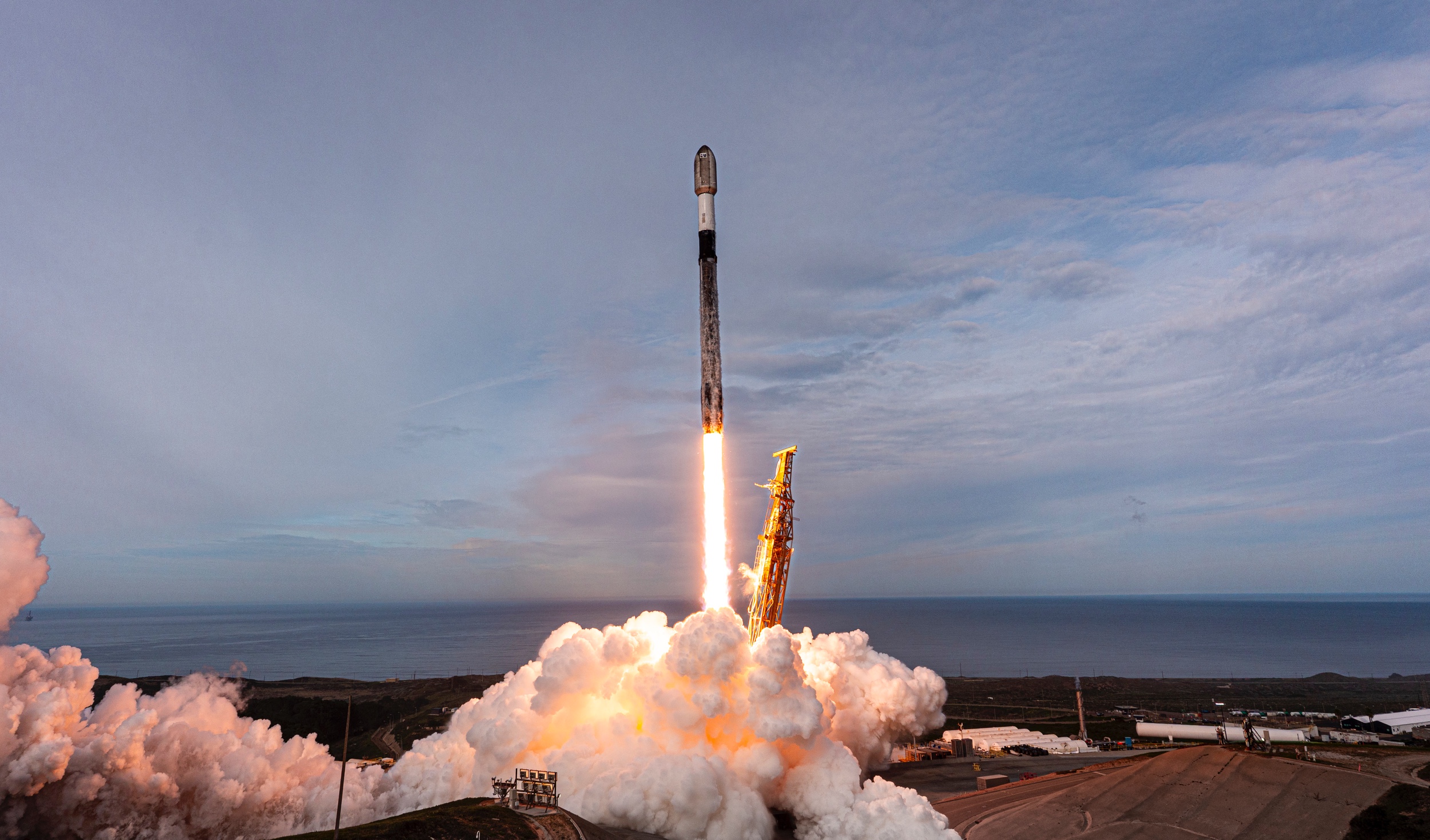

WASHINGTON — The U.S. Space Force is deploying dedicated cybersecurity teams at its primary launch sites, reflecting rising concern that adversaries could disrupt rocket launches through digital means rather than physical interference.
Two units known as Defensive Cyber Operations Squadrons will monitor activity during launch operations at Cape Canaveral Space Force Station and Vandenberg Space Force Base, according to the Space Systems Command. The command, which oversees U.S. military launch ranges, said March 23 that the teams are tasked with detecting and countering attempts to interfere with launches via cyber attack.
The move formalizes a role that has become more prominent as launch infrastructure has grown increasingly reliant on software and interconnected systems. Modern ranges tie together radar, telemetry antennas, flight termination systems, fueling controls and command networks — creating multiple points where a disruption could delay or halt a mission.
“Our adversaries are constantly looking for ways to deny, disrupt or destroy our ability to launch,” said Maj. Torius Davis, commander of the 630 Cyberspace Squadron at Vandenberg.
During countdown and liftoff, the cyber units will monitor network traffic across the range in real time, looking for anomalies in command links, telemetry streams and ground communications. Because launch operations follow a tightly scripted sequence, operators can quickly spot deviations. A sudden loss of a sensor or unusual delays in data transmission could indicate either a technical fault or a malicious intrusion.
The teams are positioned to make that distinction and respond as needed, officials said.
Lt. Col. John Quinn, who leads the 645 Cyberspace Squadron at Cape Canaveral, said the effort marks a shift in how launch security is approached.
“Launch sites were mainly concerned with physical security: keeping unauthorized personnel out of sensitive areas and to prevent sabotage or espionage of critical equipment,” Quinn said. “We’ve had to increase our security protection against a host of potential cyber attacks.”
Those threats range from attempts to gain unauthorized access to ground systems to more sophisticated efforts aimed at disrupting communications or manipulating data. Officials said the squadrons also consider scenarios in which attackers try to interfere with satellites or the networks that support them.
The emphasis on cyber defense comes as the Pentagon leans more heavily on space-based capabilities for communications, missile warning and intelligence. Delays in launching those systems can carry operational consequences. By placing cyber operators alongside launch crews, the Space Force is effectively treating its ranges as contested infrastructure.










Related Posts
Stay Informed With the Latest & Most Important News





Advertisement
-
 01Two Black Holes Observed Circling Each Other for the First Time
 -
 02From Polymerization-Enabled Folding and Assembly to Chemical Evolution: Key Processes for Emergence of Functional Polymers in the Origin of Life
 -
 03Astronomy 101: From the Sun and Moon to Wormholes and Warp Drive, Key Theories, Discoveries, and Facts about the Universe (The Adams 101 Series)
 -
 04True Anomaly hires former York Space executive as chief operating officer
 -
 05Φsat-2 begins science phase for AI Earth images
 -
 06Hurricane forecasters are losing 3 key satellites ahead of peak storm season − a meteorologist explains why it matters
 -
 07Binary star systems are complex astronomical objects − a new AI approach could pin down their properties quickly