
Now Reading: What is the Earth’s most distant spacecraft?
-
01
What is the Earth’s most distant spacecraft?


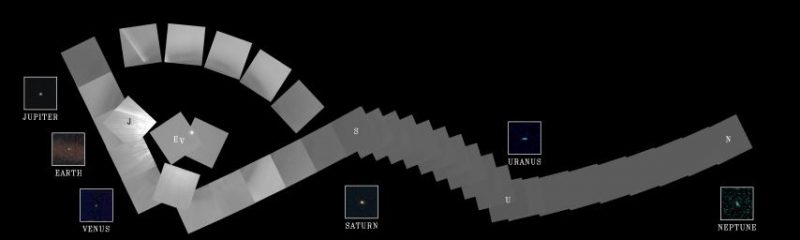
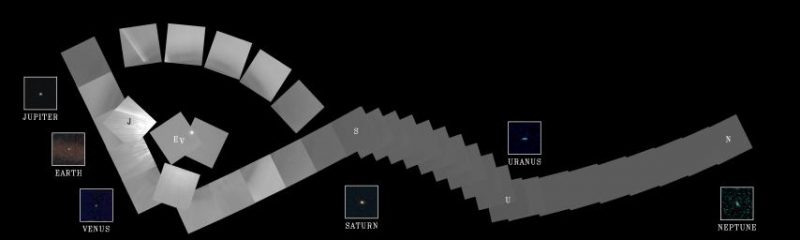
What’s Earth’s most distant spacecraft?
The most distant artificial object is the spacecraft Voyager 1. In April 2026 it’s more than 15 billion miles (24 billion km) from Earth. Voyager 1 and its twin, Voyager 2, were launched 16 days apart in 1977. Both spacecraft flew by Jupiter and Saturn. And Voyager 2 also flew by Uranus and Neptune. Now, both Voyagers are journeying into the space between the stars. Voyager 1 officially became the first earthly craft to leave the solar system, crossing the heliopause in 2012. Later, in 2021, it sent back a message that it’s hearing a faint, monotone hum of interstellar space.
Voyager 1 is expected to reach 1-light-day from Earth in November 2026. That’s 16.1 billion miles (25.9 billion km). You can track Voyager 1’s location and distance here.
And curiously, for a few months every year, the Voyager spacecraft actually get closer to Earth. That’s because in Earth’s orbit around the sun, we move away from the spacecraft (as they move away from us). Then, we move back toward them as we swing around the sun. So the distance between us and the Voyagers gets smaller temporarily. You can read more about it here: Why are the Voyager spacecraft getting closer to Earth?

Voyagers’ beginnings
Both Voyager spacecraft were designed back in the early 1970s. They were, specifically, built to take advantage of a rare grouping of planets on a single side of the sun in our solar system. This grouping, which happens only every 176 years, let the Voyagers slingshot from one planet to the next, via gravitational assists.
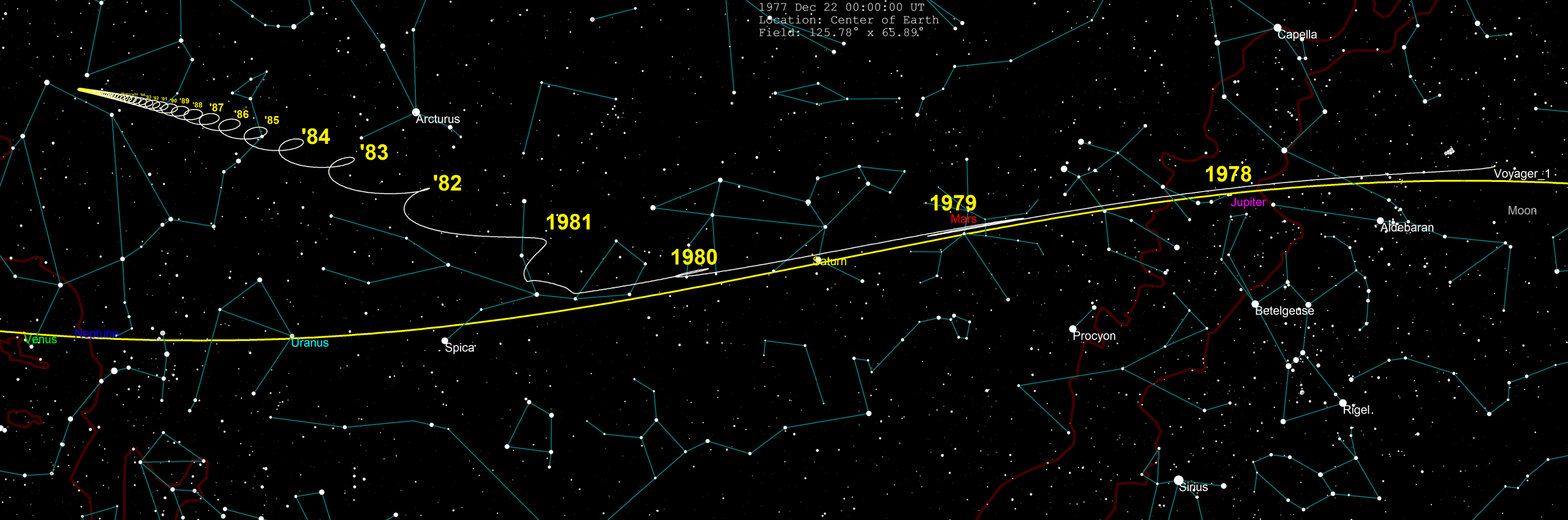
First, the Voyagers began acquiring images of Jupiter in January 1979. Voyager 1 completed its Jupiter encounter in early April of that year. Then, Voyager 2 picked up the baton in late April and its encounter continued into August. Overall, the two spacecraft took more than 33,000 pictures of Jupiter and its four major satellites.
And then the Voyagers went farther. When they were launched, no spacecraft had gone as far as Saturn, which is 10 times as far as Earth’s distance from the sun. Indeed, the four-year journey to Saturn was thus a major leap. The Voyagers arrived at Saturn nine months apart, in November 1980 and August 1981. Voyager 1 then began leaving the solar system, and Voyager 2 went on to an encounter with Uranus in January 1986 and with Neptune in August 1989.
The most distant spacecraft keeps on going
Ed Stone – who was Project Scientist for the Voyager mission – told EarthSky some years ago:
We built the spacecraft with enough redundancy – that is, backup systems – so that they could keep going.
And keep going they did! Altogether, the Voyagers have now been traveling for 46 years.
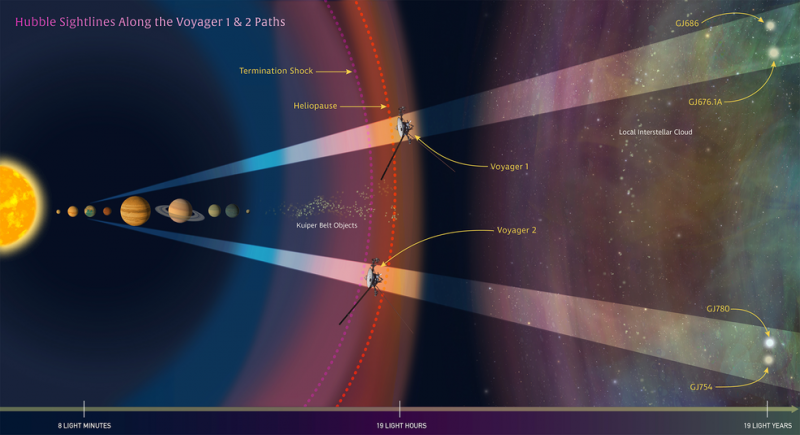
In 2017, astronomers described using the Hubble Space Telescope to look along the Voyagers’ paths. Later, in about 40,000 years, long after both spacecraft are no longer operational, Voyager 1 will pass within 1.6 light-years of the star Gliese 445, in the constellation Camelopardalis. Meanwhile, Voyager 2 will pass 1.7 light-years from the star Ross 248 in the constellation Andromeda in about 40,000 years.
Read more: Hubble peers along Voyagers’ future paths
Bottom line: Voyager 1 and its twin, Voyager 2, launched 16 days apart in 1977. Voyager 1 is now the most distant spacecraft from Earth.
Mission status: Where are the Voyagers?
Read more: New Horizons spacecraft takes image looking toward Voyager 1
The post What is the Earth’s most distant spacecraft? first appeared on EarthSky.










Related Posts

Stay Informed With the Latest & Most Important News
Previous Post
Next Post


Advertisement
-
 01Two Black Holes Observed Circling Each Other for the First Time
 -
 02From Polymerization-Enabled Folding and Assembly to Chemical Evolution: Key Processes for Emergence of Functional Polymers in the Origin of Life
 -
 03Astronomy 101: From the Sun and Moon to Wormholes and Warp Drive, Key Theories, Discoveries, and Facts about the Universe (The Adams 101 Series)
 -
 04True Anomaly hires former York Space executive as chief operating officer
 -
 05Φsat-2 begins science phase for AI Earth images
 -
 06Hurricane forecasters are losing 3 key satellites ahead of peak storm season − a meteorologist explains why it matters
 -
 07Binary star systems are complex astronomical objects − a new AI approach could pin down their properties quickly