
Now Reading: Spaceport facility bonds are now law – and they fundamentally change space infrastructure finance
-
01
Spaceport facility bonds are now law – and they fundamentally change space infrastructure finance

Spaceport facility bonds are now law – and they fundamentally change space infrastructure finance

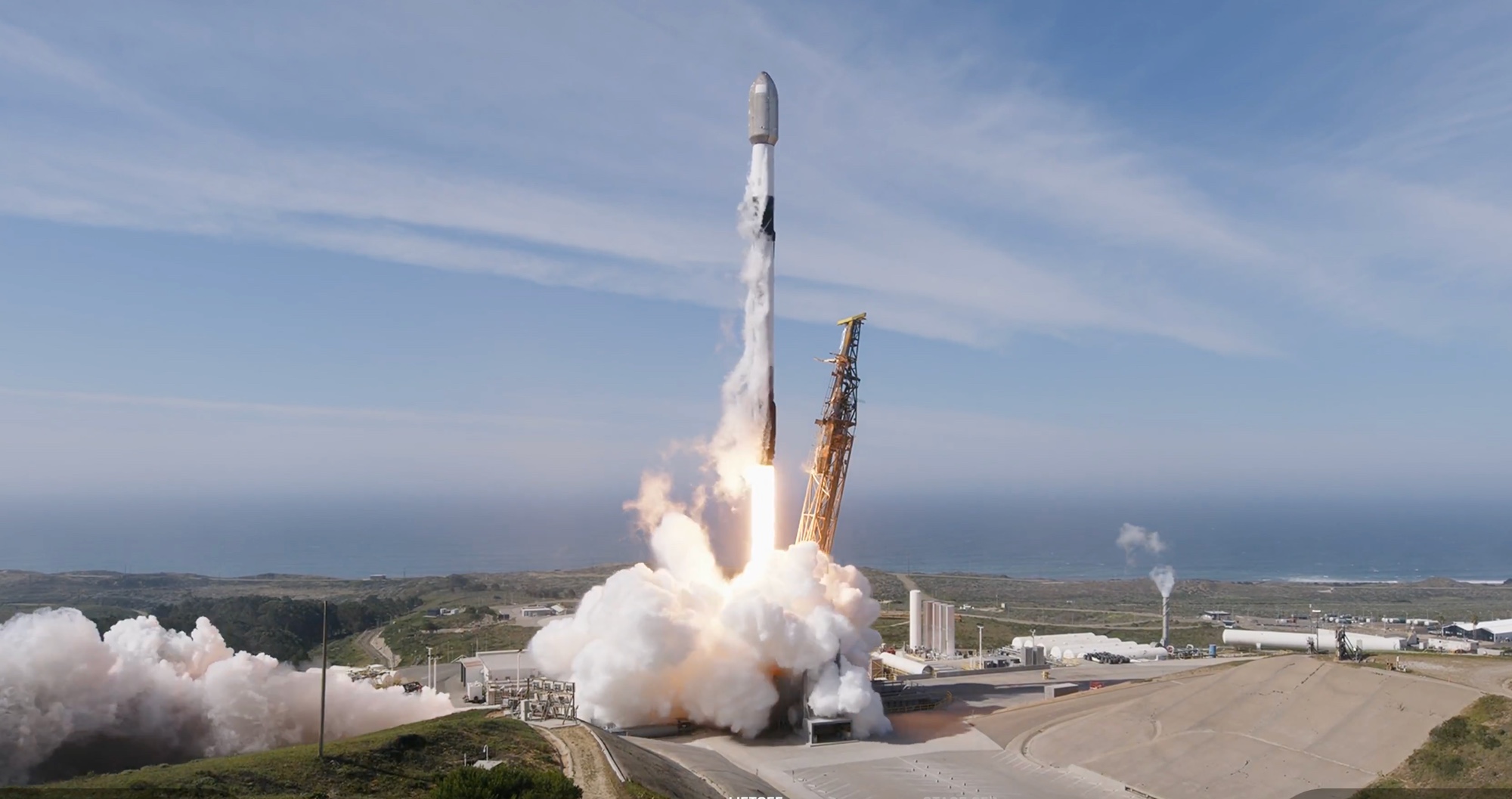

After more than three decades in public and project finance, I have learned that real inflection points in infrastructure development rarely announce themselves loudly. They usually arrive embedded in financing authority — technical on the surface, but transformational in effect. The spaceport bond provision enacted through the One Big Beautiful Bill Act (OBBBA) is one of those changes.
With this provision now law, space infrastructure in the United States has gained access to the municipal bond market through tax‑exempt private activity spaceport facility bonds. That shift may sound technical, but its implications are anything but. It fundamentally changes how space infrastructure — and the ecosystems that grow around launch and reentry sites — can be financed, scaled and sustained.
For years, spaceports and related facilities have faced a structural financing mismatch. They are long‑lived, capital‑intensive assets that resemble airports or seaports in function and risk profile. Yet they have often been financed with short‑term, higher‑cost capital more appropriate for commercial ventures than for foundational infrastructure. The result has been chronic underinvestment, deferred modernization and capacity constraints that ripple across the space economy.
The OBBBA provision corrects that mismatch.
By authorizing tax‑exempt private activity spaceport facility bonds, the law opens space infrastructure to one of the deepest and most efficient capital markets in the world. Municipal bonds offer lower cost of capital, long tenors aligned with asset life, and — critically under this provision — no project size limitation. Infrastructure can now be financed based on operational need rather than funding constraints.
Equally important, the law permits 100% private use of bond‑financed facilities. That point cannot be overstated. In infrastructure finance, use restrictions often distort design and limit effectiveness. Allowing full private use enables facilities to be built for throughput, safety and efficiency, not compliance workarounds.
What makes this provision truly transformative, however, is its scope. It does not apply solely to publicly owned spaceports. Commercial space companies themselves can access the municipal bond market for qualifying space infrastructure. In addition, manufacturing and industrial facilities that have a nexus to a licensed launch or reentry site and are located at or in close proximity to that site are also eligible.
This is how infrastructure ecosystems form.
In every mature transportation and logistics sector, success depends on more than the core facility. Airports thrive when maintenance, assembly, cargo, and training facilities cluster around runways. Ports succeed when terminals are integrated with processing, storage, and industrial capacity. Spaceports have long lacked a financing framework that supports this kind of integrated development. The OBBBA provision provides it.
Credit enhancement and supply‑chain acceleration
An underappreciated feature of this framework is how it allows anchor customers — including defense and national security primes — to credit‑enhance critical parts of the space supply chain without owning those assets outright.
Under the OBBBA provision, suppliers and operators developing eligible spaceport‑adjacent or launch‑nexus facilities can issue municipal bonds to finance long‑lived infrastructure. When an anchor customer provides durable commercial commitments — such as long‑term service agreements, capacity reservations or offtake arrangements — it materially reduces risk to municipal investors.
That credit enhancement lowers the borrowing cost, supports longer maturities and accelerates development timelines. Facilities that might struggle to attract private capital on their own become financeable infrastructure assets.
From a systems perspective, this is a force multiplier. It allows primes to strengthen manufacturing, integration, and sustainment capacity near launch and reentry sites without bringing those assets onto their own balance sheets. The result is a more resilient, distributed, and responsive industrial base — built faster and financed appropriately for infrastructure measured in decades.
Infrastructure finance as strategy
From a capital markets perspective, access to municipal financing changes behavior. Lower capital costs improve project economics and durability. Longer maturities support assets that will serve multiple generations of users. The absence of size limits allows for comprehensive, system‑level planning rather than incremental upgrades. Together, these factors reduce risk for downstream private investment.
The risk reduction matters. When core infrastructure is financeable on stable terms, private capital follows. Launch providers commit earlier. Manufacturers collocate operations. Workforce development becomes viable at scale. Over time, spaceports evolve from isolated launch sites into durable regional space economies.
There is also a national interest dimension. Spaceport capacity underpins commercial growth, civil missions, and national security alike. A more modern, geographically distributed network of financeable spaceport ecosystems improves resilience, reduces single‑point failures and enhances surge capacity. Those are strategic advantages in an increasingly competitive and contested space environment.
Here is what must happen next
None of this is automatic. Municipal markets reward discipline and transparency. Projects must be tied to real demand, sound governance and measurable performance outcomes. Poorly conceived investments will struggle, as they should. But that discipline is a strength of the model, not a weakness.
To unlock the full potential of this new financing tool, several concrete steps should follow:
- Spaceports should develop integrated master plans, strategic plans and multi‑year capital plans that explicitly identify bond‑eligible infrastructure.
- Spaceports should map and prioritize investment at or near their licensed launch or reentry sites — including assembly, integration, testing, utilities, workforce and industrial facilities that strengthen the ecosystem.
- States and local issuers should establish clear conduit frameworks for evaluating and approving spaceport facility bonds.
- Launch providers — including Rocket Lab, SpaceX, Blue Origin, ULA, Firefly Aerospace and Stoke Space — should identify anchor commitments that can serve as credit enhancement for suppliers and adjacent facilities, accelerating the development of long‑lived infrastructure they depend on.
- Defense primes such as Lockheed Martin, Northrop Grumman, Boeing and RTX should evaluate where long‑term service agreements, capacity reservations or sustainment commitments can provide supply‑chain credit enhancement. These commitments materially reduce risk for municipal investors and make critical manufacturing, integration and testing facilities financeable at scale.
- Commercial operators and manufacturers should assess which of their facilities qualify for tax‑exempt financing under the new authority, particularly those with a direct nexus to launch or reentry operations.
- Federal agencies should coordinate demand signals, especially where civil and national security missions rely on shared infrastructure.
- Industry coalitions should create standardized templates for feasibility studies, governance structures and disclosure practices to accelerate adoption and reduce transaction friction.
These are the same actions that enabled airports, ports and energy systems to scale using tax‑exempt financing over the past half‑century.
The moment Is here — and it requires action
From the vantage point of someone who has financed airports, ports and other critical infrastructure, the significance of this moment is clear. The OBBBA spaceport bond provision does not subsidize the space economy. It gives space infrastructure access to the same capital architecture that built every other essential system in the U. S.
The law is now in place. The foundation is financeable. The next phase depends on whether industry, government, and capital markets move with urgency and coordination.
What we build — and how quickly we build it — will define the next era of American space development.
Craig Hrinkevich is a managing director of Public and Project Finance, at D.A. Davidson & Co., an employee-owned investment banking firm. Craig has more than 30 years of experience in public and project finance, including prior roles at Wells Fargo Securities and Baird, financing long-lived infrastructure assets that support operationally intensive industries.
SpaceNews is committed to publishing our community’s diverse perspectives. Whether you’re an academic, executive, engineer or even just a concerned citizen of the cosmos, send your arguments and viewpoints to opinion (at) spacenews.com to be considered for publication online or in our next magazine. If you have something to submit, read some of our recent opinion articles and our submission guidelines to get a sense of what we’re looking for. The perspectives shared in these opinion articles are solely those of the authors and do not necessarily represent their employers or professional affiliations.










Related Posts

Stay Informed With the Latest & Most Important News
Previous Post
Next Post




Advertisement
-
 01Two Black Holes Observed Circling Each Other for the First Time
 -
 02From Polymerization-Enabled Folding and Assembly to Chemical Evolution: Key Processes for Emergence of Functional Polymers in the Origin of Life
 -
 03Astronomy 101: From the Sun and Moon to Wormholes and Warp Drive, Key Theories, Discoveries, and Facts about the Universe (The Adams 101 Series)
 -
 04True Anomaly hires former York Space executive as chief operating officer
 -
 05Φsat-2 begins science phase for AI Earth images
 -
 06Hurricane forecasters are losing 3 key satellites ahead of peak storm season − a meteorologist explains why it matters
 -
 07Binary star systems are complex astronomical objects − a new AI approach could pin down their properties quickly