
Now Reading: Blue Origin achieves first reflight of New Glenn booster while payload suffers operational loss
-
01
Blue Origin achieves first reflight of New Glenn booster while payload suffers operational loss

Blue Origin achieves first reflight of New Glenn booster while payload suffers operational loss

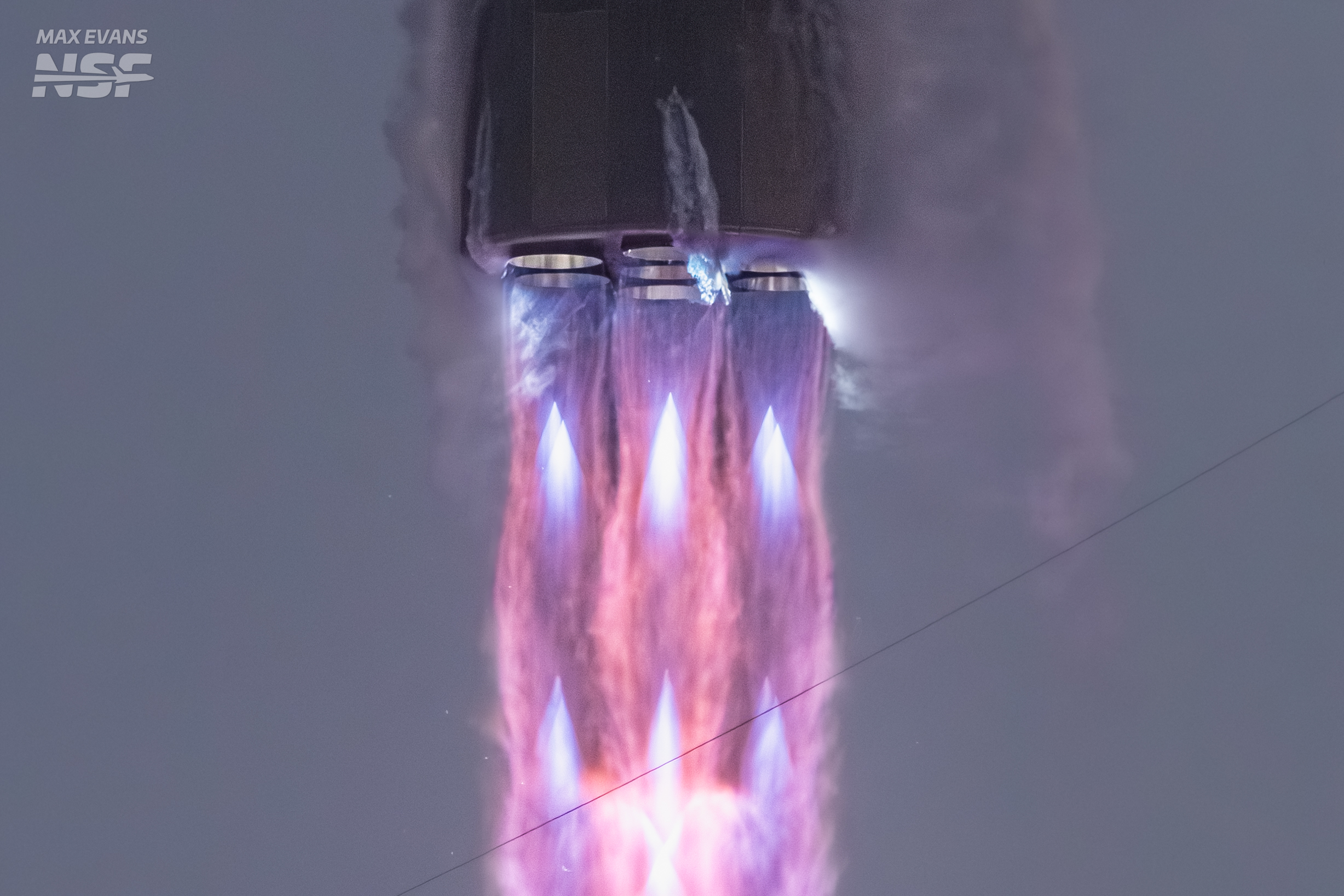

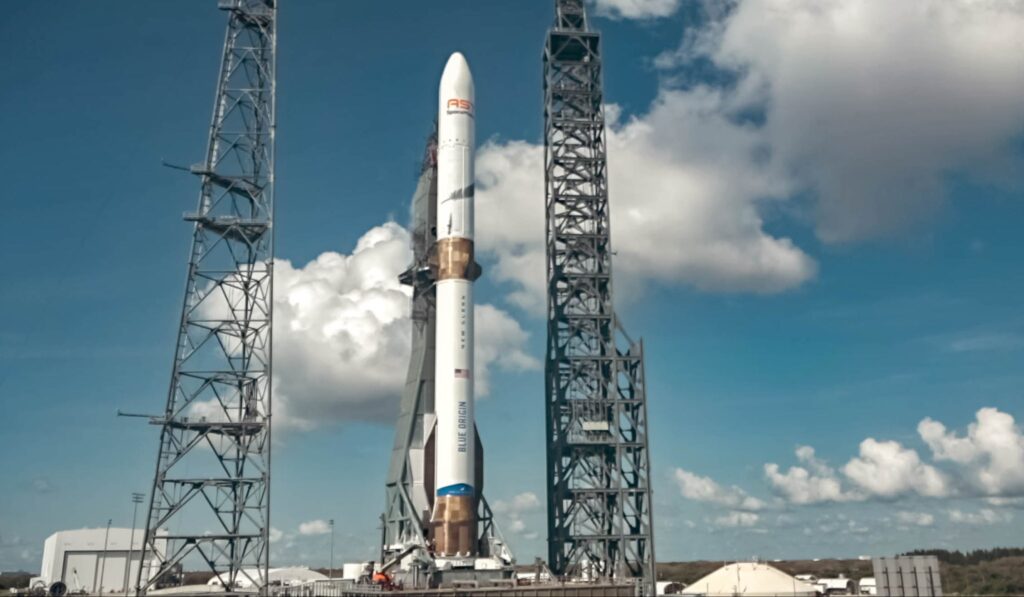
In a significant but bittersweet achievement for Blue Origin, the company successfully completed the first-ever reflight of its New Glenn booster on Sunday, following the vehicle’s third launch. While the booster made a flawless return, the mission’s primary payload, the BlueBird 7 communications satellite from AST SpaceMobile, was unfortunately deployed into a lower-than-expected orbit, leading to its operational loss.
The launch, which took place from Launch Complex 36, experienced a brief delay of around 40 minutes attributed to necessary final vehicle adjustments. Once cleared, the New Glenn rocket ascended smoothly, and after stage separation, its first stage—dubbed “Never Tell Me The Odds” and powered by seven BE-4 engines—successfully executed both an entry burn and a landing burn. It touched down precisely on the droneship Jacklyn in the Atlantic Ocean. Interestingly, following this landing, a vent was observed from the aft section of the booster, a precaution not noted during its previous touchdown, likely aimed at dispersing remaining fuel for secure recovery.
This mission marked a new milestone for Blue Origin, as it represented the first reflight of an orbital-class booster for New Glenn, demonstrating a rapid turnaround of approximately 157 days since its last flight in November 2025. In comparison, SpaceX’s first reused Falcon 9 booster took significantly longer—356 days—between launches.
Despite the successful booster recovery, there were complications with the second stage. Blue Origin confirmed that payload separation took place about an hour behind schedule, with AST SpaceMobile later indicating that while the satellite powered on, it was placed in a less-than-ideal orbit. U.S. Space Force tracking data revealed that the satellite ended up in an orbit of 154 by 494 kilometers at a 36.1° inclination—far from the intended parameters. As a result, AST SpaceMobile announced that the satellite’s altitude was insufficient for its onboard thruster technology to maintain operations, compelling the company to deorbit the asset. Fortunately, it plans to reclaim the satellite’s cost through insurance.
The BlueBird 7 satellite was a key component of AST SpaceMobile’s Block 2 constellation, designed to deliver 4G/5G cellular connectivity from space to standard smartphones. Despite its advanced capabilities, the satellite’s large phased-array antenna—spanning approximately 2,400 square feet—is raising concerns among astronomers about potential light interference with ground observations. To address these concerns, AST SpaceMobile has put in place coordination agreements with the National Science Foundation.
This recent launch setback follows another issue earlier this month involving a ground anomaly at Blue Origin’s facilities in Merritt Island, Florida, which resulted in damage from an overpressure event but thankfully caused no injuries. Blue Origin is currently in preparation for several future missions, including launches associated with Amazon’s Project Kuiper and possibly the debut test flight of its Blue Moon Mark 1 lunar lander.
As Blue Origin navigates this incident, it remains focused on increasing its operational capacity, having multiple second stages in preparation and prior testing. The company has not yet provided a timeline for the investigation into the payload failure, but the successful recovery of the rocket provides a silver lining amidst the challenges and might influence future clients with marginally higher insurance costs.










Related Posts


Stay Informed With the Latest & Most Important News
Previous Post
Next Post



Advertisement
-
 01Two Black Holes Observed Circling Each Other for the First Time
 -
 02From Polymerization-Enabled Folding and Assembly to Chemical Evolution: Key Processes for Emergence of Functional Polymers in the Origin of Life
 -
 03Astronomy 101: From the Sun and Moon to Wormholes and Warp Drive, Key Theories, Discoveries, and Facts about the Universe (The Adams 101 Series)
 -
 04True Anomaly hires former York Space executive as chief operating officer
 -
 05Φsat-2 begins science phase for AI Earth images
 -
 06Hurricane forecasters are losing 3 key satellites ahead of peak storm season − a meteorologist explains why it matters
 -
 07Binary star systems are complex astronomical objects − a new AI approach could pin down their properties quickly