
Now Reading: Public Invited to Help Uncover Cosmic Mysteries Through Citizen Science Initiative Space Warps
-
01
Public Invited to Help Uncover Cosmic Mysteries Through Citizen Science Initiative Space Warps

Public Invited to Help Uncover Cosmic Mysteries Through Citizen Science Initiative Space Warps

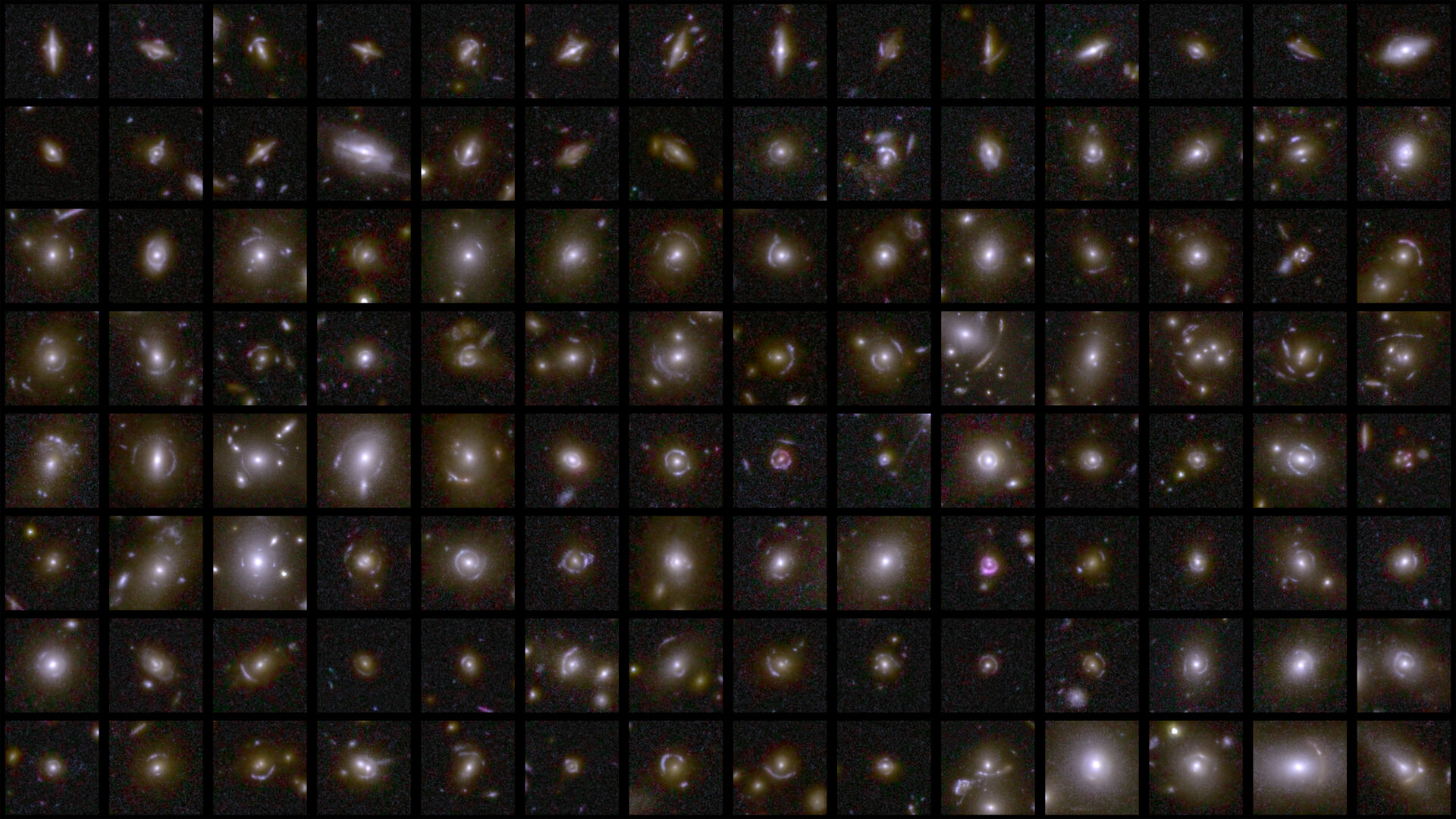

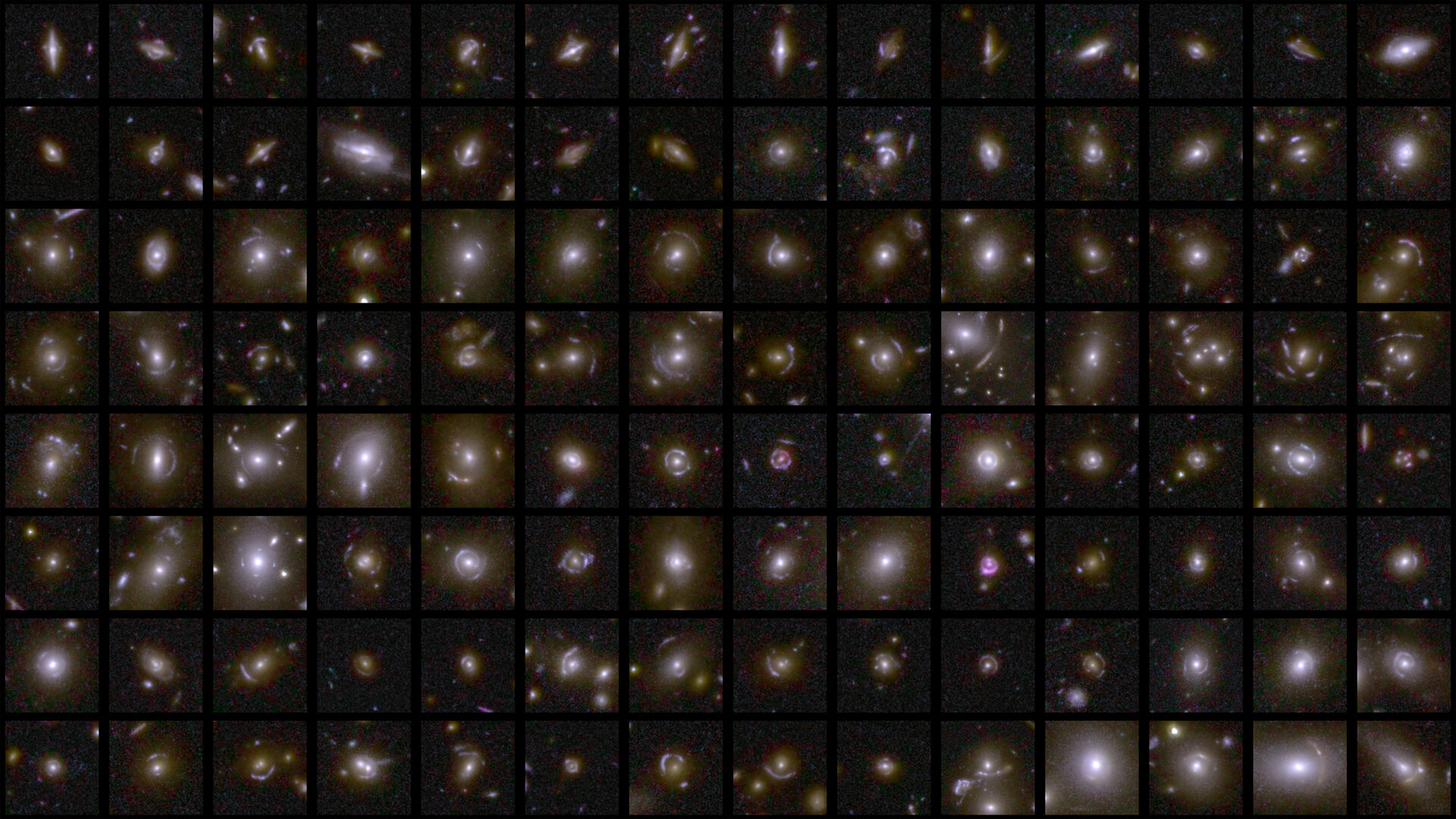
A groundbreaking citizen science initiative, Space Warps, has been launched on the Zooniverse platform, inviting the public to assist in the discovery of rare strong gravitational lenses using previously unseen imagery from the European Space Agency’s Euclid space telescope. This effort aims to improve our understanding of dark matter and dark energy within the cosmos.
Gravitational lensing, an effect first theorized by Albert Einstein, occurs when the gravity of a substantial object, such as a galaxy, distorts spacetime and bends light from objects situated behind it. This phenomenon can produce fascinating visual artifacts, including multiple images and complete rings known as “Einstein rings.” With its advanced capabilities, Euclid is poised to transform our grasp of strong gravitational lensing by delivering high-resolution imaging across expansive celestial areas, essential for identifying these rare lenses.
Since its first data release in March 2025, Euclid has already uncovered 500 strong galaxy-galaxy lenses from a mere 0.04% of its dataset, many of which had never been documented before. This accomplishment resulted from collaboration among citizen scientists, artificial intelligence, and researchers.
As the Euclid mission gathers approximately 100 GB of data daily, the Space Warps team calls upon citizen scientists to aid in identifying gravitational lenses hidden within an extensive collection of data, set to be part of the upcoming Euclid Data Release 1. Although this dataset remains private, participants will gain early access to high-quality new images of galaxies captured by the telescope. The project will feature about 300,000 images pre-selected by AI, highlighting the best candidates for strong lensing from a total of 72 million galaxies. Scientists anticipate that this refined dataset could reveal over 10,000 new gravitational lenses.
The insights gained from studying strong gravitational lenses will contribute to understanding the evolution of the universe, particularly by examining the effects of gravity, dark matter, and dark energy. Such lenses offer a method for “weighing” galaxies and clusters, helping to map total matter and the distribution of dark matter across cosmic time, thereby tracing the universe’s expansion and acceleration linked to dark energy.
Aprajita Verma, co-founder of Space Warps and project lead at the University of Oxford, emphasized the efficacy of blending AI technology with human analysis. Following the initial successful search in 2024, there are high hopes for discovering more than quadruple the lenses previously identified since the inception of this research nearly 50 years ago.
Launched in July 2023, the Euclid mission is designed to investigate the elusive impacts of dark matter and dark energy on the observable universe over its planned six-year duration, observing billions of galaxies stretching out to 10 billion light-years. Coordinated by the European Space Agency, with contributions from NASA and a consortium of over 2,000 scientists from multiple countries, Euclid represents a major milestone in the field of astrophysics, and its findings will significantly advance our understanding of the cosmos.










Related Posts

Stay Informed With the Latest & Most Important News
Previous Post
Next Post


Advertisement
-
 01Two Black Holes Observed Circling Each Other for the First Time
 -
 02From Polymerization-Enabled Folding and Assembly to Chemical Evolution: Key Processes for Emergence of Functional Polymers in the Origin of Life
 -
 03Astronomy 101: From the Sun and Moon to Wormholes and Warp Drive, Key Theories, Discoveries, and Facts about the Universe (The Adams 101 Series)
 -
 04True Anomaly hires former York Space executive as chief operating officer
 -
 05Φsat-2 begins science phase for AI Earth images
 -
 06Hurricane forecasters are losing 3 key satellites ahead of peak storm season − a meteorologist explains why it matters
 -
 07Binary star systems are complex astronomical objects − a new AI approach could pin down their properties quickly