
Now Reading: Global Space Missions Set to Make Waves from April 20 to 26 with Launches from Four Nations
-
01
Global Space Missions Set to Make Waves from April 20 to 26 with Launches from Four Nations

Global Space Missions Set to Make Waves from April 20 to 26 with Launches from Four Nations

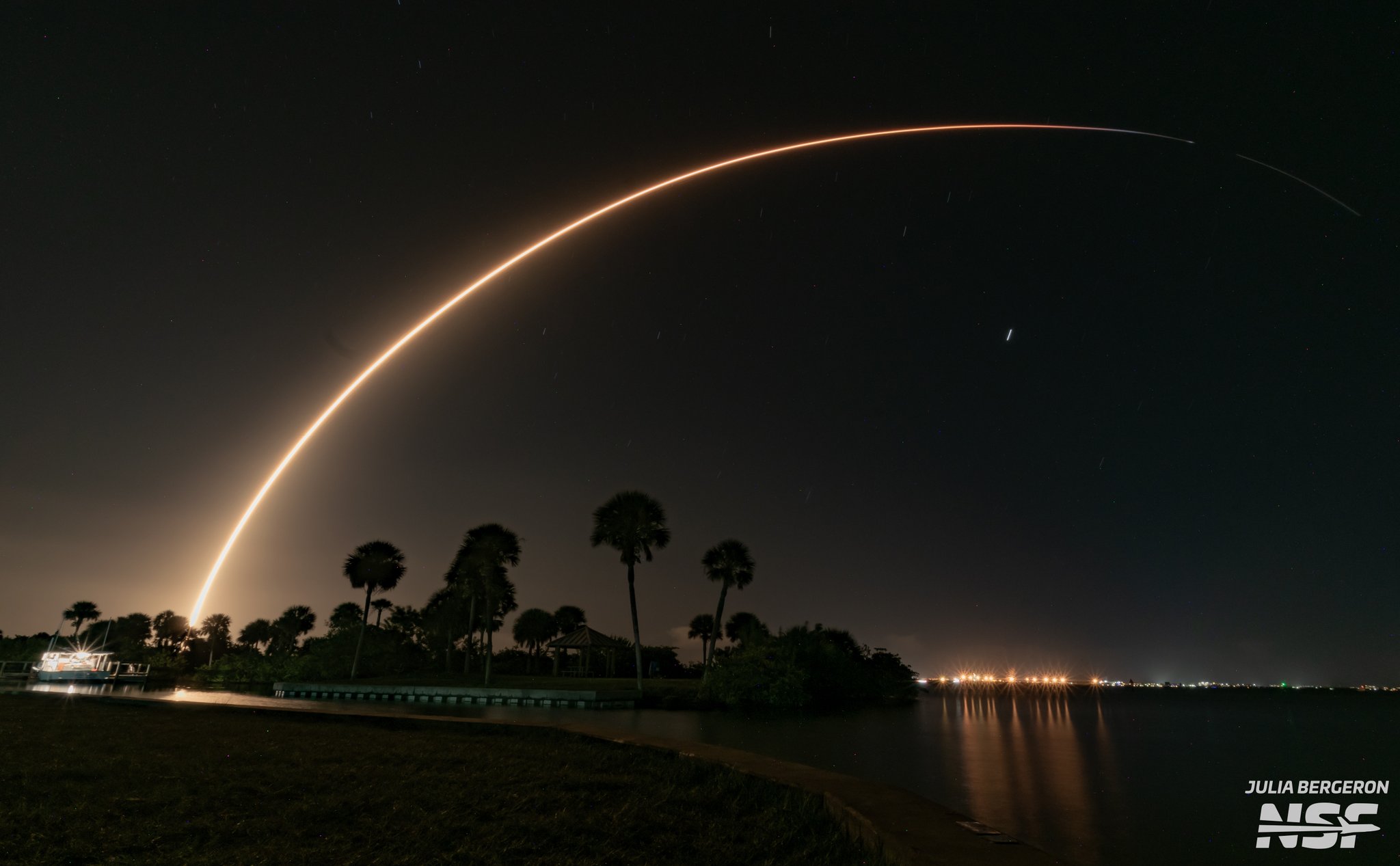

A week of diverse space activity is set to unfold from April 20 to April 26, 2026, featuring seven missions across four nations and a variety of launch vehicles. The highlight includes the inaugural laser communication demonstration from the GPS III SV10 satellite, while South Korea’s ADD prepares for its first full launch of a four-stage solid-fuel orbital vehicle. Additionally, Rocket Lab will conduct dual missions from both the United States and New Zealand, and SpaceX will continue its frequent Starlink deployments with multiple launches from California. Russia will wrap up the week with a resupply mission to the International Space Station.
The week begins with SpaceX’s Falcon 9 rocket scheduled to lift off the tenth and final satellite in the first generation of the GPS III program on April 21 at 2:53 AM EDT from Cape Canaveral, Florida. The mission, using booster B1095, has a narrow launch window and will see the booster land on the recovery vessel Just Read the Instructions in the Atlantic Ocean. The GPS III SV10 satellite, named after actress Hedy Lamarr, will not only complete the constellation but also include a groundbreaking optical communications terminal capable of transmitting data at rates up to 100 Gbps. This mission marks a significant advancement in GPS technology by aiming to facilitate simultaneous updates to the entire constellation from a single ground station, moving away from current radio-frequency systems.
Rocket Lab’s Electron rocket is slated for a suborbital flight on April 21 from NASA’s Wallops Flight Facility. This mission, cryptically named “Bubbles,” has not disclosed its payload and will occur within a five-hour launch window beginning at 8:00 PM EDT. The Electron vehicle has become a frequent presence in the small satellite market since its debut in 2017, with this launch being its 86th overall.
Subsequently, SpaceX will conduct a Starlink mission to deploy a set of 25 v2 Mini satellites into a sun-synchronous orbit on April 22 at 7:00 PM PDT from Vandenberg Space Force Base in California. The launch is associated with booster B1100, which is making its fifth flight. This mission is vital for expanding Starlink’s internet service to high-latitude regions.
On April 22 at 2:09 UTC, Rocket Lab will launch a second mission from the Māhia Peninsula. This launch will carry eight satellites for Japan’s space research initiatives, originally designated for the Epsilon-S rocket. The payload includes several re-flights of previously lost satellites alongside new experimental devices designed for testing advanced technologies.
A Chang Zheng 2D rocket from China is next in line, launching an undisclosed payload from Xichang Satellite Launch Center on April 24. This launch marks another entry in the long history of the CZ-2D, which has been operational since 1992.
South Korea’s Agency for Defense Development is set to make a significant leap with its first complete orbital demonstration of a solid-fuel small satellite launch vehicle, scheduled for April 25. The vehicle, designed to deliver military reconnaissance satellites, will use an offshore platform for launch, providing strategic advantages in terms of trajectory flexibility and safety.
Finally, Russia’s Progress MS-34 mission is slated to lift off on April 25, delivering approximately 7,280 kg of supplies to the ISS. This mission benefits from the resumption of operations at the Baikonur Cosmodrome following repairs, and it will continue the longstanding tradition of Progress missions which have supported the ISS and its predecessor programs since 1978.
As the week concludes, Falcon 9 is prepared for another round of Starlink satellite deployment on April 26, bringing the total for the year to a significant milestone. This continuation of scheduled missions underscores the growing activity in aerospace and satellite technology globally.










Related Posts
Stay Informed With the Latest & Most Important News
Advertisement
-
 01Two Black Holes Observed Circling Each Other for the First Time
 -
 02From Polymerization-Enabled Folding and Assembly to Chemical Evolution: Key Processes for Emergence of Functional Polymers in the Origin of Life
 -
 03Astronomy 101: From the Sun and Moon to Wormholes and Warp Drive, Key Theories, Discoveries, and Facts about the Universe (The Adams 101 Series)
 -
 04True Anomaly hires former York Space executive as chief operating officer
 -
 05Φsat-2 begins science phase for AI Earth images
 -
 06Hurricane forecasters are losing 3 key satellites ahead of peak storm season − a meteorologist explains why it matters
 -
 07Binary star systems are complex astronomical objects − a new AI approach could pin down their properties quickly