
Now Reading: Groundwater Microbial Diversity Associated With Icelandic Basaltic Subsurface Environments
-
01
Groundwater Microbial Diversity Associated With Icelandic Basaltic Subsurface Environments

Groundwater Microbial Diversity Associated With Icelandic Basaltic Subsurface Environments

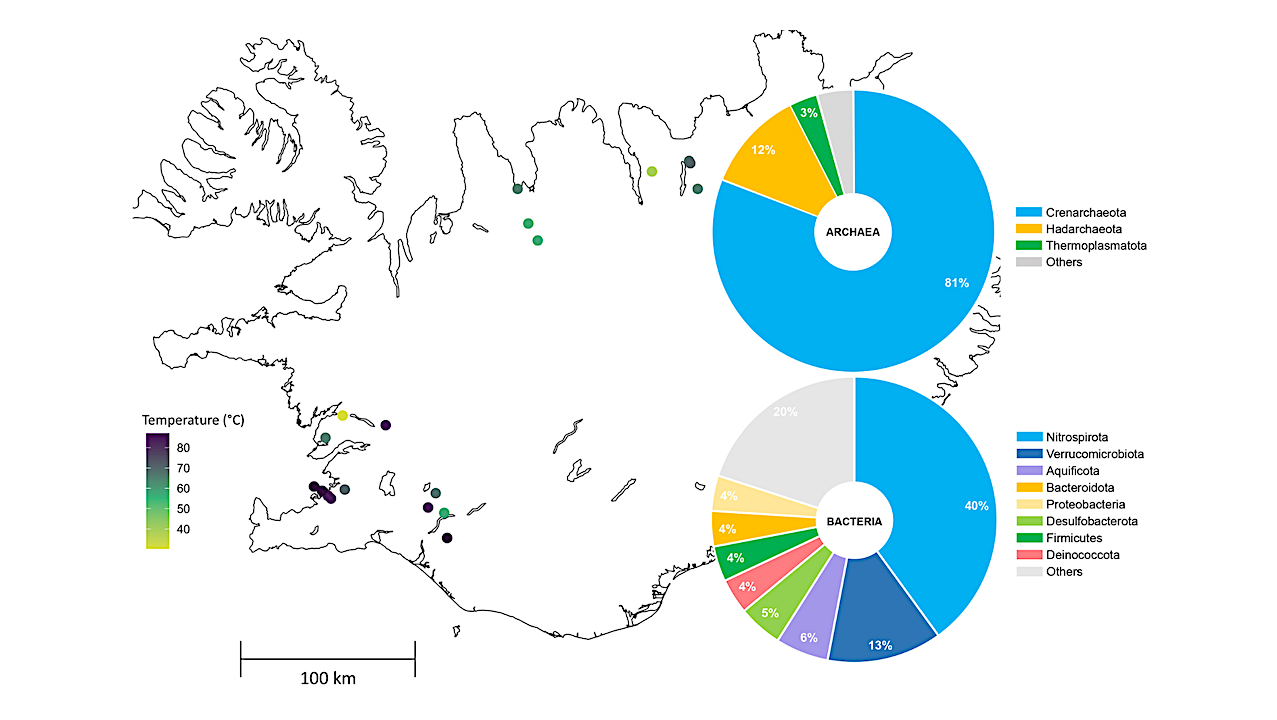
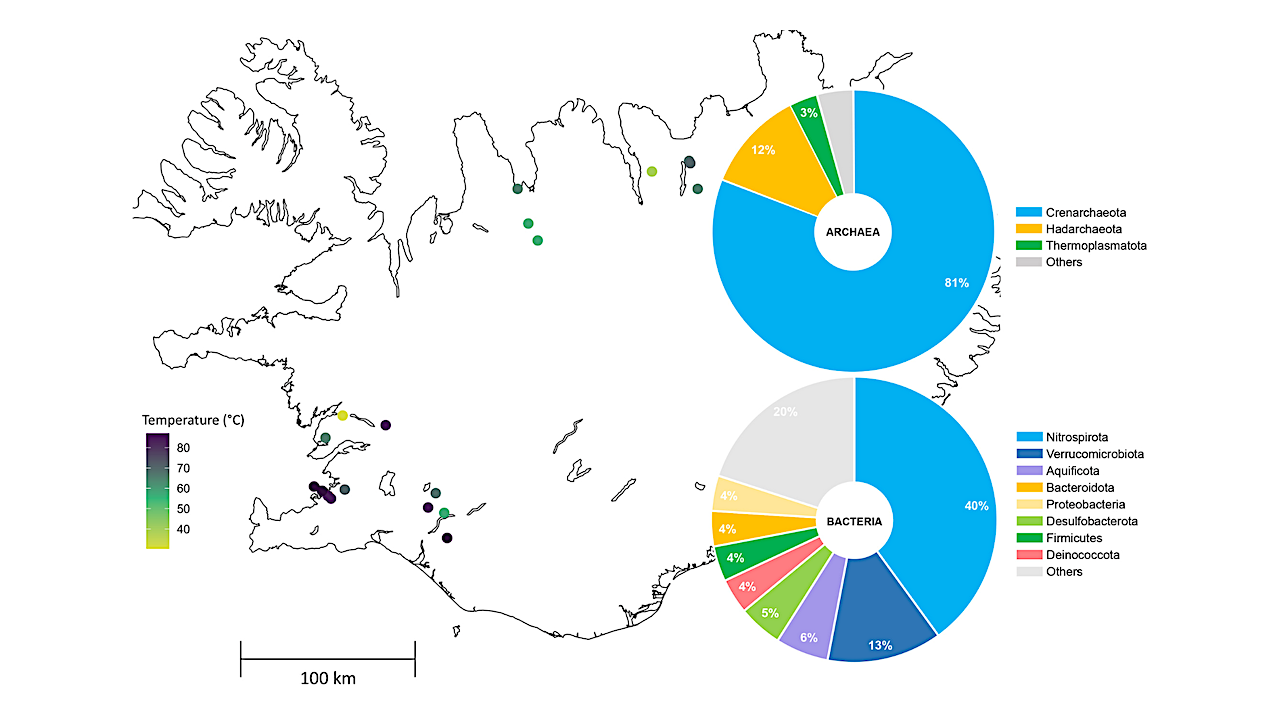
Graphical Abstract Overview of microbial diversity and environmental drivers in Icelandic deep basaltic aquifers. Using 16S rRNA gene metabarcoding across 22 geothermal wells spanning broad temperature, pH, and bedrock-age gradients, the study reveals distinct bacterial and archaeal community structures shaped by temperature, pH, and host-rock reactivity. Findings highlight key ecological and geochemical controls relevant to subsurface silicate weathering and microcosm experiment design. — Environmental Microbiology Reports via Pubmed
Microbial communities in the deep basaltic aquifers of Iceland remain poorly characterized, despite their relevance for understanding subsurface biogeochemical processes, including silicate weathering.
Here, we used 16S rRNA gene metabarcoding to investigate bacterial and archaeal diversity in 22 geothermal wells spanning broad gradients in temperature (30°C–110°C), pH (7.0–11.0), and bedrock age (0.01–15 Myr). We observed highly variable microbial assemblages, with several dominant taxa affiliated with known deep biosphere lineages, including hydrogenotrophs and sulfate reducers.
Archaeal communities were less diverse and displayed domain‐specific patterns, distinct from bacterial assemblages. Beta diversity was primarily structured by temperature and pH, and, to a lesser extent, by bedrock age. Thermodynamic and kinetic parameters derived from groundwater chemistry—including redox potential and silicate dissolution rates—also accounted for significant fractions of the variation in microbial beta diversity, although it cannot be ruled out that their influence primarily reflected underlying correlations with temperature and pH.
Our results suggest that both environmental gradients and host‐rock reactivity shape microbial diversity in these systems. This highlights the importance of considering geochemical context when designing subsurface microcosm experiments, and identifies candidate taxa for future studies exploring links between microbial composition and silicate weathering processes.
Astrobiology,










Related Posts
Stay Informed With the Latest & Most Important News
Previous Post
Next Post




Advertisement
-
 01Two Black Holes Observed Circling Each Other for the First Time
 -
 02From Polymerization-Enabled Folding and Assembly to Chemical Evolution: Key Processes for Emergence of Functional Polymers in the Origin of Life
 -
 03Astronomy 101: From the Sun and Moon to Wormholes and Warp Drive, Key Theories, Discoveries, and Facts about the Universe (The Adams 101 Series)
 -
 04True Anomaly hires former York Space executive as chief operating officer
 -
 05Φsat-2 begins science phase for AI Earth images
 -
 06Hurricane forecasters are losing 3 key satellites ahead of peak storm season − a meteorologist explains why it matters
 -
 07Binary star systems are complex astronomical objects − a new AI approach could pin down their properties quickly