
Now Reading: SpaceX set to launch Falcon Heavy rocket for ViaSat-3 F3 satellite mission after long hiatus
-
01
SpaceX set to launch Falcon Heavy rocket for ViaSat-3 F3 satellite mission after long hiatus

SpaceX set to launch Falcon Heavy rocket for ViaSat-3 F3 satellite mission after long hiatus

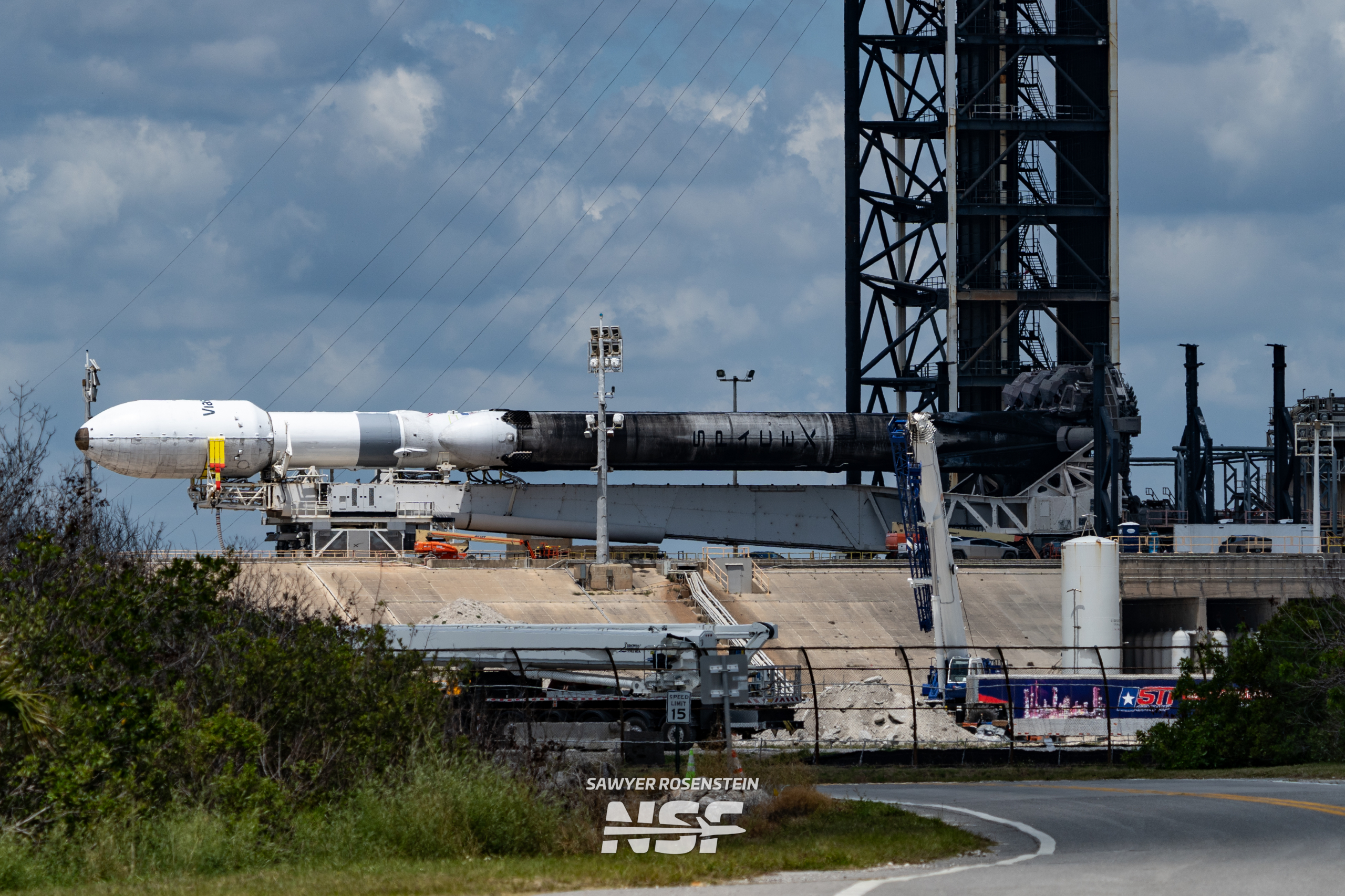

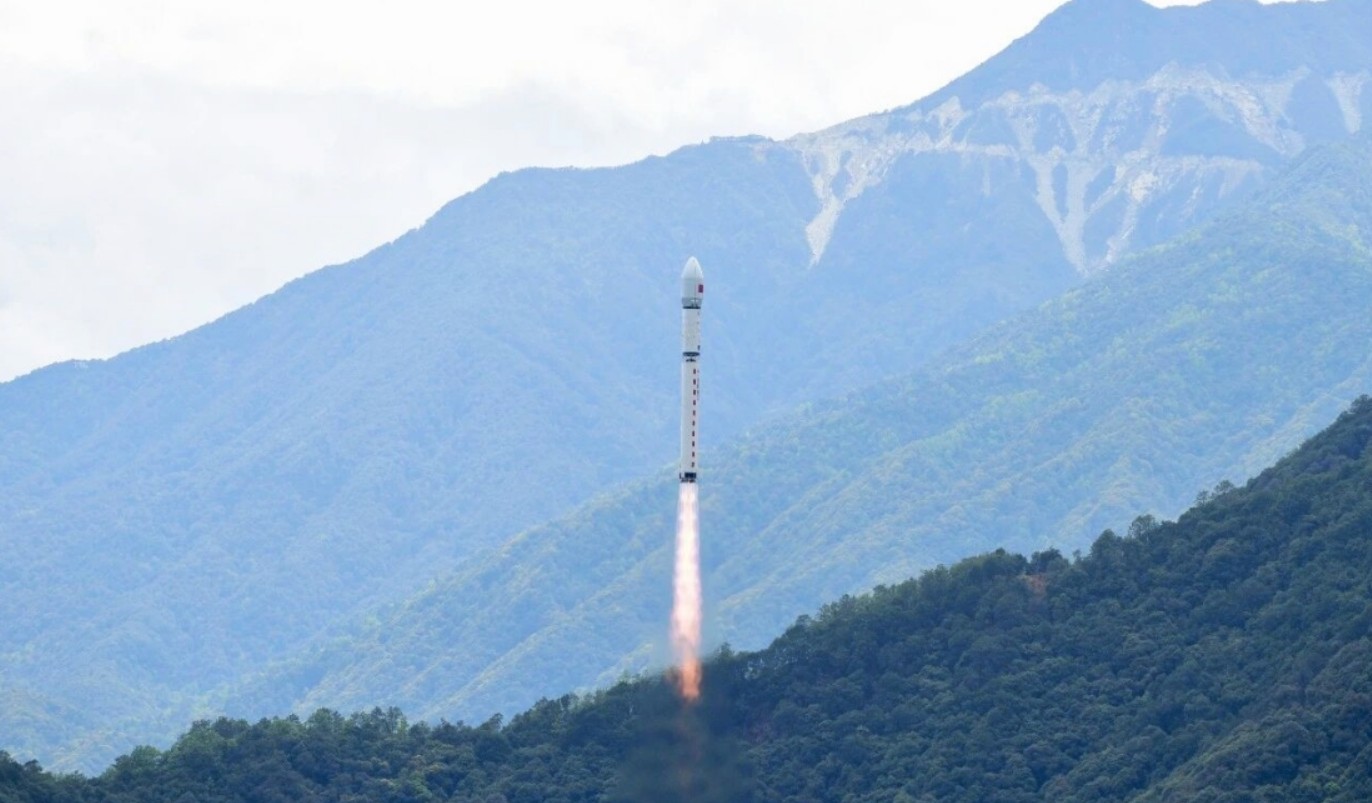
After a pause lasting more than a year and a half, SpaceX is preparing for the return of its Falcon Heavy rocket, scheduled to launch from Kennedy Space Center’s historic Launch Complex 39A in Florida. The mission, dubbed ViaSat-3 F3, aims to deploy the third satellite in the ViaSat-3 internet constellation into geostationary orbit.
The launch is set for Monday, April 27, at 10:21 AM EDT (14:21 UTC), kicking off an 85-minute launch window. Two side boosters will conduct a return-to-launch-site landing at Landing Zone 2 and Landing Zone 40, both located at Cape Canaveral Space Force Station. The center booster will be expended for this mission.
ViaSat-3 F3, as indicated by its name, is the final satellite in a series of Ka-band satellites designed to improve internet connectivity. The first satellite, ViaSat-3 F1, was launched in May 2023 on a Falcon Heavy rocket to provide internet services across the Americas, while the second satellite, F2, was sent into orbit in November 2025 on a United Launch Alliance Atlas V rocket, targeting coverage for Europe, the Middle East, and Africa. Following the initial deployment, ViaSat identified a capacity issue with F1 due to a malfunction in one of its antennas. Consequently, once F2 is operational, it will adjust its coverage area to swap with F1, while F3 will focus on the Asia-Pacific region.
Initially slated for launch on an Ariane 6 rocket from French Guiana, F3’s launch was shifted to Falcon Heavy due to delays in the European rocket’s development and an increasing backlog of missions stemming from the conflict in Ukraine. The launch facility for the Ariane 6 was formerly used for Soyuz mission launches, which were halted following the Russian invasion, prompting a reassignment of many payloads.
Constructed on a Boeing 702 satellite bus, ViaSat-3 F3’s payload was developed in Tempe, Arizona, while Boeing’s facility in El Segundo, California handled its systems integration, testing, and launch operations. The satellite weighs approximately six metric tons and is capable of generating 25 kilowatts of power. ViaSat reports that it will enhance their network with more than one terabyte per second of capacity and improve download speeds beyond 100 megabits per second.
This satellite is designed to upgrade in-flight WiFi services on commercial and business aircraft, as well as provide connectivity for maritime operations and homes. It’s also anticipated to support government and defense applications.
Falcon Heavy, which will embark on its 12th flight since its inaugural launch in 2018, last flew in October 2024 when it supported NASA’s Europa Clipper mission. The rocket’s design allows for a mix of expended and reusable components, with previous missions seeing all three boosters used for their full payload capacity. SpaceX has transitioned its Falcon Heavy operations exclusively to LC-39A, shifting Falcon 9 launches to other launch pads to focus resources on Falcon Heavy and preparations for future Starship launches from the same historic site.
The countdown for this upcoming mission will commence with propellant loading commencing at T-50 minutes, marking a detailed and timed progression of preparations leading up to liftoff. After separation from the core stage, the side boosters will return for landings, while the payload will ultimately be deployed nearly five hours post-launch, completing the mission.










Related Posts
Stay Informed With the Latest & Most Important News
Previous Post
Next Post


Advertisement
-
 01Two Black Holes Observed Circling Each Other for the First Time
 -
 02From Polymerization-Enabled Folding and Assembly to Chemical Evolution: Key Processes for Emergence of Functional Polymers in the Origin of Life
 -
 03Astronomy 101: From the Sun and Moon to Wormholes and Warp Drive, Key Theories, Discoveries, and Facts about the Universe (The Adams 101 Series)
 -
 04True Anomaly hires former York Space executive as chief operating officer
 -
 05Φsat-2 begins science phase for AI Earth images
 -
 06Hurricane forecasters are losing 3 key satellites ahead of peak storm season − a meteorologist explains why it matters
 -
 07Binary star systems are complex astronomical objects − a new AI approach could pin down their properties quickly