
Now Reading: Falcon 9 rocket stage projected to impact moon’s near side in August
-
01
Falcon 9 rocket stage projected to impact moon’s near side in August


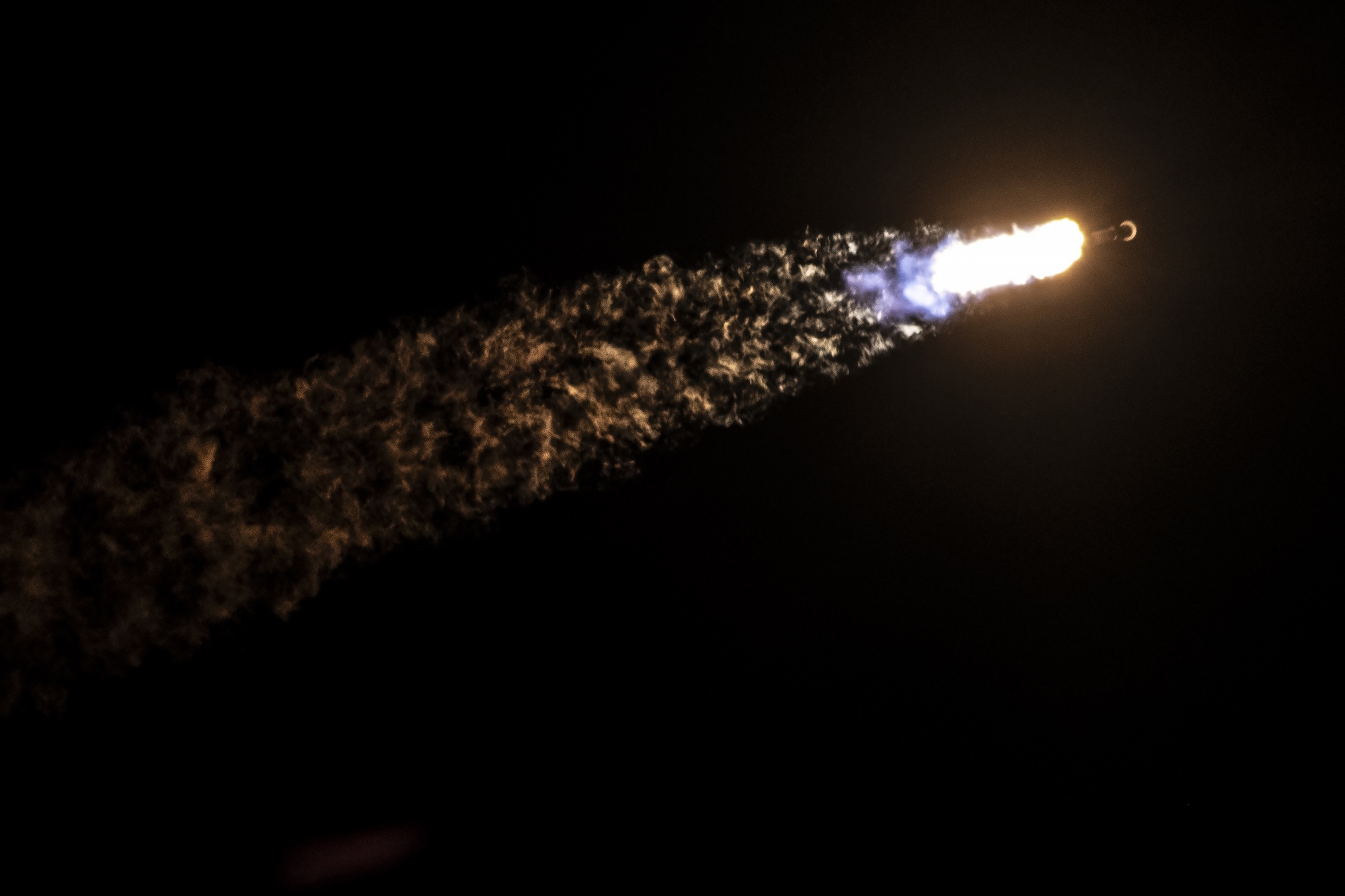

HELSINKI — A spent Falcon 9 stage used to launch a pair of commercial lunar landers is projected to impact the moon Aug. 5, according to astronomers.
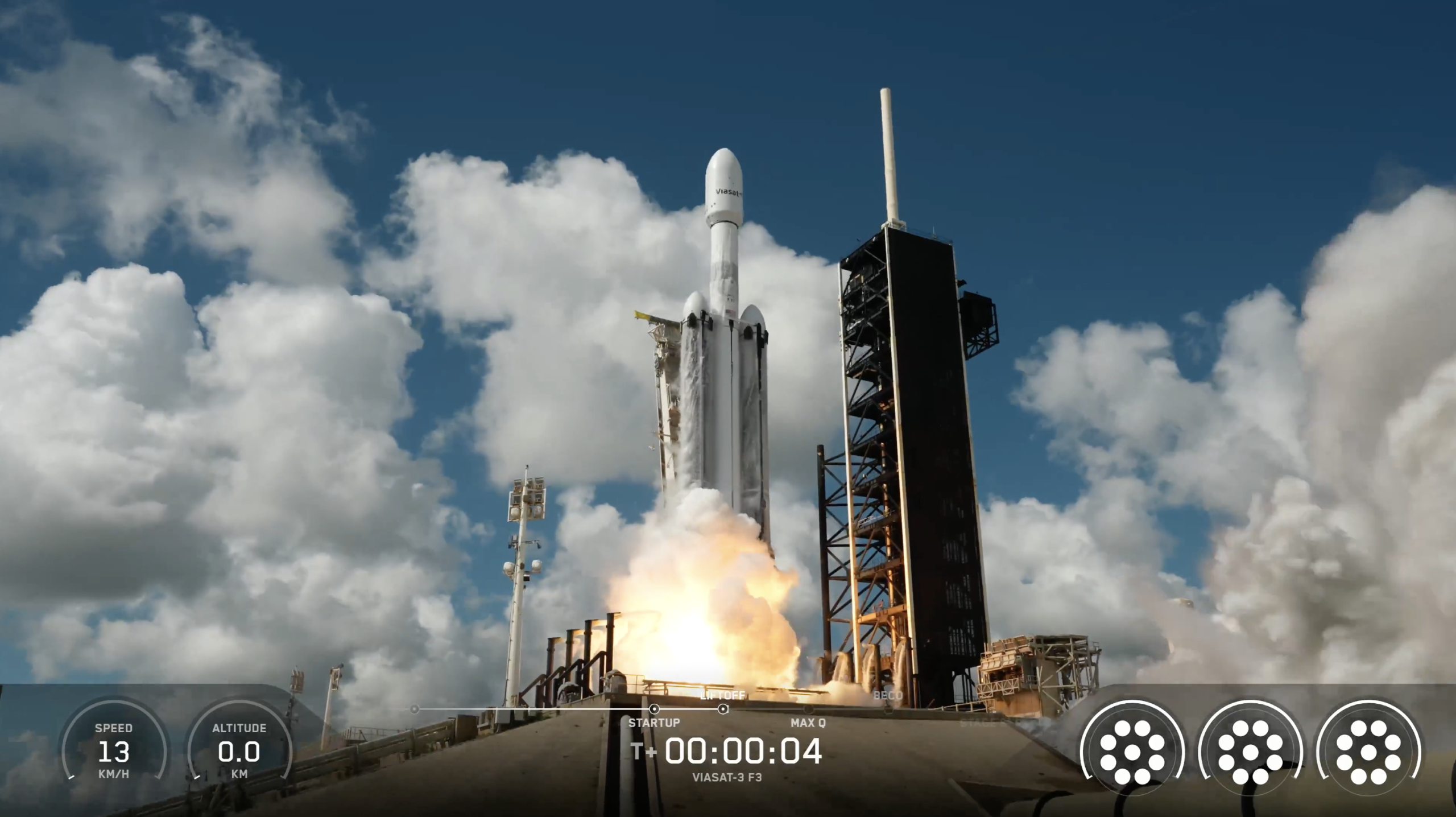
Firefly’s Blue Ghost Mission 1 and the ispace Hakuto-R Resilience lunar landers launched on a Falcon 9 rocket in January 2025, with the former making a successful landing. The upper stage from the launch has, however, remained in a highly elliptical orbit around the Earth with a period of around 26 days, taking it beyond the moon. That will now soon end in an impact with the lunar surface.
Bill Gray, an astronomer, independent orbital analyst and author of the Project Pluto tracking software, stated in a post that the upper stage, with the international designation of 2025-010D, will impact in or near Einstein crater on the western limb of the moon at 2:44 a.m. Eastern (0644 UTC) Aug. 5, following computations of its orbit based on observations made by asteroid surveys and telescopes. Estimates will be refined over the coming months.
“The upper stage, 2025-010D… had a few close passes by the moon and Earth, but nothing that was close enough to look like a possible impact,” Gray wrote. “The asteroid surveys observed it whenever it wasn’t too close to the sun or moon to see. As of 2026 February 26, we had accumulated 1053 observations of it.”
The U.S. Space Force tracks objects in orbit and updates a catalog of data from launches. It mostly tracks objects using radar, which is very useful for tracking objects in low Earth orbit, even tracking gloves and tool bags lost by astronauts over the years, Gray notes. Telescopes are much better suited for tracking more distant objects.
Swiss space situational awareness firm s2A systems provided SpaceNews with a short animation showing 2025-010D moving from bottom-right to center across the starfield, with periodic flashes indicating the stage is tumbling.
The roughly 4,000-kilogram, 13.8-meter-long upper stage is projected to impact the moon at a speed of 2.43 kilometers a second, or 8,700 km per hour. The event poses no risk and is unlikely to be viewable from the Earth, particularly as the impact is expected to occur on a sunlit portion of the lunar surface.
While Gray is confident of the impact timing and location being solid, he notes that even gentle forces such as solar radiation pressure, or sunlight, can build over months and influence an object’s orbit. “But come August, we’ll have a quite precise idea of where it will hit,” Gray wrote.
The event will be a very rare instance of an unintentional impact of an artificial object with the moon. It follows the 2022 impact of a Long March 3B upper stage from the 2014 Chang’e-5T1 mission which created a double crater on the far side of the moon.
Gray first raised the possibility of that impact, though initially misidentifying the stage as that from the SpaceX Falcon 9 launch of DSCOVR. In this case, the Falcon 9 upper stage has been tracked since launch.










Related Posts
Stay Informed With the Latest & Most Important News
Previous Post
Next Post
Previous Post
Next Post




Advertisement
-
 01Two Black Holes Observed Circling Each Other for the First Time
 -
 02From Polymerization-Enabled Folding and Assembly to Chemical Evolution: Key Processes for Emergence of Functional Polymers in the Origin of Life
 -
 03Astronomy 101: From the Sun and Moon to Wormholes and Warp Drive, Key Theories, Discoveries, and Facts about the Universe (The Adams 101 Series)
 -
 04True Anomaly hires former York Space executive as chief operating officer
 -
 05Φsat-2 begins science phase for AI Earth images
 -
 06Hurricane forecasters are losing 3 key satellites ahead of peak storm season − a meteorologist explains why it matters
 -
 07Binary star systems are complex astronomical objects − a new AI approach could pin down their properties quickly