
Now Reading: Water Molecules Found To Actively Drive Gene Transcription ProcessUniversity of California – San Diego
-
01
Water Molecules Found To Actively Drive Gene Transcription ProcessUniversity of California – San Diego

Water Molecules Found To Actively Drive Gene Transcription ProcessUniversity of California – San Diego

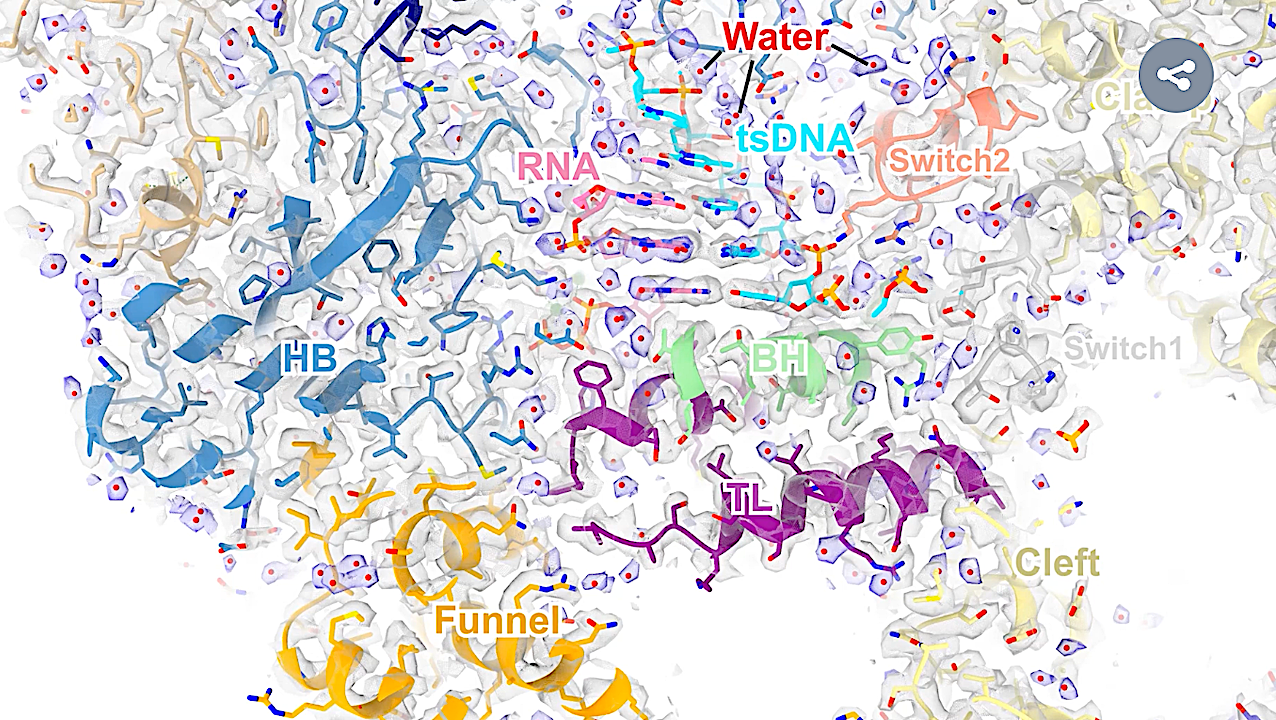
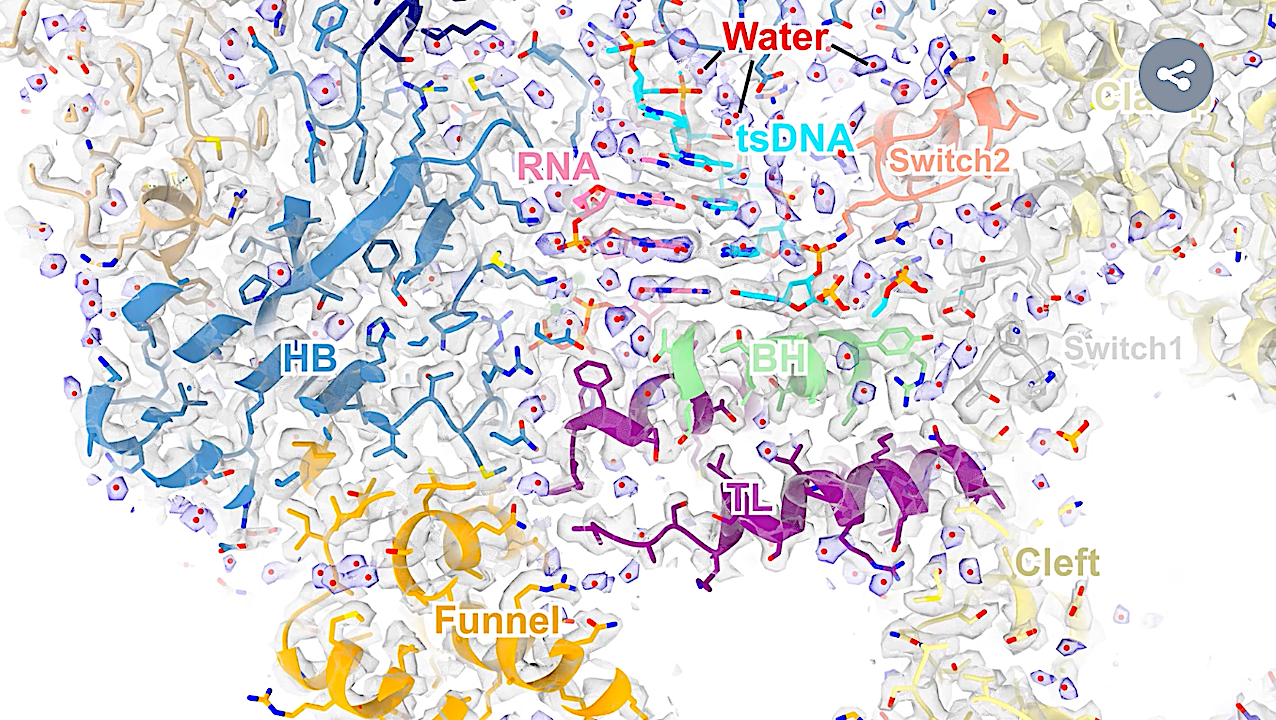
Researchers have uncovered a previously hidden layer of complexity in how genes are activated, showing that water molecules play a direct and essential role in one of the most fundamental processes in biology: DNA transcription.
Using state-of-the-art cryo-electron microscopy that can zoom down to smaller than the width of a single atom, the researchers visualized the inner workings of RNA polymerase II — the enzyme responsible for reading DNA and synthesizing RNA. The technology allowed the researchers to visualize individual water molecules and metal ions within the enzyme at an unprecedented level of detail.
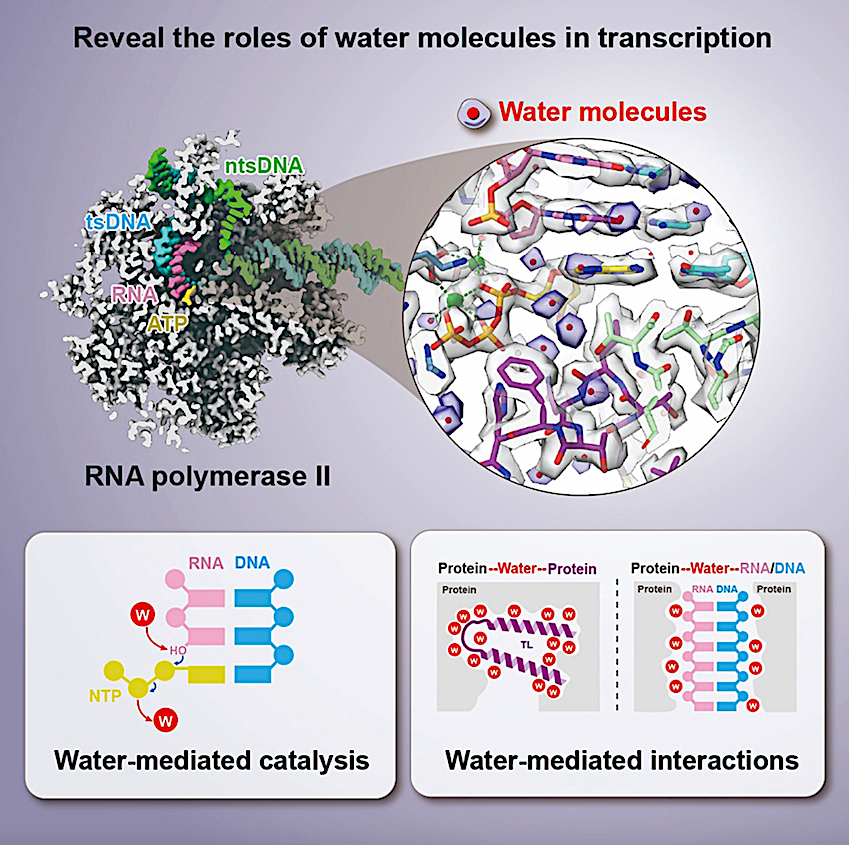
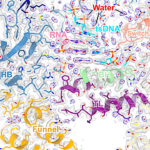
Graphical Abstract — Molecular Cell
The results provide a fundamentally new understanding of how genetic information is read and expressed, offering insights that could inform future research in molecular biology, drug development and disease mechanisms.
RNA polymerase II is central to gene expression, carrying out the first step in converting genetic information into functional molecules. While scientists have long understood the major structural components involved in transcription, the precise biochemical mechanism has remained unclear.
By capturing multiple high-resolution snapshots of the enzyme in action, researchers identified hundreds to more than a thousand individual water molecules positioned adjacent to the enzyme. Many of these were located at critical functional sites, forming intricate networks that connect the enzyme, DNA and incoming RNA building blocks.
The study reveals that these water molecules are not passive bystanders, but active participants in the chemistry of transcription. Specifically, they help facilitate proton transfer — an essential step in the chemical reaction that adds new nucleotides to a growing RNA strand.
Water molecules also contribute to recognizing the correct molecular substrates and stabilizing key structural elements of the enzyme during the transcription process. Strikingly, these waters are evolutionary conserved from bacteria to yeast — and potentially humans as well — challenging the traditional ‘protein-centered’ view of gene expression, showing that water is an integral and evolutionarily conserved part of the transcription machinery. This finding could fundamentally change how scientists think about how genes are read.
Sub-2 Å cryo-EM structures of transcribing RNA polymerase II reveal critical roles of water molecules in catalysis, Molecular Cell (open access)
Astrobiology, Genomics,










Related Posts
Stay Informed With the Latest & Most Important News
Previous Post
Next Post
Previous Post
Next Post


Advertisement
-
 01Two Black Holes Observed Circling Each Other for the First Time
 -
 02From Polymerization-Enabled Folding and Assembly to Chemical Evolution: Key Processes for Emergence of Functional Polymers in the Origin of Life
 -
 03Astronomy 101: From the Sun and Moon to Wormholes and Warp Drive, Key Theories, Discoveries, and Facts about the Universe (The Adams 101 Series)
 -
 04True Anomaly hires former York Space executive as chief operating officer
 -
 05Φsat-2 begins science phase for AI Earth images
 -
 06Hurricane forecasters are losing 3 key satellites ahead of peak storm season − a meteorologist explains why it matters
 -
 07Binary star systems are complex astronomical objects − a new AI approach could pin down their properties quickly