
Now Reading: Astrobiological Implications of Lava Flows Superposed on Martian Glaciers
-
01
Astrobiological Implications of Lava Flows Superposed on Martian Glaciers


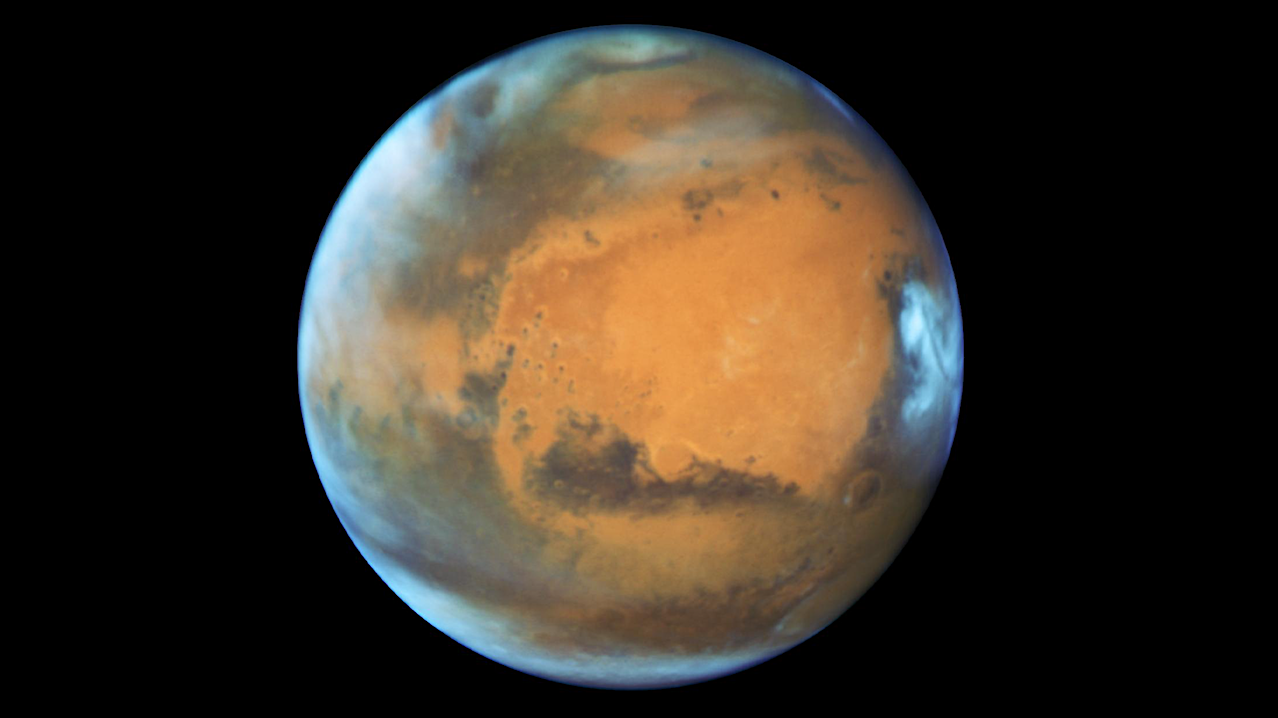
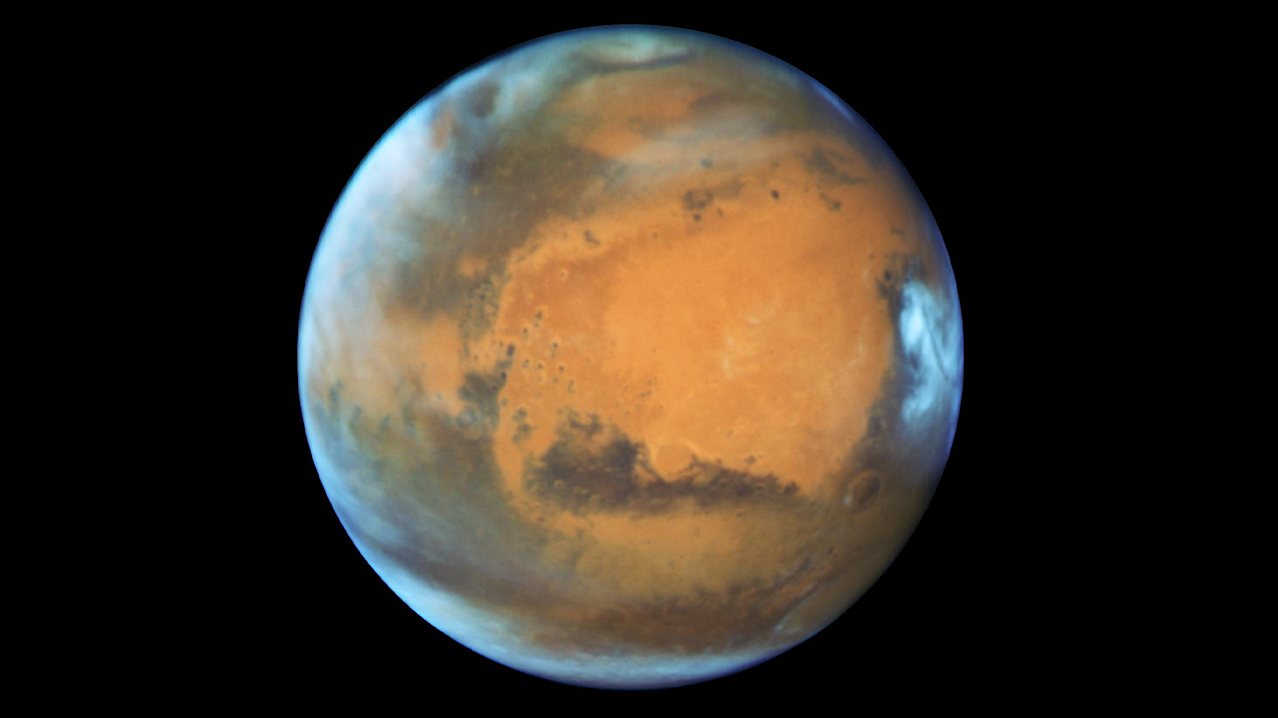
Volcanic eruptions and glacial ice have occurred at virtually all latitudes and altitudes throughout Mars history.
To assess the astrobiological potential of processes and microenvironments associated with lava flows onto glacial ice, we explore: (1) the influence of lava flow loading on the flow behavior of underlying ice, (2) whether, and for how long, wet-based conditions might occur and be sustained in otherwise cold-based glacial environments, and (3) the immediate fate of the meltwater generated, whether moulins can be generated, and whether and for how long wet-based conditions are generated by such processes.
We employ a 1D time-dependent solution of the heat-flow equation to solve for the transient temperature field within a column of ice subjected to instantaneous deposition of a hot lava layer, exploring the parameter space by examining six different initial surface temperatures and three potential geothermal fluxes to characterize a range of past climates/geological regimes. We observe an initial pulse of accelerated flow due to the increased loading by the lava and consequent increase in the driving stress.
A secondary pulse of acceleration occurs as the temperature wave from the lava penetrates the ice and reaches the bed, where the bulk of the deformation occurs in response to the warmer, softer ice.
We observe basal melting as the bed briefly reaches the melting point and characterize the amounts of water produced during such brief basal melting intervals. Examination of the meltwater generated below, and in moats adjacent to the superposed lava, shows that completely full moats can propagate cracks through km-thick ice, and such crevasses can remain open (moulins) if they are at least 90% full.
The greatest volume of drained water is produced by thin lava over thick ice, but the longest duration draining events occur for moderate lava thicknesses over thinner ice. Locally wet-based glacial conditions could persist below the superposed lava flow for durations well over ∼103 years.
We explore the detailed consequences of lava flow/ice interaction, highlighting those most important for the formation and dispersal of potential cryophilic microbiota on Mars, opening new windows of Mars history for astrobiological research and exploration.
Astrobiology,










Related Posts
Stay Informed With the Latest & Most Important News
Previous Post
Next Post


Advertisement
-
 01Two Black Holes Observed Circling Each Other for the First Time
 -
 02From Polymerization-Enabled Folding and Assembly to Chemical Evolution: Key Processes for Emergence of Functional Polymers in the Origin of Life
 -
 03Astronomy 101: From the Sun and Moon to Wormholes and Warp Drive, Key Theories, Discoveries, and Facts about the Universe (The Adams 101 Series)
 -
 04True Anomaly hires former York Space executive as chief operating officer
 -
 05Φsat-2 begins science phase for AI Earth images
 -
 06Hurricane forecasters are losing 3 key satellites ahead of peak storm season − a meteorologist explains why it matters
 -
 07Binary star systems are complex astronomical objects − a new AI approach could pin down their properties quickly