
Now Reading: Firefly plans late summer launch of first Alpha Block 2 rocket
-
01
Firefly plans late summer launch of first Alpha Block 2 rocket


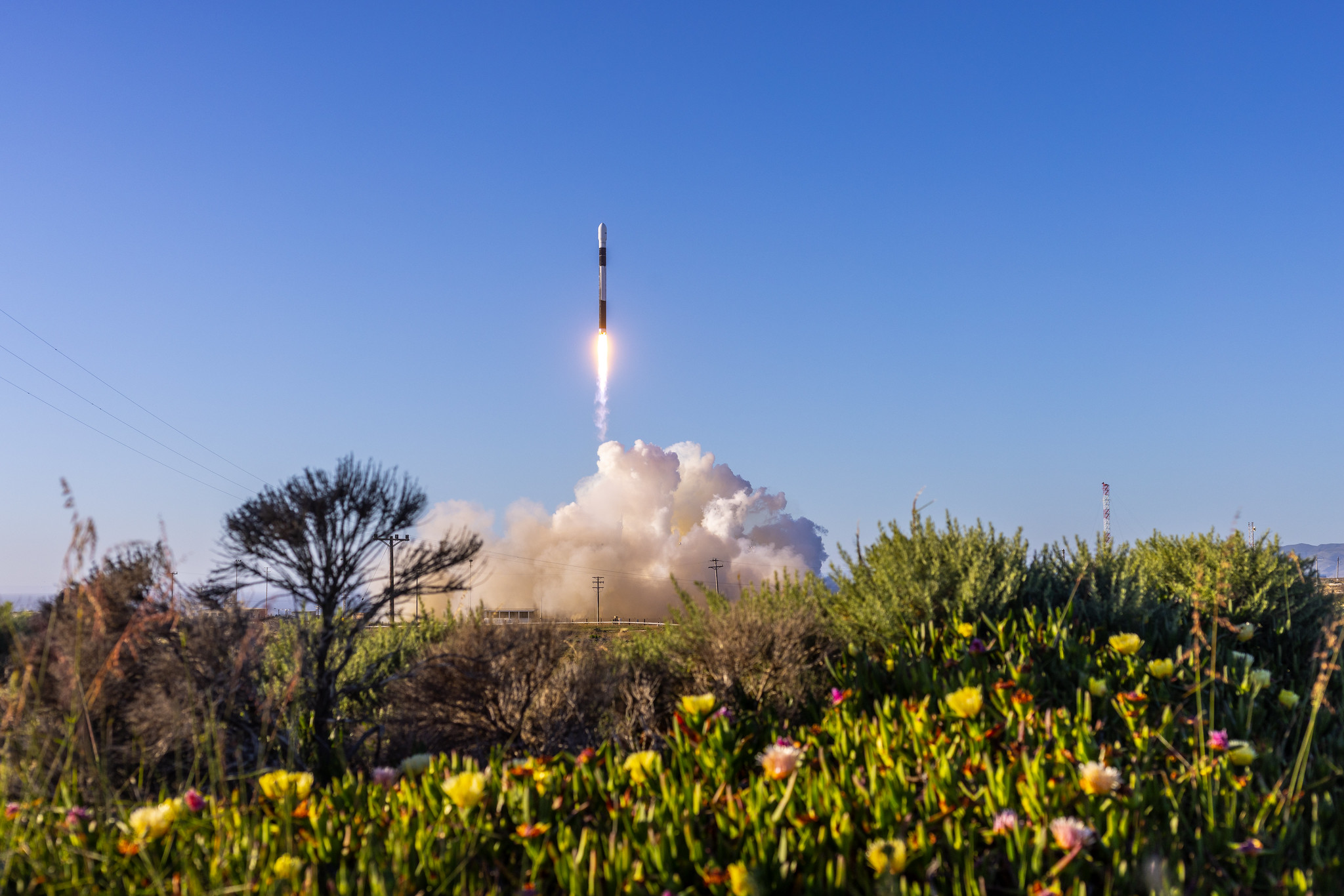

WASHINGTON — Firefly Aerospace plans to debut the upgraded version of its Alpha rocket late this summer as it sees strong demand for the vehicle, particularly for national security applications.
In a May 4 earnings call about the company’s first-quarter financial results, Jason Kim, chief executive of Firefly, confirmed the company was moving ahead with the Alpha Block 2 rocket after a successful return to flight of the original version of the vehicle in March.
“We are now focused on delivering our first Block 2 vehicle, which will debut on Flight 8. That’s targeted to launch late this summer,” he said.
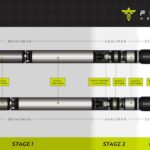
The company announced the Block 2 version of Alpha in January, with stretched first and second stages and upgrades to avionics, batteries and its thermal protection system. The company said the upgrades were intended to improve reliability of the vehicle, which suffered two failures and two partial failures in its first six launches.
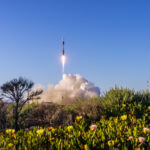
The original version of Alpha launched March 11, placing a Lockheed Martin technology demonstration satellite into its planned low Earth orbit. “Everything was nominal” with the launch, Kim said after a post-flight data review. “It was a flawless launch.”
He did not disclose the customer for the Flight 8 mission, but said the company was planning two more launches after that this year. Hardware for those later launches is in production as the Flight 8 hardware goes into integration and testing.
The company has not announced any major new launch contracts for Alpha recently, but Kim said Firefly held discussions with current and prospective customers at the Space Symposium last month.
“There was a lot of interest with existing customers as well as new customers, and it’s just a matter of timing,” he said.
“Demand is not the problem with Alpha,” he added. “There’s so much demand from national security as well as commercial and in terms of civil as well.”
However, he emphasized the national security applications of Alpha, both for responsive launches of satellites weighing up to one ton as well as suborbital missions for hypersonics testing. “That really is very fit for national security purposes,” he said.
He also emphasized the ability of Alpha, which so far has launched only from Vandenberg Space Force Base in California, to operate from multiple sites. During the call he thanked the Swedish military for allocating “tens of millions” for orbital launch capabilities as Firefly works to launch Alpha from the Esrange Space Center. Firefly also announced an agreement with Seagate Space April 6 to study launching Alpha from offshore launch platforms that Seagate is developing.
“We have a deployable Alpha capability that we would like to field, and with that capability, you can get resiliency,” he said.
Firefly’s roles in a lunar base
Firefly also used the call to emphasize potential opportunities for the company in NASA’s expanded lunar ambitions announced in March. That includes development of a lunar base, spending $20 billion over the next seven years on a program that will include acquiring dozens of additional lunar lander flights.
“The lunar opportunity is here,” Kim said. “Our prior growth strategy was to extend from one moon landing a year to multiple a year, and now we have an amplified demand signal from NASA.”
Firefly’s Blue Ghost 1 mission successfully landed on the moon in March 2025, and the company has three more missions in development, all supported by NASA Commercial Lunar Payload Services (CLPS) awards. Blue Ghost 2 is scheduled for launch as soon as late this year.
He said the company already quadrupled the amount of clean room space to allow it to build multiple landers per year, but he did not give a specific production rate or the time it will take for the company to reach that rate. NASA has talked about going to nearly monthly lunar missions as soon as 2027.
That includes, he said, landers that can be “templated” and built on a production line “so that we can address the frequency that’s being demanded by NASA.” He also cited efforts to build key elements of the landers in-house while having a “strategic inventory” of components from suppliers.
Firefly is also studying landers larger than Blue Ghost, which can deliver up to 240 kilograms to the lunar surface. Kim noted that NASA, at its event in March to outline its lunar base plans, was looking for landers that can deliver payloads from 500 kilograms to eight metric tons.
“Those are all in our roadmap,” he said. “Our larger lunar lander designs are scalable to meet that demand.” He did not disclose additional details about those larger landers and when they might be ready.
“We build big things at this company,” he said, noting the Eclipse medium-class rocket in development will be 60 meters tall. “So building a larger lander is right up our alley.”










Related Posts

Stay Informed With the Latest & Most Important News
Previous Post
Next Post
Previous Post
Next Post


Advertisement
-
 01Two Black Holes Observed Circling Each Other for the First Time
 -
 02From Polymerization-Enabled Folding and Assembly to Chemical Evolution: Key Processes for Emergence of Functional Polymers in the Origin of Life
 -
 03Astronomy 101: From the Sun and Moon to Wormholes and Warp Drive, Key Theories, Discoveries, and Facts about the Universe (The Adams 101 Series)
 -
 04True Anomaly hires former York Space executive as chief operating officer
 -
 05Φsat-2 begins science phase for AI Earth images
 -
 06Hurricane forecasters are losing 3 key satellites ahead of peak storm season − a meteorologist explains why it matters
 -
 07Binary star systems are complex astronomical objects − a new AI approach could pin down their properties quickly