
Now Reading: Stardust in Antarctica shows Earth crossed a supernova cloud
-
01
Stardust in Antarctica shows Earth crossed a supernova cloud


- Stardust in Antarctic ice – originating in vast clouds in space, left when stars explode – reveals the presence of iron-60. This material doesn’t form naturally on Earth. But supernovae produce it.
- A look back at ice cores tens of thousands of years old shows the amount of iron-60 varies slightly over this time period. It suggests our solar system has been traveling through a cloud of supernova debris for 40,000 to 124,000 years.
- The amount of iron-60 was sparser in the past than it is now. So it appears we are still passing through one of these interstellar clouds. So the iron-60 helps trace our path through the universe.
By Dominik Koll, Australian National University
Stardust in Antarctica shows Earth crossed supernova cloud
When you think of outer space, you’re likely picturing stars, planets and moons. But much of space is filled with clouds of gas, plasma and stardust … or interstellar clouds.
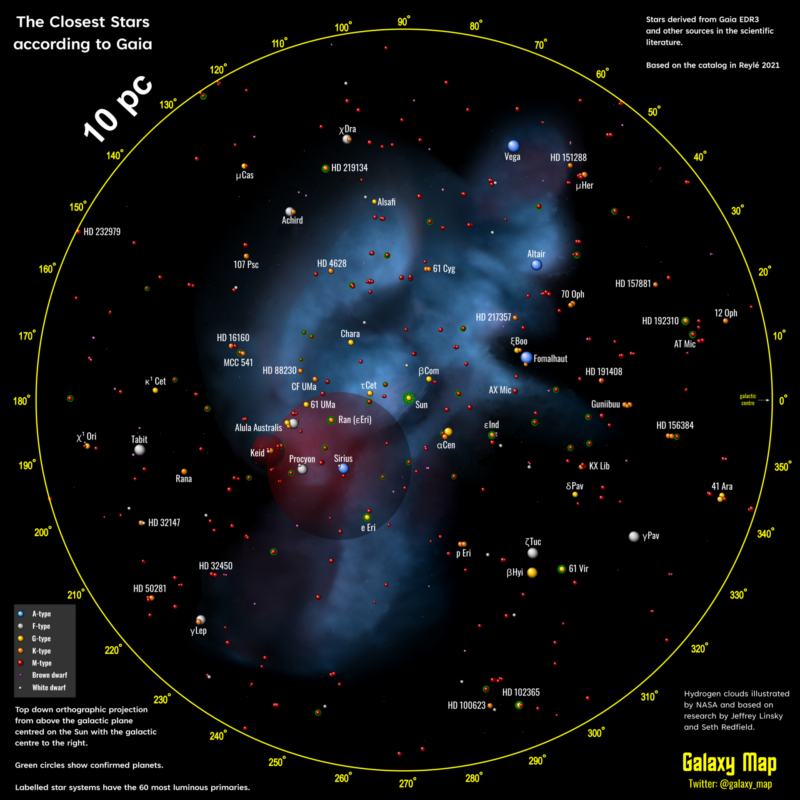
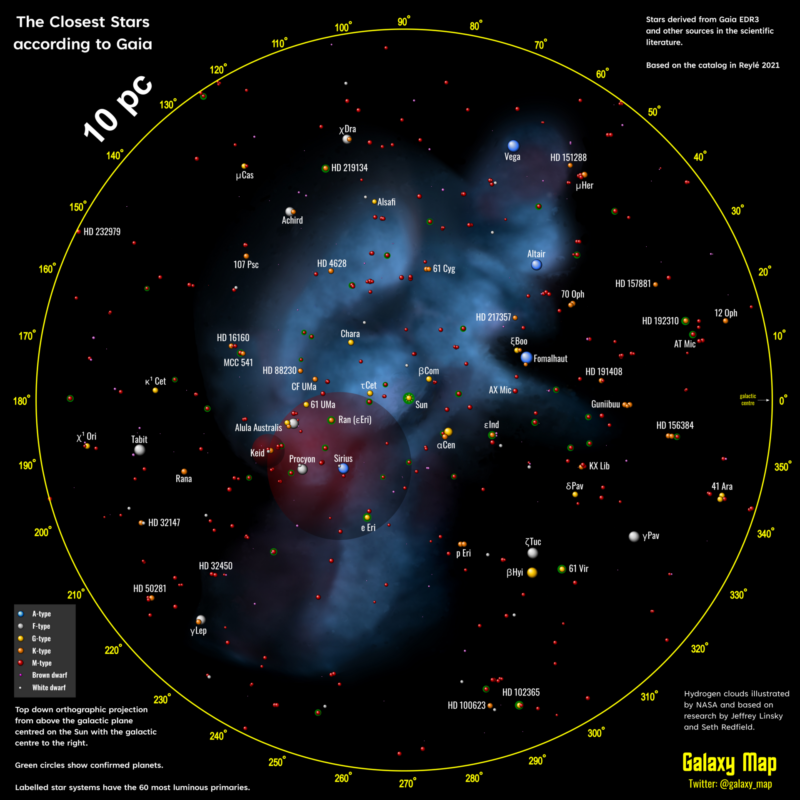
In the local parts of our galaxy alone, there’s a complex of roughly 15 individual interstellar clouds. The solar system is currently traversing one of them, aptly named the Local Interstellar Cloud. Scientists believe the origin and history of these clouds are tightly connected to the birth and death of stars. But we can see their imprints right here on Earth, in a place you might not expect: Antarctic ice.
My colleagues and I have been studying stardust – the dust left behind in space from supernova explosions – trapped in old Antarctic snow and ice. This dust lets us trace the history of our solar neighborhood, including the solar system itself.
In a new study that the peer-reviewed journal Physical Review Letters – published on May 13, 2026 – we found a subtle clue that reveals our solar system’s movement through the local interstellar environment over the past 80,000 years.
Looking down to see the sky
Astronomy usually looks outward. Telescopes collect light from distant stars and galaxies, allowing us to observe events across vast stretches of space and time. From these observations, we infer how stars live and die, how elements are formed, and how the universe evolves.
Our approach turns that idea on its head.
Instead of observing the light coming to us, we study the debris of exploding stars right here on Earth. As cosmic furnaces, stars forge many elements in their cores, from carbon and oxygen to calcium and iron. This includes rare isotopes (variants of chemical elements) such as iron-60.
When massive stars explode into supernovae at the end of their life, these elements fly out into space and become interstellar dust.
Tiny grains of this dust then drift through the galaxy and occasionally find their way to Earth’s surface. Radioactive iron-60, a fingerprint of stellar explosions, lies embedded within these grains. By searching for these atoms in geological archives on Earth, we can probe astrophysical events like supernovae long after their light has faded.
This is why Antarctica is so valuable. Its snow accumulates slowly and remains largely undisturbed, forming a layered record that stretches back tens of thousands of years. Each layer captures a snapshot of the material that was present in our cosmic neighborhood at the time.
Finding stardust in Antarctica
When we studied 500 kg (1,100 lbs) of recent snow in Antarctica, we unexpectedly found this rare radioactive isotope. Where did it come from? There was no recent near-Earth supernova.
But our solar neighborhood is filled with 15 clouds, with the solar system currently traversing at least one of them. Is the stardust waiting in the clouds for Earth to sweep it up? If yes, then the amount of stardust Earth collects should be related to their structure: the denser the clouds, the more iron-60 they contain. This was our educated guess in 2019.
Soon, some scientists brought forth other explanations. Millions of years ago Earth received large showers of iron-60 from massive supernovae. Is the iron-60 in Antarctic snow the last remnant or an echo of this signal? A rain that became a drizzle?
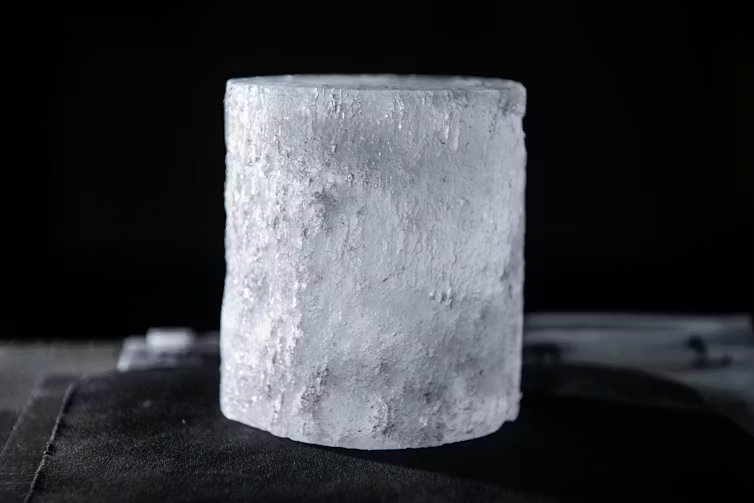
To find out, we analyzed a 300-kg (660-lb) section of Antarctic ice, dating from 40,000 to 80,000 years ago. The process is painstaking. First we needed to melt the ice. Then we chemically treated it to isolate tiny amounts of iron, including the iron-60 from the stardust.
Next, using the sensitive atom-counting technique of accelerator mass spectrometry at the Heavy-Ion Accelerator Facility at Australian National University, we counted individual atoms of iron-60.
The expectation was straightforward: based on previous measurements from surface snow of Antarctica and several-thousand-year-old ocean sediments, we anticipated a certain steady level of iron-60 deposition.
The results
Instead, we found less. Not zero, but noticeably lower than we expected.
This result suggests that less interstellar dust was reaching Earth during that period. This is a remarkable change on a comparatively short astrophysical timescale and does not fit the long timescales of the iron-60 deposits that landed here millions of years ago. Instead, we needed to look for a smaller, more local source for the isotope.

A fitting story
Naturally, astronomers are also quite interested in the clouds around the solar system. Last year, a study reconstructing the history of the clouds arrived at the conclusion that they most likely originated in a stellar explosion. Furthermore, they found the solar system has been traversing the Local Interstellar Cloud from sometime between 40,000 and 124,000 years ago.
If that’s correct, we would expect that the amount of iron-60 on Earth should have changed sometime in the same time period: between 40,000 and 124,000 years ago.
This is exactly what our results showed in Antarctica.
The story doesn’t fit perfectly, though. If these clouds did originate directly from an exploding star, we would expect way more iron-60 than we actually see in Antarctic ice.
Nevertheless, these clouds are imprinted in Earth’s geological record. If we look deeper and analyze even older ice, we might soon unravel the mystery of these local interstellar clouds, revealing their full history and uncertain origins.
Dominik Koll, Honorary Lecturer, Nuclear Physics, Australian National University
This article is republished from The Conversation under a Creative Commons license. Read the original article.
Bottom line: Stardust in Antarctica reveals the presence of an element that is not naturally made on Earth. But it is created in supernovae. Looking at the time period this material appears in ice cores lets us know when Earth passed through this cloud of supernova debris.
The post Stardust in Antarctica shows Earth crossed a supernova cloud first appeared on EarthSky.










Related Posts
Stay Informed With the Latest & Most Important News
Previous Post
Next Post




Advertisement
-
 01Two Black Holes Observed Circling Each Other for the First Time
 -
 02From Polymerization-Enabled Folding and Assembly to Chemical Evolution: Key Processes for Emergence of Functional Polymers in the Origin of Life
 -
 03Astronomy 101: From the Sun and Moon to Wormholes and Warp Drive, Key Theories, Discoveries, and Facts about the Universe (The Adams 101 Series)
 -
 04True Anomaly hires former York Space executive as chief operating officer
 -
 05Φsat-2 begins science phase for AI Earth images
 -
 06Hurricane forecasters are losing 3 key satellites ahead of peak storm season − a meteorologist explains why it matters
 -
 07Binary star systems are complex astronomical objects − a new AI approach could pin down their properties quickly